
Padel Racket Prices: What to Buy at Every Budget

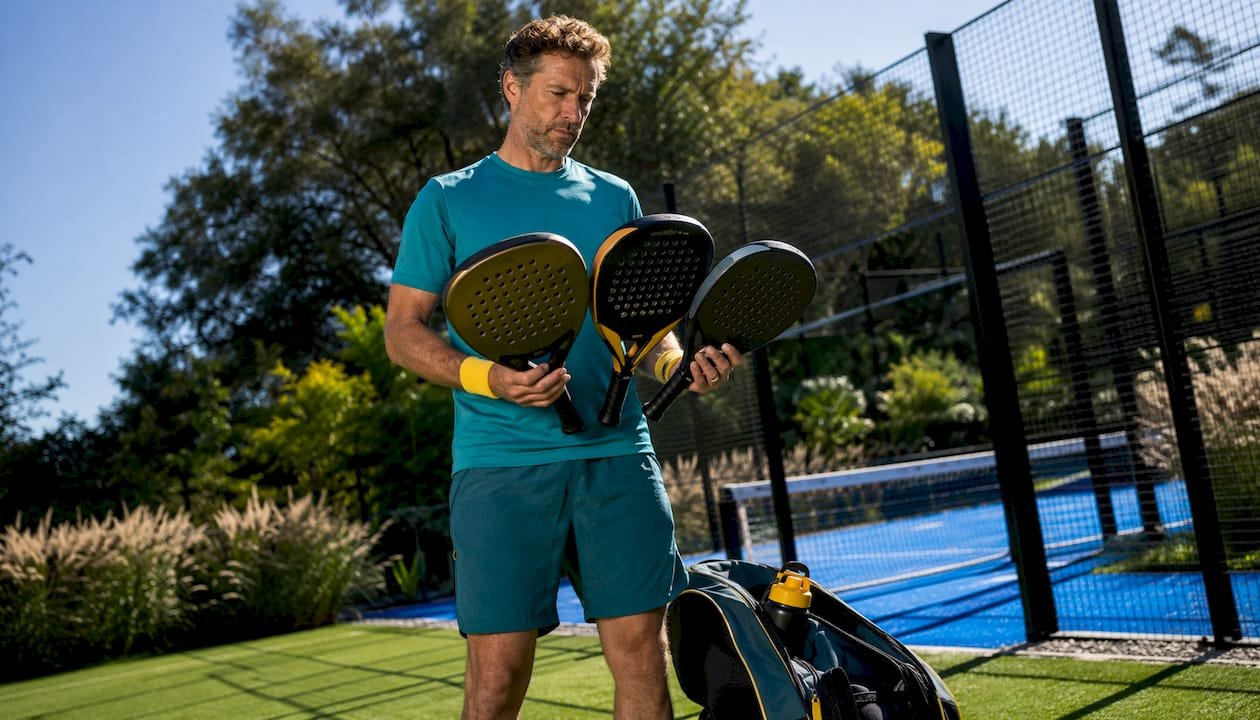
Padel racket prices in the U.S. vary widely, and the right tier depends almost entirely on how often you play and how far along your game is. Here’s the quick breakdown:
- Entry price tier (under $100) typically uses fiberglass frame and soft foam core, suitable for beginners prioritizing forgiveness.
- The $100–$200 “sweet spot” features genuine carbon faces and EVA cores, favored by recreational players for good value.
- Enthusiast rackets ($200–$300) offer advanced materials like multi-layer carbon and denser EVA for more consistent players.
- The top pro tier ($300+) includes pro-level construction with high-weave carbon and firm cores, designed for serious competitors.
Sale prices on prior-year models are often significantly lower than retail, providing opportunities to get higher-quality rackets at reduced prices.
Table of Contents
- What does each price tier actually get you?
- Why do padel rackets cost what they do?
- How do you match a racket to your skill level and style?
- Where should U.S. buyers shop to get the best deal?
- Recommended picks by budget tier
- Brand examples by price tier in the U.S.
- Online vs. in-store prices in the U.S.
- Key Takeaways
- The case for spending less than you think you need to
- Shop padel rackets at Padelhip
- Useful sources
What does each price tier actually get you?
The price jump from one tier to the next isn’t arbitrary. Each step up buys you a measurable change in materials, construction, and how the racket behaves on court.
Entry tier (under $100): Frames at this price use fiberglass faces and softer, lower-density foam cores. Fiberglass entry rackets are cheaper to produce in volume because they require less precise manufacturing than carbon alternatives. The result is a forgiving, comfortable feel that suits players still learning footwork and swing mechanics. Don’t expect much spin or power ceiling.
Sweet spot ($100–$200): This tier is where the materials genuinely improve. You get carbon faces and real EVA cores, which translate to better ball response and more consistent feel across the face. Last-season flagship models from major brands frequently drop into this band during seasonal clearances, giving you pro-grade construction at a recreational price. For most players who hit two or three times a week, this is the ceiling you need.
Enthusiast ($200–$300): Multi-layer carbon construction, higher-density EVA, and more refined surface textures for spin. The sweet spot gets smaller, which rewards cleaner ball striking. Players at this level usually have a year or more of consistent play behind them.
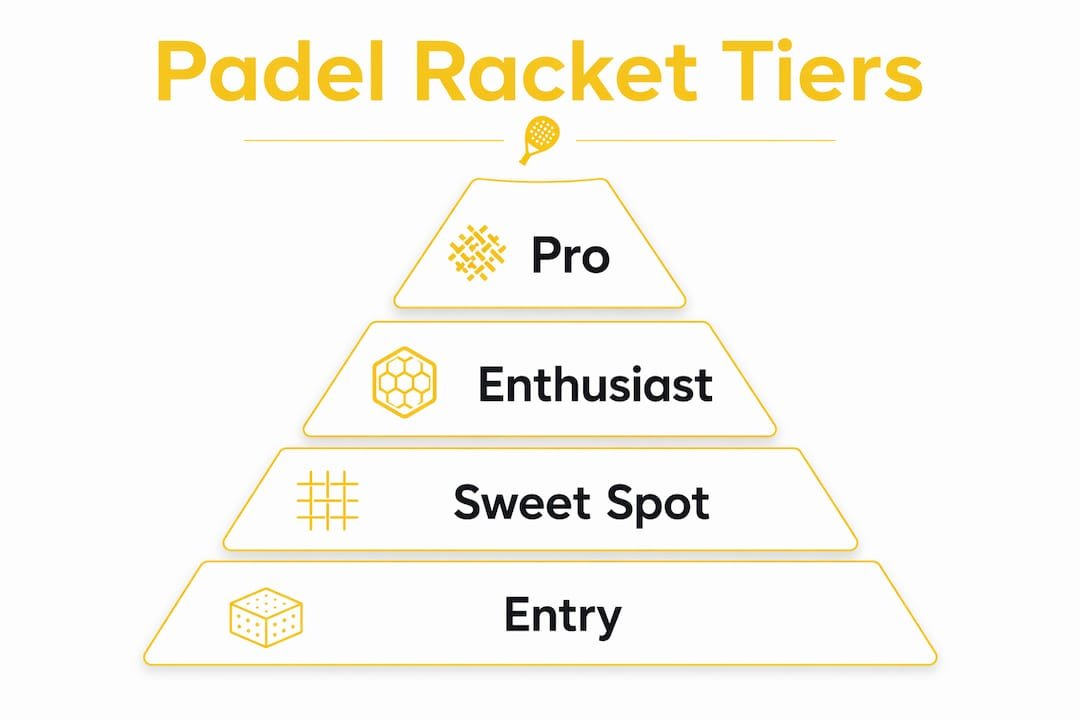
Pro ($300+): High-weave carbon faces (18K, 24K weave counts), the firmest EVA cores, and tight manufacturing tolerances. These rackets are built for players who can exploit the power and spin ceiling. For anyone still developing technique, the smaller sweet spot and stiff response will hurt more than help.
| Tier | Typical U.S. Price | Face Material | Core | Best For |
|---|---|---|---|---|
| Entry | Under $100 | Fiberglass | Soft foam | Beginners |
| Sweet spot | $100–$200 | Carbon | EVA | Recreational / intermediate |
| Enthusiast | $200–$300 | Multi-layer carbon | Dense EVA | Consistent intermediates |
| Pro | $300+ | High-weave carbon | Firm EVA | Competitive players |
Why do padel rackets cost what they do?
Three things drive most of the price difference: the face material, the core foam, and how complex the frame is to build.
Carbon vs. fiberglass: Carbon fiber faces cost more to source and require tighter quality control during layering. The weave count (12K, 18K, 24K) refers to how many carbon filaments are woven per unit, and higher counts produce stiffer, more responsive faces. Fiberglass is cheaper to process and more forgiving of manufacturing variation, which is why it dominates the entry tier.
Core foam: Soft foam cores (sometimes called “Core Foam” in brand literature) are stable and comfortable but offer a lower performance ceiling. EVA foam, particularly higher-density variants, gives better energy return and a livelier feel. The density and thickness of the EVA layer directly affect both cost and how the racket plays.
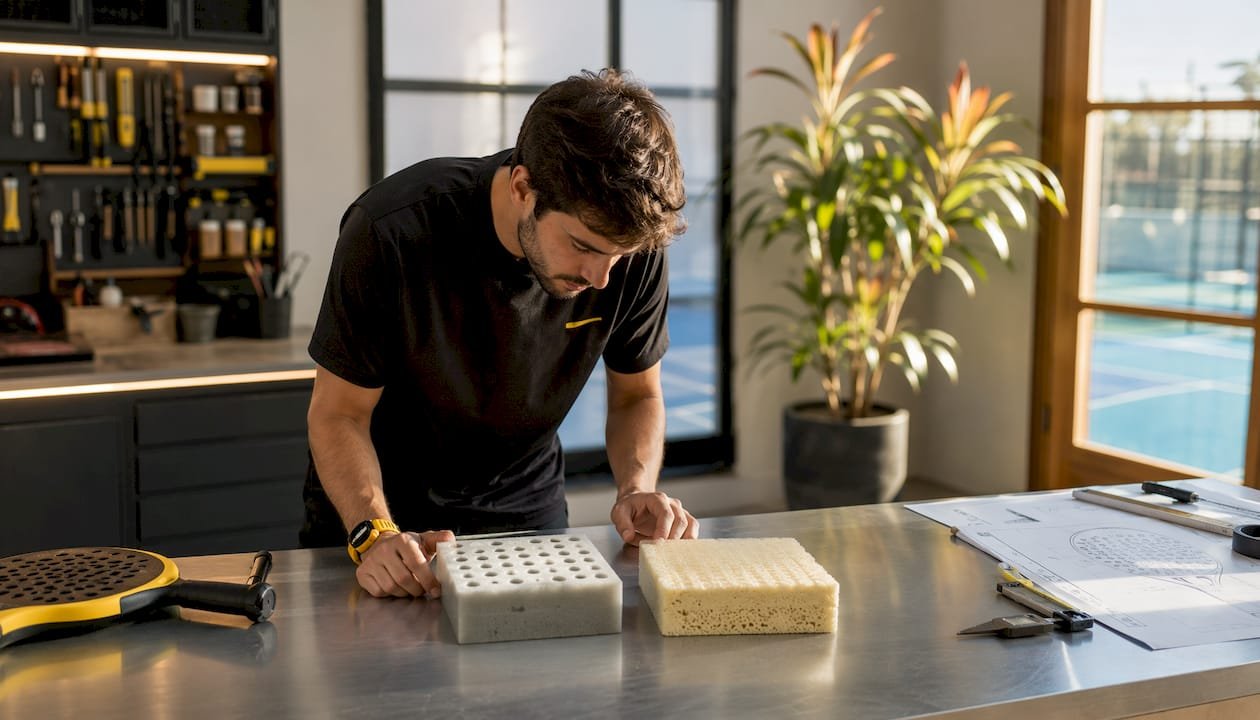
Frame construction and surface treatments: Textured or roughed surfaces add spin potential but require additional processing steps. Proprietary tech (anti-vibration systems, specific hole patterns) adds licensing and tooling costs. A racket with a textured carbon face, anti-vibration frame, and a precision-drilled hole pattern costs more to build than a smooth fiberglass frame with a standard pattern.
Pro Tip: If you’re deciding between a better frame material and a better grip or ergonomics, go with the frame. You can replace a grip for a few dollars. You can’t change the face material after purchase. And if you’re unsure about weight, start lighter: adding weight with lead tape is straightforward, but removing weight from a heavy frame isn’t possible.
How do you match a racket to your skill level and style?
Shape, weight, and core hardness matter more than brand name. Here’s how to think through each variable based on where you are in the game.
-
Beginners: round shape, under 360g, soft core. A round shape puts the sweet spot in the center of the face, which is exactly where new players make contact most often. Experts recommend prioritizing forgiveness over power at this stage. A soft core absorbs mishits rather than punishing them. Spend under $100 or in the low end of the $100–$200 range.
-
Intermediates: teardrop or balanced shape, 355–370g. A teardrop shape shifts the sweet spot slightly higher, adding power without fully sacrificing control. The $100–$200 tier gives you genuine carbon faces and EVA cores at this level. If you’re playing consistently two or more times per week, this is your bracket.
-
Advanced players: diamond or teardrop, 360–375g, firm EVA. Diamond shapes push the sweet spot toward the top of the frame, maximizing power for players who can consistently hit that zone. A racket optimized for power at this level has a smaller sweet spot and a firmer core that rewards precise timing. If your technique isn’t there yet, a high-end frame will expose errors, not hide them.
-
Weight and fatigue: Beginners commonly prefer 340–360g, while tournament players often use 360–375g. Heavier frames add power but increase arm fatigue over a long session. If you’re unsure, go lighter. You can always add weight with overgrip or lead tape later.
-
Body and conditioning: Players with prior shoulder or elbow issues should lean toward softer cores and lighter frames regardless of skill level. A firm, heavy racket amplifies vibration through the arm.
-
Testing before buying: When demoing a racket, swing it for at least 15 minutes before deciding. Check how your arm feels at the end, not just at the start. Notice where on the face you’re making contact. If you’re consistently hitting off-center, the shape or balance isn’t right for your swing.
For a deeper look at how shape affects sweet spot and control, the padel racket shape guide at Padelhip covers the geometry in detail.
Where should U.S. buyers shop to get the best deal?
The U.S. padel market has grown fast, and with that growth has come a wider range of sellers, not all of them trustworthy.
- Authorized retailers vs. third-party marketplaces: Gray-market imports and counterfeits are common on large third-party platforms. Buying from an authorized retailer protects your warranty and gives you a real return path if the racket arrives damaged or isn’t what was advertised.
- Timing sales: New model releases typically happen in late fall and early spring. The weeks after a new model drops are the best time to buy the previous version at a discount. Holiday sales (Black Friday, end-of-year) and end-of-season clearances are the other reliable windows. U.S. retailers commonly list recent models in the $150–$400 range, with periodic discounts of 20–40% on prior-year models.
- Refurbished and last-season models: A last-season flagship from a major brand is often a better buy than a current-season entry model. The materials are superior; only the colorway is old.
- Total cost: Factor in a replacement grip ($5–$15), a protective cover if one isn’t included ($15–$30), and shipping. Some international sellers offer better prices but add duties and longer delivery times. Know the full landed cost before you commit.
- Verifying authenticity: Check that the seller is listed on the brand’s official authorized dealer page. Look for a serial number on the frame. If a deal looks too good for a current flagship, it probably is.
Recommended picks by budget tier
These are Padelhip-curated picks across the main price tiers, chosen for price-to-performance at each level.
Entry tier (under $100): The Adidas Match Light 2026 is a clean starting point. Round shape, fiberglass construction, light enough that new players won’t fatigue mid-session. No frills, which is exactly right for someone still building swing mechanics. The Adidas Match Black/Lime 2026 is a close alternative with the same beginner-friendly profile and a slightly different balance point.
Mid-range ($100–$200) — Publisher Pick: The Head Speed Motion sits in the sweet spot for recreational players moving past the beginner stage. Carbon face, EVA core, balanced shape. It handles well without demanding the precision that a diamond frame requires. For players who want a step up in power, the Bullpadel Vertex Advance 26 brings a diamond shape and carbon frame into the intermediate-to-advanced range.
Enthusiast to pro ($200–$300+): The Babolat Air Vert is a lightweight carbon teardrop built for advanced players who want fast reaction speed at the net. The Royal Padel EFE Extreme 2026 goes further into pro territory with a high-performance carbon fiber diamond shape and EVA core tuned for maximum power output.
| Pick | Tier | Shape | Best For |
|---|---|---|---|
| Adidas Match Light 2026 | Entry (under $100) | Round | New players |
| Head Speed Motion | Sweet spot ($100–$200) | Balanced | Recreational / improving |
| Bullpadel Vertex Advance 26 | Enthusiast ($200–$300) | Diamond | Consistent intermediates |
| Babolat Air Vert | Advanced | Teardrop | Net players, fast hands |
| Royal Padel EFE Extreme 2026 | Pro ($300+) | Diamond | Competitive / tournament |
Brand examples by price tier in the U.S.
Wilson, Head, Bullpadel, Adidas, Babolat, NOX, and Slazenger all offer models across multiple tiers. The brand name alone doesn’t tell you where a specific racket sits; the model and its materials do.
Wilson covers the full range. Entry models like the Optix V1 use fiberglass and low-density foam, explicitly designed for beginners. The Blade series steps up to carbon and EVA for intermediate and advanced players, with the Blade Pro V3 targeting power hitters at the top of the range.
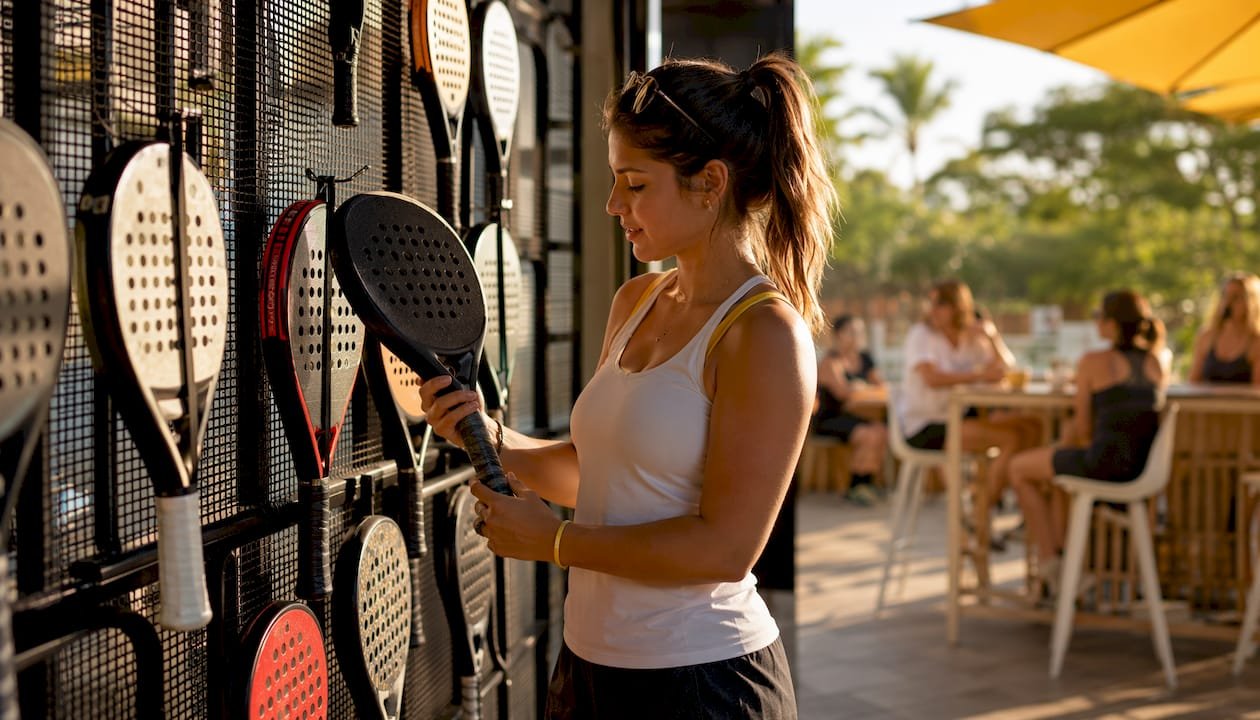
Head places models like the Speed Motion in the accessible mid-range and reserves its Extreme Pro line (including the Arturo Coello edition) for competitive players. The Extreme Pro sits firmly in the $300+ bracket with pro-level diamond carbon construction.
Bullpadel is well represented across tiers. The Vertex Advance 26 targets intermediates with a carbon diamond frame, while the Vertex JR 25 serves junior players with a size and weight appropriate for youth development.
Adidas keeps several models in the entry-to-mid range, making it a reliable brand for players who want a recognizable name without a premium price.
Babolat and NOX both concentrate their flagship models in the $200–$350 range, with construction and specs aimed at consistent intermediate and advanced players.
Slazenger tends to occupy the more accessible end of the market, with models that suit beginners and casual players looking for a low-commitment entry point.
Online vs. in-store prices in the U.S.
Online retailers generally offer lower prices than physical specialty stores, but the gap is smaller than most buyers expect. A racket listed at $180 online might sit at $195–$210 in a brick-and-mortar shop, reflecting the overhead of floor staff, demo inventory, and physical retail space.
The real advantage of buying in-store isn’t price. It’s the ability to hold the racket, check the grip size, and sometimes demo it before committing. For a first purchase, that hands-on check is worth a modest price premium. For a second or third racket, when you already know your preferred weight and balance, buying online from an authorized retailer is usually the smarter move.
International online retailers can offer lower sticker prices, but additional costs like shipping, duties, and lack of local warranty often reduce the savings.
Key Takeaways
The $100–$200 tier delivers genuine carbon construction and real EVA cores, making it the best value bracket for most U.S. recreational players regardless of brand.
| Point | Details |
|---|---|
| Best value tier | The $100–$200 range offers carbon faces and EVA cores — the sweet spot for most recreational players. |
| Beginners: stay light and round | Round shapes and soft cores forgive mishits; overspending on a power frame slows skill development. |
| Time your purchase | Prior-year flagship models drop 20–40% during seasonal clearances — better materials for mid-range money. |
| Buy from authorized sellers | Gray-market listings risk counterfeit frames and void warranties; verify the seller before purchasing. |
| Padelhip picks | Padelhip carries curated options from entry to pro tier, including the Head Speed Motion and Bullpadel Vertex Advance 26, with authentic inventory and easy returns. |
The case for spending less than you think you need to
Most players who walk into a padel purchase overestimate how much racket they need. The marketing around high-end frames is compelling, and the specs sound impressive. But a racket optimized for advanced power has a smaller sweet spot and a firmer core that rewards precise timing. For a player still developing consistency, that’s a liability, not an asset.
The $100–$200 tier isn’t a compromise. It’s where genuine performance materials meet a price that doesn’t require you to commit before you know what you actually want from the game. Last-season flagships from brands like Head, Bullpadel, and Babolat regularly land in this band during clearance, which means you’re often getting pro-grade construction at a recreational price.
The one place players consistently underinvest is footwear. A proper pair of padel shoes does more for your game than a $50 racket upgrade. Budget accordingly.
Shop padel rackets at Padelhip
Padelhip carries authentic padel rackets across every price tier, from beginner-friendly entry frames to pro-level carbon builds, all shipped directly to U.S. buyers with easy returns and no guesswork about authenticity.
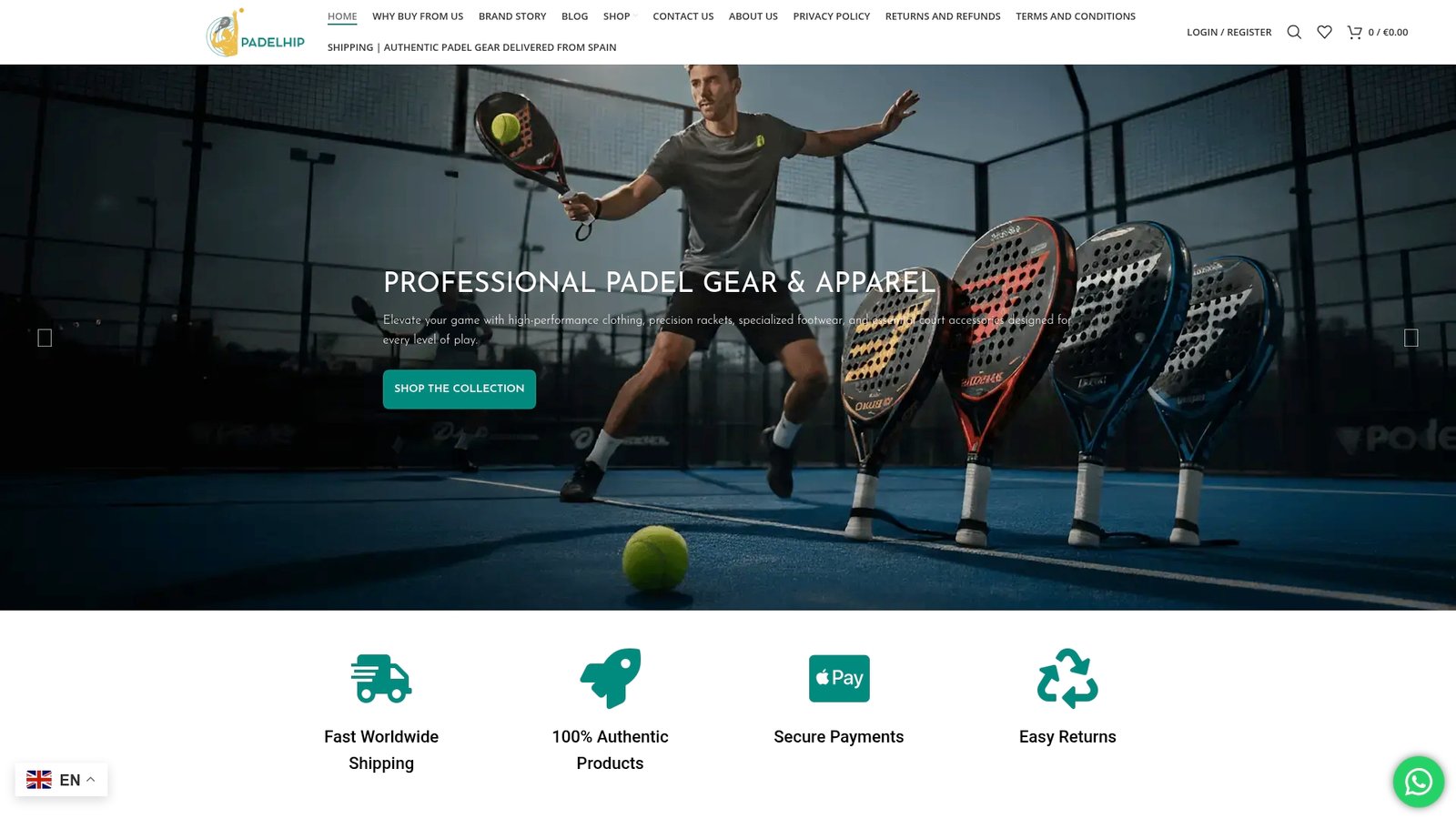
Every racket in the catalog is 100% authentic, sourced directly from the brands, and backed by a clear return policy. Whether you’re picking up your first racket or upgrading to a carbon teardrop for faster net play, the full racket catalog at Padelhip has options at every budget. For players factoring in the full kit, Padelhip also covers shipping details and authenticity guarantees so you know exactly what to expect before checkout.
Useful sources
- How to Choose a Padel Racket: 2026 US Buyer’s Guide — Padel Browser: Price tier definitions, beginner guidance, and authenticity warnings used throughout this guide.
- How to Choose a Padel Racket for Your Skill Level — Bounce: Material and core comparisons, manufacturing cost context.
- How to Choose a Padel Racquet — HEAD: Weight and balance guidance, including typical weight ranges by player level.
- Padel Racket Buying Guide — Racket Rise: Practitioner advice on weight adjustability and lead tape as an upgrade path.
- How to Choose a Padel Racket — Wilson Sporting Goods: Model-level guidance on core foam types and shape recommendations by skill level.
- Padel Rackets — Tennis Warehouse: U.S. retail price listings and seasonal discount patterns.
Recommended
- Choosing the Right Padel Racket Shape: A Complete Guide – Your online Padel store- Padel Hip-Premier padel shop
- Adidas Arrow Hit Junior Pink/Blue 2026 Padel Racket for Kids – Lightweight Junior Racquet with Soft Foam Core and Easy Control for Beginners – Your online Padel store- Padel Hip-Premier padel shop
- ACA Roqueta Padel Racket 2026 – Lightweight Control Racket for Beginners – Your online Padel store- Padel Hip-Premier padel shop
- Adidas Match Black/Lime 2026 Padel Racket for Beginner Players – Lightweight Fiberglass All-Round Racquet with Soft EVA Core and Large Sweet Spot – Your online Padel store- Padel Hip-Premier padel shop
One thought on “Padel Racket Prices: What to Buy at Every Budget”