

Spend 30–40% on Shoes: What to Wear for Padel and Why

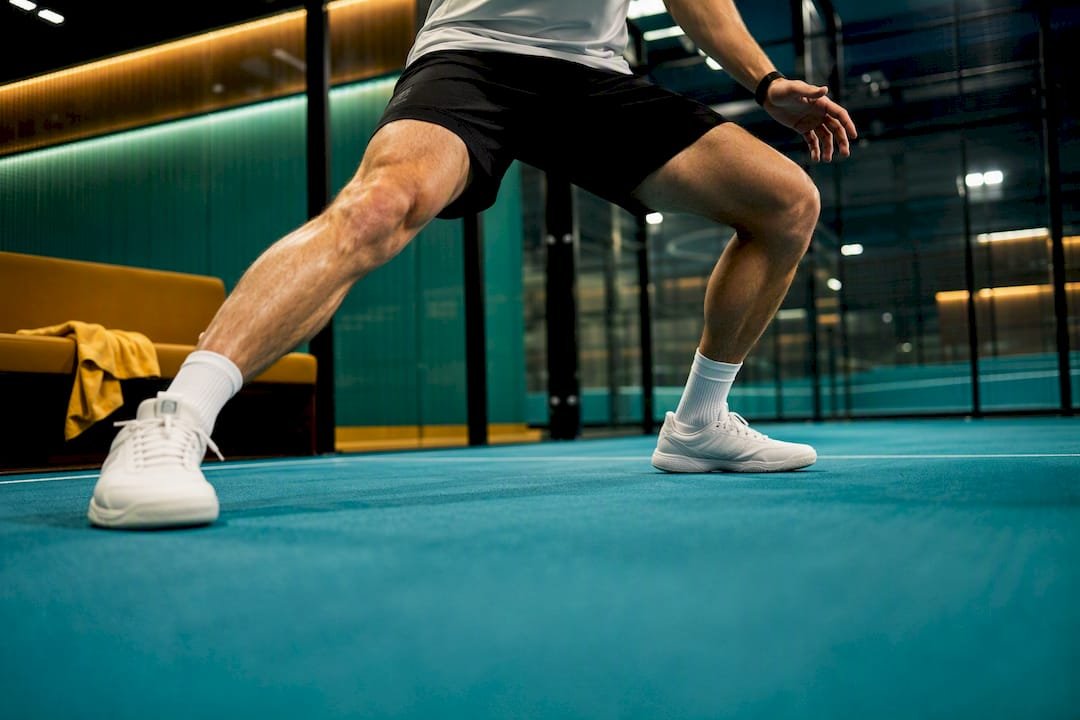
Prioritize three things: court shoes with non-marking, sand-releasing soles for lateral support, moisture-wicking polyester-elastane clothing, and a bottom with a secure pocket for your spare ball. Tennis kit works fine as a substitute in most cases, but skip anything 100% cotton. If you only fix one thing before your next session, make it footwear.
TL;DR:
- Proper court shoes with non-marking soles and reinforced sides are essential to prevent ankle rolls and withstand frequent lateral cuts during padel play.
- Moisture-wicking polyester-elastane clothing with secure pockets for balls enhances performance and prevents distractions on the court.
- Wearing tightly fitted, weather-appropriate layers avoids fabric catching wind or interfering with swings, especially in cold or windy conditions.
- Packing essentials such as water, towels, spare grips, extra shirts, and quick-repair kits ensures readiness and avoids mid-match disruptions.
- Prioritize buying quality footwear and rackets first, as they critically impact stability and performance, before investing in outfit changes.
Table of Contents
- What to Wear for Padel: Footwear Comes First
- Clothing by Piece: Tops, Bottoms, and Women’s Options
- Seasonal Layering: Hot, Cold, Indoor, and Windy Days
- What to Pack in Your Bag Beyond Clothes
- Your Pre-Match Checklist Before You Walk Out the Door
- Why This Advice Holds Up on Real Courts
- One Weekly Player’s Actual Kit
- Where to Buy Your Padel Kit
- Sources
What to Wear for Padel: Footwear Comes First
Shoes are the one purchase that actually changes how you play, not just how you look. Padel involves constant lateral cuts, quick stops, and sudden direction changes that running shoes were never built to handle. A running shoe’s cushioning sits too high off the ground and its sole flexes in the wrong places, so your ankle rolls exactly when you need it to hold firm.
Court shoes fix this with a low-to-medium profile, a wider base, and reinforced sides that resist the sideways load of a split-step recovery. Look for a reinforced toe box too. Padel players drag their front foot on wide lunges, and a flimsy toe cap wears through in a matter of weeks.
Almost every indoor and outdoor club requires non-marking soles, and staff often check at the door before letting you on court. The giveaway is usually a pale gum-rubber outsole rather than a dark, hard rubber tread that leaves streaks. Bring the wrong shoes and you may get turned away entirely, so this isn’t a detail to guess on.
Outsole pattern matters as much as the rubber itself. Herringbone and omni patterns are built to release the sand infill used on artificial turf courts, which keeps your grip consistent point after point. Indoor courts with less sand and harder surfaces can tolerate a slightly different tread, which is why it’s worth checking indoor versus outdoor shoe differences before you buy.
If you already own tennis shoes, they’re a reasonable stand-in, since tennis and padel court shoes share similar demands for lateral stability and non-marking soles. Just confirm the sole is genuinely light-colored and non-marking rather than a generic gym trainer.
A few fit checks before you commit to a pair:
- Try them on with the socks you’ll actually wear to match, not thin dress socks.
- Push off hard to each side in the shop or at home to feel for heel slip.
- Give leather or synthetic uppers a short walk-in period rather than debuting them in a two-hour match.
Pro Tip: Buy shoes half a size up from your street size if you play in warmer climates. Feet swell during long sessions, and a snug toe box turns into blister territory by the second set.
Clothing by Piece: Tops, Bottoms, and Women’s Options
Fabric matters more than cut. Polyester-elastane blends, typically 10 to 15 percent elastane, pull sweat away from your skin and stretch through a full lunge without binding. Cotton does the opposite: it soaks up moisture, gets heavy, and stays wet against your skin for the rest of the session. Coaches consistently steer players away from cotton tees and hoodies for exactly this reason.
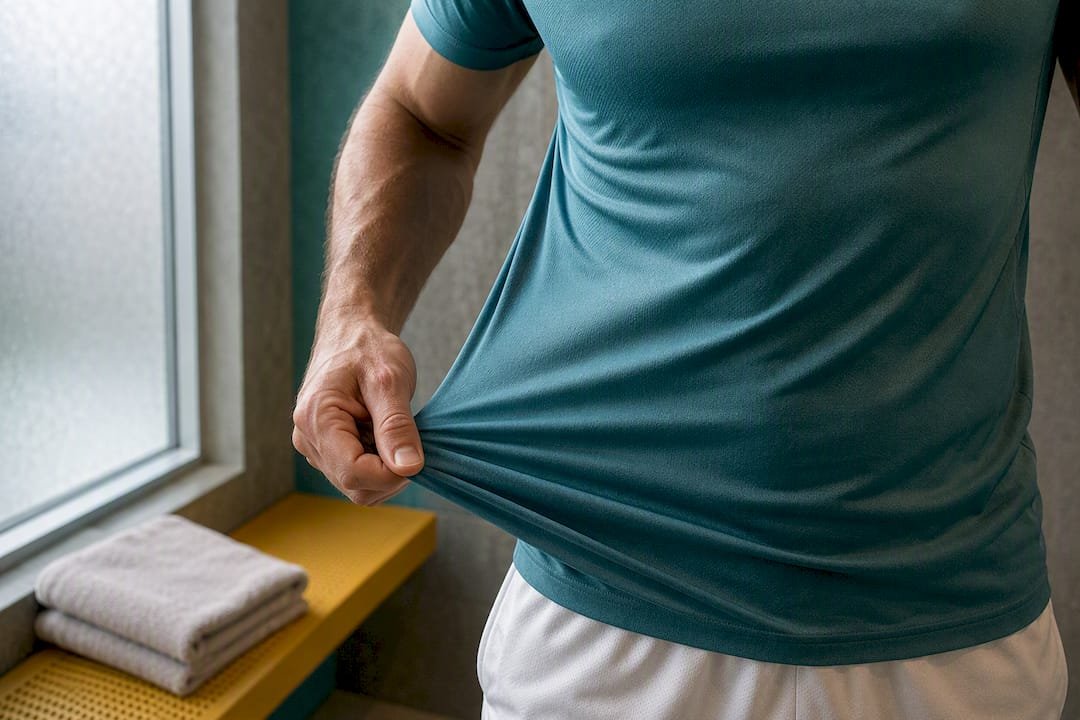
For tops, a technical tee, tank, or polo all work, and the choice mostly comes down to personal preference and climate. Women playing at higher intensity should look for medium-to-high-impact sports bra support, since padel’s stop-start movement puts more strain on chest support than steady-state running does.
Bottoms are where padel gets specific. A secure pocket for a spare ball isn’t a nice-to-have, since a shallow or unzipped pocket will drop the ball mid-lunge at the worst possible moment. Your options:
- Shorts with a zip or deep pocket, the simplest choice for most players.
- Skorts with a built-in ball pocket, popular for their coverage and fast access. Browse padel skorts and shorts if you want options built specifically around this feature.
- Leggings or compression tights, better for cold weather or players who prefer full coverage; check leggings sized for padel movement before you buy, since a snug but restrictive fit will fight you on every lunge.
Before you check out, raise both arms overhead in the fitting room or living room. If the hem rides up past your waistband or the shoulder seam pulls, size up. Flat-locked seams also cut down on chafing during long rallies, a detail worth checking on any technical top.
If you’re heading straight from the court to lunch afterward, a coordinated set in one or two colors reads as put-together without any extra effort. Court-to-cafe outfit pairing is trending for exactly that reason: performance fabric that still looks intentional once you’ve toweled off.
Seasonal Layering: Hot, Cold, Indoor, and Windy Days
Layering in padel is about managing heat without ever wearing something loose enough to catch a swing. The base system: a moisture-wicking layer against your skin, a zip mid-layer you can open mid-rally, and a packable wind jacket for the warm-up only.
- Indoors: go lighter than you think you need. Indoor courts trap heat fast, and a mid-layer that felt fine outside becomes a liability by game three.
- Cold weather (below roughly 5°C): a merino or synthetic base layer plus thermal leggings keeps you warm without restricting your swing, and a warm-up jacket you can shed once you’re moving handles the first five minutes.
- Wind and sun: fitted tops beat anything loose or flappy, since loose fabric catches wind and distracts your peripheral vision. Add a cap or visor plus sunscreen for any outdoor booking.
What to Pack in Your Bag Beyond Clothes
A handful of small items make a bigger difference than most players expect over a 60 to 90 minute session.
- Water bottle and a towel, non-negotiable in both indoor heat and outdoor sun.
- A spare overgrip or two, since a sweaty handle mid-match is a real problem, not a minor annoyance.
- A tube of balls and a full change of shirt for anything longer than one match.
- Wristbands or a headband if you sweat heavily, plus cushioned socks in synthetic or merino blends to cut down on blisters.
- A tiny kit of spare laces, scissors, and a couple of plasters for on-court repairs.
A bag with a separate shoe compartment and a thermal racket pocket keeps sweaty shoes away from clean clothes and protects your racket from temperature swings in the trunk of your car.
Your Pre-Match Checklist Before You Walk Out the Door
Run through this in order, and you’ll rarely forget something that actually matters mid-warm-up.
- Shoes on, laced, and checked for wear on the toe drag area.
- Match socks, not the thin ones from your work drawer.
- Racket packed, or confirmed you’re borrowing one from the club.
- Balls, water bottle, and a towel in the bag.
- Spare shirt for anything past a single set.
- Sunscreen and a cap for outdoor daytime bookings, or a thermal layer for cold evenings.
Arrive 10 to 15 minutes early. That’s enough time to double-check your shoes, get a proper warm-up in, and avoid rushing onto court cold, which is when most avoidable strains happen.
Why This Advice Holds Up on Real Courts
Padelhip built this guide around what actually gets enforced at the net and checked at the front desk, not generic sportswear trends. Padelhip stocks court-tested shoes, ball-pocket bottoms, and the small accessories that solve real on-court problems, backed by fast shipping and straightforward returns. Before you order, run your measurements through the padel clothing sizing guide so your first pair of shorts or shoes fits on arrival. Every recommendation here reflects the non-marking sole rules and fabric guidance clubs and coaches already enforce.
One Weekly Player’s Actual Kit
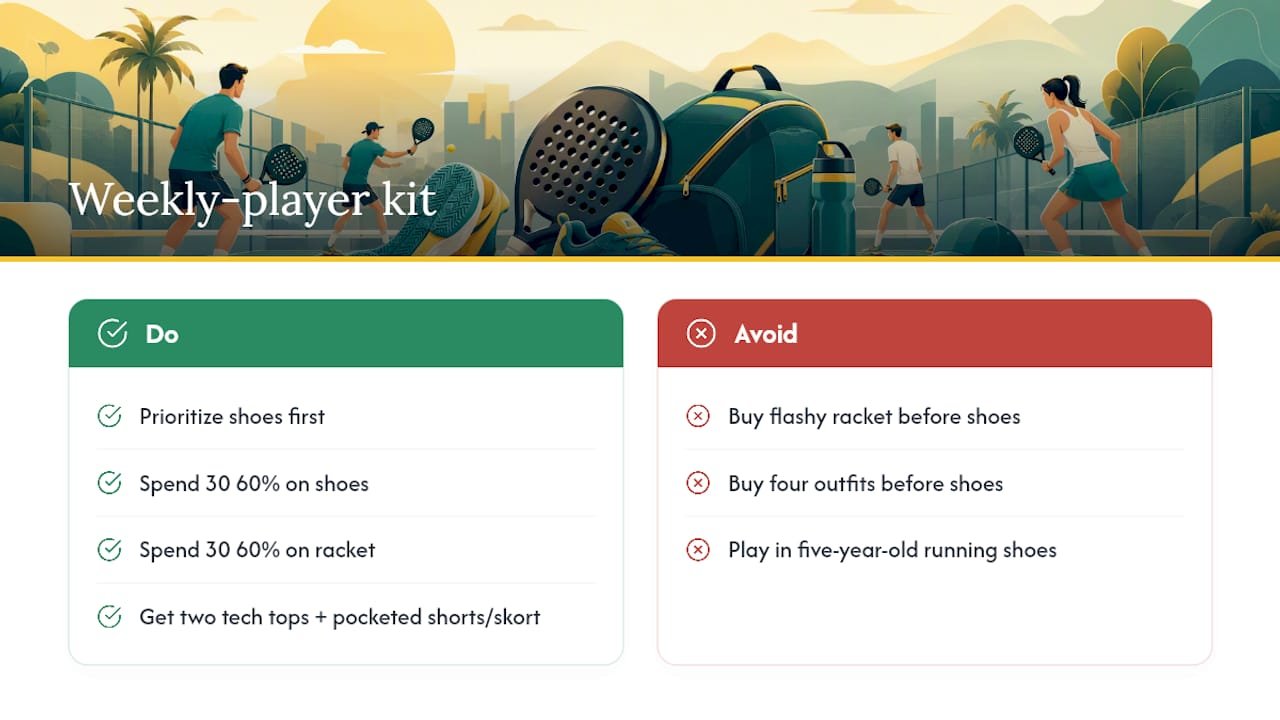
If I were building a bag from scratch for someone playing once a week, I’d spend roughly 30 to 40 percent of the budget on shoes, another 30 to 40 percent on a mid-range racket, and the rest on two technical tops plus a pair of shorts or a skort with a real pocket. Skip the temptation to buy four outfits before you own one good pair of shoes.
The biggest mistake I see recreational players make isn’t fashion, it’s sequencing. They buy a flashy racket and play in five-year-old running shoes, then wonder why their ankle feels unstable on wide balls. Fix the feet first. Everything else is easier to upgrade later, and cheaper to get wrong.
— Serena
Where to Buy Your Padel Kit
Padelhip carries the exact categories covered here, court shoes, ball-pocket shorts and skorts, and the small accessories that actually get used, all shipped with straightforward returns if the fit isn’t right.
Start with the padel shoe selection if your current pair is past its prime, or check the full shoe and apparel range alongside shorts built for ball pockets. Run your measurements through the sizing guide first, then head to the Padelhip store to check current stock and place your order before your next booking.