

Fix Racket Slipping in Two Sessions: Overgrips for Sweaty Hands

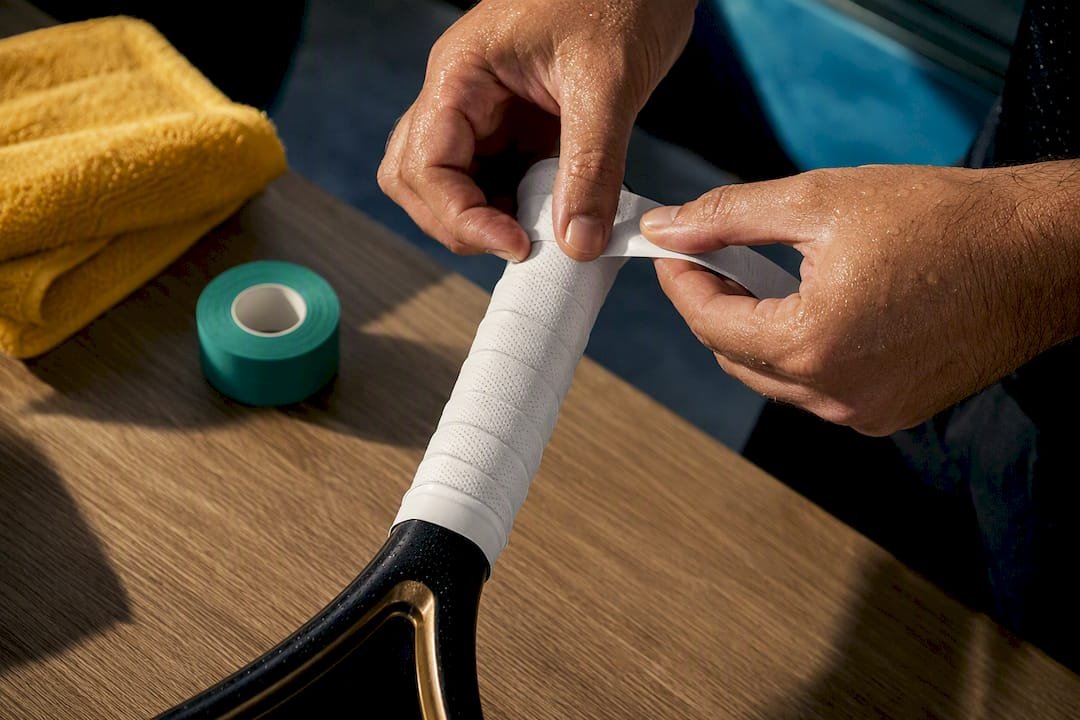
If your hands sweat through a set, reach for a dry-feel absorbent overgrip like Tourna Grip first, and carry a rosin bag or micro-towel as backup. If you’d rather keep a tackier feel, a moisture-resistant option like Yonex Super Grap holds up almost as well. Test whichever one you pick over two full sessions before judging it. Padelhip’s gear guides, including this one from Serena, are built around exactly that kind of quick, practical test.
TL;DR:
- Using a dry-feel absorbent overgrip is ideal for heavy sweaters because it becomes tackier as it absorbs moisture but wears out faster.
- Tacky moisture-resistant grips last longer under sweat but may lose some stickiness after fully saturating, making them suitable for moderate to lighter sweaters.
- Proper wrapping, including consistent overlap and controlled tension, is crucial to prevent grip slipping mid-match regardless of grip type.
- Testing both grip categories over two full sessions helps players identify their preferred feel and durability trade-offs before committing long-term.
- Buying multi-packs of overgrips, along with accessories like rosin or grip powder, ensures better durability and quick solutions for in-match grip emergencies.
Table of Contents
- Why Sweaty Hands Change How Overgrips Perform
- What To Look For When Choosing A Grip For Sweaty Hands
- How To Wrap A Grip So It Doesn’t Slip Mid-Match
- Managing Sweat During Play And Keeping Grips Fresh
- The Approach Padelhip Recommends For Sweaty Hands
- Serena’s Practical Notes From Testing These Grips
- Building A Starter Kit With Padelhip
- Sources
Why Sweaty Hands Change How Overgrips Perform
Overgrips fall into three rough categories, and sweat treats each one differently. Dry, absorbent grips like Tourna Grip start out feeling almost paper-like and get grippier the more moisture they soak up. Tacky grips like Yonex Super Grap lean the opposite way: they’re sticky from the first wrap and rely on resisting moisture rather than absorbing it. Textured or corded grips add raised patterns or fabric threads for mechanical grip, which matters less for sweat control and more for players who want tactile feedback through the handle.
The trade-offs show up fast once you’re a few games into a humid match. A dry-feel grip that gets grippier as it saturates is the closest thing to a cheat code for heavy sweaters, but that same absorbency means it breaks down quicker and needs replacing more often. A tacky, moisture-resistant grip like Super Grap tends to last longer under the same sweat load, though players sometimes notice it losing a bit of stick once it’s fully soaked through. Textured grips split the difference on feel but don’t solve moisture problems on their own, so they’re rarely the right pick for someone whose main issue is a slipping racket.
Durability by grip type, roughly:
- Dry/absorbent grips (Tourna Grip style): shorter lifespan in humid conditions, often good for around 3 matches before wear becomes noticeable.
- Tacky/moisture-resistant grips (Super Grap style): tend to last longer under moderate sweat, sometimes stretching to 8 to 12 hours of play.
- Textured/corded grips: durability varies more by construction quality than by sweat exposure specifically.
Match-play testers consistently put Tourna Grip and Super Grap at the top of the pile for sweaty conditions, precisely because they solve the moisture problem from two different directions. Climate plays a bigger role than most players expect, too. Durability estimates that sound generous on a cool autumn evening can shrink dramatically during a humid summer tournament, so factor your local conditions into which category you lean toward, not just your hand’s sweat level.
What To Look For When Choosing A Grip For Sweaty Hands
Not every spec on the packaging matters equally once your hands start sweating mid-match. Some properties decide whether you keep control of the racket; others just affect how the handle feels in your palm.
- Absorbency or tackiness first. Decide whether you want a grip that soaks up moisture (dry-feel) or one that resists it (tacky). This single choice matters more than any other spec on the list.
- Thickness. Thicker overgrips add cushioning and can feel more secure, but they also change your racket’s effective grip size, which matters if you’re already sizing carefully.
- Texture. Raised patterns help players who rely on tactile feedback, but a heavily textured surface can trap sweat in the grooves instead of channeling it away.
- Length and taper. A grip cut too short leaves the butt cap exposed and slick; one that isn’t tapered properly bunches up at the top, creating a ridge that shifts under a sweaty palm.
- Durability estimate. Match your expected replacement frequency to how you actually sweat, not to marketing copy that assumes moderate conditions.
- Pack economics. Heavy sweaters burn through grips faster, so a 3 or 6 pack of a proven option usually costs less per session than buying single grips repeatedly.
Priorities shift depending on how much you sweat. Heavy sweaters should weight absorbency and replacement frequency above everything else, even if it means sacrificing some feel. Moderate sweaters have more room to prioritize tack and texture, since they’re not fighting saturation every set. Players who care most about feel, especially in padel where touch shots depend on subtle wrist control, might accept a shorter grip lifespan in exchange for the tackiness they prefer.
Watch for a few red flags. “All-weather” or “moisture control” on packaging doesn’t guarantee performance in genuinely heavy sweat. It often just means the grip performs adequately in light humidity, not that it was built for players who soak through a grip in one set. Grip size claims can also mislead: an overgrip’s stated thickness assumes it’s wrapped over a standard base grip, so stacking it over a worn or swollen replacement grip throws off the numbers. If you’re unsure how grip diameter interacts with your hand size, a grip sizing guide is worth five minutes before you buy anything.
Pro Tip: Buy two different grip types in the same order, a dry-feel option and a tacky one, and test each for one full session. Most sweaty-handed players can tell within an hour which category their hands actually prefer.
How To Wrap A Grip So It Doesn’t Slip Mid-Match
The wrap itself matters almost as much as the grip material. A perfectly good overgrip applied loosely or unevenly will slip regardless of how absorbent it claims to be.
- Start with a clean base grip. Wipe down the existing replacement grip or factory grip before wrapping. Old sweat residue underneath your new overgrip will seep through and undermine even the best dry-feel material.
- Keep overlap consistent. Aim for roughly 1/8 inch of overlap on each wrap. Too little leaves gaps where the base grip shows through; too much builds uneven ridges that create pressure points against a sweaty palm.
- Control your stretch. Pull the grip taut but not to its limit. Overstretching thins the material and speeds up wear exactly where you need durability most.
- Taper the start. Cut a small diagonal angle at the beginning of the wrap so it lies flat against the butt cap instead of creating a lip that catches your palm on your first swing.
- Finish with tight, secure tape. A loose finishing wrap is one of the most common causes of a grip unraveling mid-match, especially once sweat softens the adhesive underneath.
On the question of layering: wrapping an overgrip directly over a fresh replacement grip works fine for most players, and it’s the standard setup. Double-layering, adding a second overgrip on top of the first, only makes sense if you want extra cushioning or your hands are unusually large for the handle. It’s rarely the fix for a slip problem; that’s almost always a material or wrapping issue, not a thickness one. For a clearer breakdown of when to replace the base grip entirely versus just refreshing the overgrip, this comparison walks through both scenarios.
Pair your setup with a few accessories from the start rather than adding them after you notice a problem:
- A wristband to intercept sweat before it runs down to your palm.
- A second racket, pre-wrapped, so a mid-match grip failure doesn’t cost you the set.
- An absorbent underlayer if your base grip itself tends to feel slick once you’re a set in.
Managing Sweat During Play And Keeping Grips Fresh
Even the right overgrip needs backup during a long match. Rosin bags give you an instant tack boost when you tap them against your palm between points, and they work on almost any grip type without leaving residue that damages the material. Grip powder does something similar but spreads faster and works well for players who sweat from the whole hand rather than just the fingers. A micro-towel clipped to your bag or waistband takes two seconds to use between points and resets your palm dry, which matters more in the third set than the first. Wristbands catch sweat before it ever reaches your hand, and they’re the cheapest fix on this list.
Replacement cadence depends heavily on how much you actually sweat, not on a fixed calendar schedule:
- Heavy sweaters: replace dry-feel grips roughly every match or two; tacky grips can often stretch closer to the 8 to 12 hour range.
- Moderate sweaters: dry-feel grips last several sessions; tacky grips can often run a couple of weeks of regular play.
- Light sweaters: either category holds up well, and replacement usually comes down to visible wear rather than moisture failure.
Storage matters more than most players realize. A grip left balled up in a damp bag between sessions breeds bacteria and starts smelling before it’s actually worn out. Let your racket air dry with the grip exposed after each session, and keep a spare towel in your bag specifically for wiping down the handle before you pack up. A dedicated padel towel built for quick-dry use beats a generic gym towel here, since cotton towels tend to stay damp and transfer moisture right back onto your next grip.
The Approach Padelhip Recommends For Sweaty Hands
Padelhip’s starting recommendation is simple: try a dry-feel absorbent overgrip first. It solves the actual problem, a slipping racket handle, faster than almost any other single change you can make. If the trade-off in durability bothers you, or you simply prefer a stickier feel from the first swing, move to a moisture-resistant tacky option instead. Both solve the same job differently, and neither is objectively wrong for every player.
The logic here is straightforward. The job-to-be-done isn’t “buy an overgrip,” it’s keep control of the racket when your hand is wet. A dry-feel grip does that by getting grippier exactly when you need it most, which is why it shows up so often in match-play testing as a top pick for heavy sweaters. The trade-off is wear speed, which is a cost you manage with pack economics, not a reason to avoid the category.
- If you sweat heavily and replace grips often anyway, start dry-feel and buy in bulk.
- If you value a longer-lasting grip and don’t mind slightly less tack once fully saturated, start tacky.
- If you’re not sure which you are, that’s exactly what the two-session test settles.
Pro Tip: Order a small mixed batch, a couple of dry-feel grips and a couple of tacky ones, and wrap a different type on each racket if you own more than one. You’ll settle the debate for your own hands faster than any review can settle it for you.
If neither works after a fair test, Padelhip’s returns process makes swapping approaches simple rather than something you’re stuck with.
Serena’s Practical Notes From Testing These Grips
What changes a match isn’t the grip brand, it’s whether you notice your racket shifting in your hand during a rally. That’s the tell. If you’re adjusting your grip between shots, the overgrip isn’t doing its job, regardless of what the label promises.
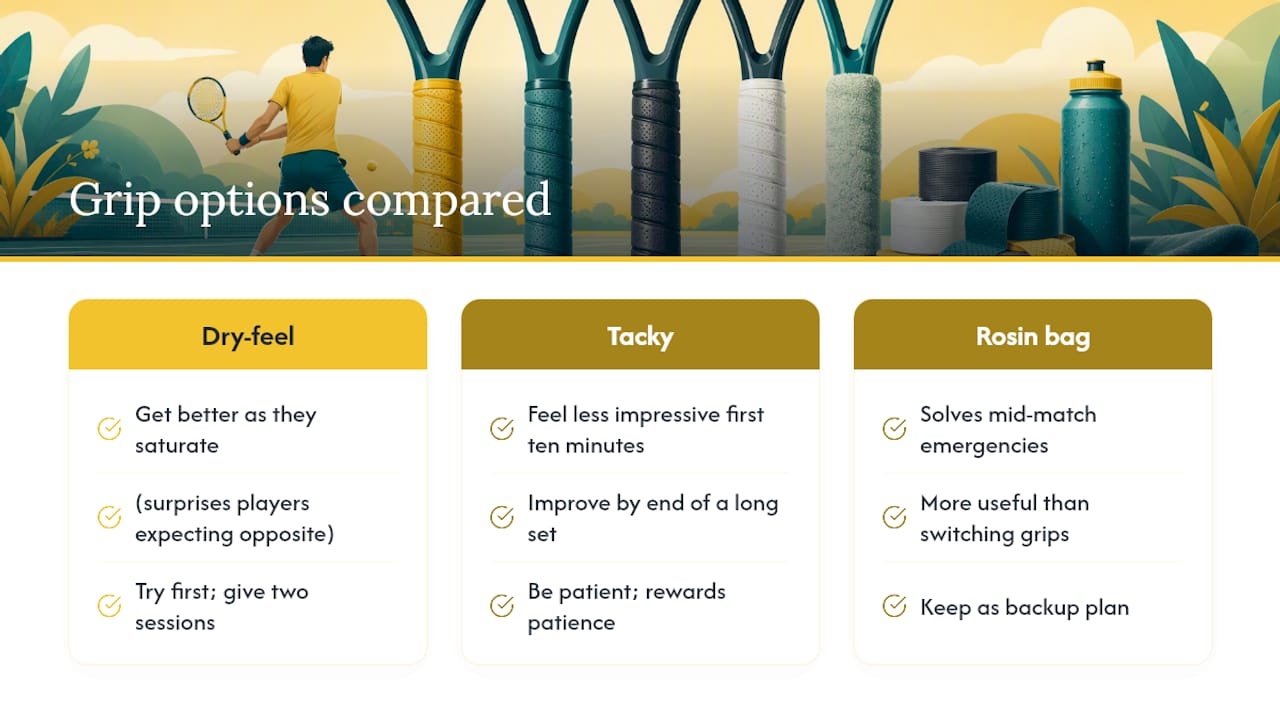
A few things stood out across testing sessions. Dry-feel grips genuinely do get better as they saturate, which surprises players expecting the opposite. Tacky grips reward patience. They feel less impressive in the first ten minutes and better by the end of a long set. And a rosin bag in your bag solves more mid-match emergencies than switching grips ever will.
If you only take one thing from this guide, it’s the same verdict from the top: try dry-feel first, keep a backup plan, and give it two sessions before you decide.
— Serena
Building A Starter Kit With Padelhip
Padelhip stocks the grip categories covered above alongside the accessories that make them work, towels, wristbands, and rosin or grip powder, so you’re not piecing together a solution from five different stores. Every order ships fast with straightforward returns, which matters here specifically: grip preference is personal, and you shouldn’t be stuck with a pack of overgrips that didn’t suit your hands.

A practical starter setup looks like this: a 3 to 6 pack of your chosen overgrip type, a quick-dry towel, and a rosin bag or grip powder for backup during matches. That combination covers both the long-term fix and the in-play emergency, which is the two-part approach that actually works for sweaty hands. Padelhip’s accessories selection has these grouped together if you’d rather browse a curated set than hunt for each piece individually.
The buying tip worth repeating: order the multi-pack, not a single grip. Heavy sweaters burn through overgrips fast enough that a single test grip won’t tell you much about long-term durability, and the per-unit cost drops noticeably once you buy in bulk. Browse the full range at Padelhip’s store and get your starter kit moving before your next session.
Sources
- 5 Best Overgrips for Sweaty Hands – Tested in Match Play (2026)
- Yonex Super Grap Overgrip | Tennis Warehouse