

Overgrip vs Replacement Grip: What Padel Players Need to Know

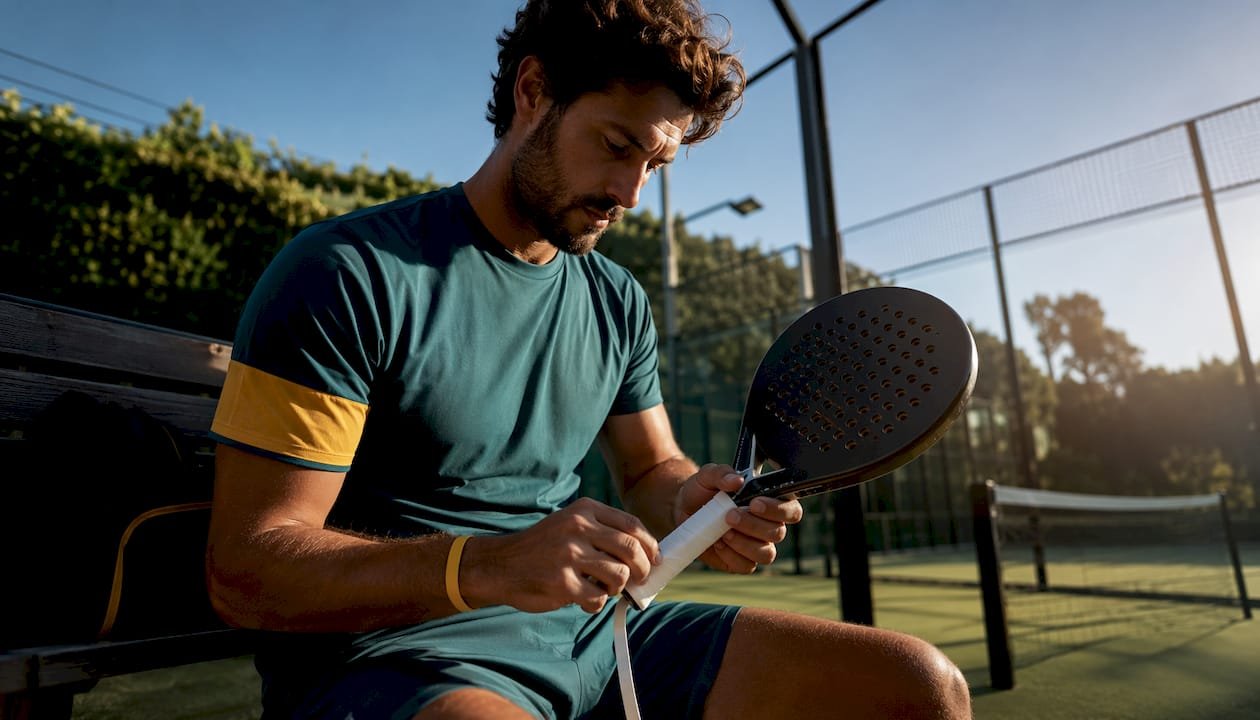
The best grip setup for padel is a two-layer system: a replacement (base) grip as the structural foundation, and an overgrip as the consumable layer you swap out regularly. Get that hierarchy right and your racket will feel consistent match after match.
When to use each:
- Replacement grip: Always present under everything else. It defines cushioning, handle shape, and shock absorption. Replace it when padding feels compressed or the handle shape has gone soft.
- Overgrip: The layer your hand actually touches. Replace it regularly depending on sweat and climate. If your hand slips, start here.
- Sweaty hands: A dry-feel or absorbent overgrip is your first fix. Don’t pull the base grip off just because your hand is sliding.
- Match setup: Fresh overgrip before every competitive match. Replace the base grip every 4–6 months for competitive players.
- Training setup: Overgrip every few sessions; base grip on a slower rotation.
If your handle feels wrong, change the overgrip first. Move to the base grip only if the problem persists after a fresh overgrip.
Table of Contents
- How do overgrips and replacement grips actually compare?
- When should you replace the overgrip vs the base grip?
- How to install and remove each grip correctly
- How often should you replace each grip?
- How do you choose the right grip setup for your game?
- Padelhip has the grips you need, shipped to your door
- Key Takeaways
- The grip layer most players get wrong
- Useful sources and further reading
How do overgrips and replacement grips actually compare?
| Dimension | Overgrip | Replacement Grip |
|---|---|---|
| Primary function | Sweat absorption, tack, feel customization | Cushioning, handle shape, vibration dampening |
| Feel / tackiness | Tacky or dry-feel; chosen by sweat profile | Softer PU or synthetic; not the contact surface |
| Thickness / grip size | ~0.6mm; one layer adds ~1/16" circumference | Thicker; defines the base handle geometry |
| Lifespan | 3–5 matches; shorter in humid conditions | 4–6 months for competitive players |
| Cost per use | Low per unit; higher turnover | Higher upfront; replaced less often |
| Best use case | Match play, sweaty hands, feel tweaks | Long-term structure, shock reduction, new racket setup |
| Installation | Quick wrap; no tools needed | Adhesive alignment required; more precision needed |
A few padel-specific notes worth keeping in mind:
- On humid indoor courts, overgrips saturate faster. Budget for more frequent swaps, not a different base grip.
- Playing without a base grip or on a bare pallet causes blisters and sends vibration straight into your arm.
- Stacking two overgrips to add size rounds off the bevels and kills your grip orientation feel. One overgrip for a small size bump; a thicker replacement grip for anything more.
- Think of the overgrip as sacrificial. It takes the abuse so the base grip doesn’t have to.
When should you replace the overgrip vs the base grip?
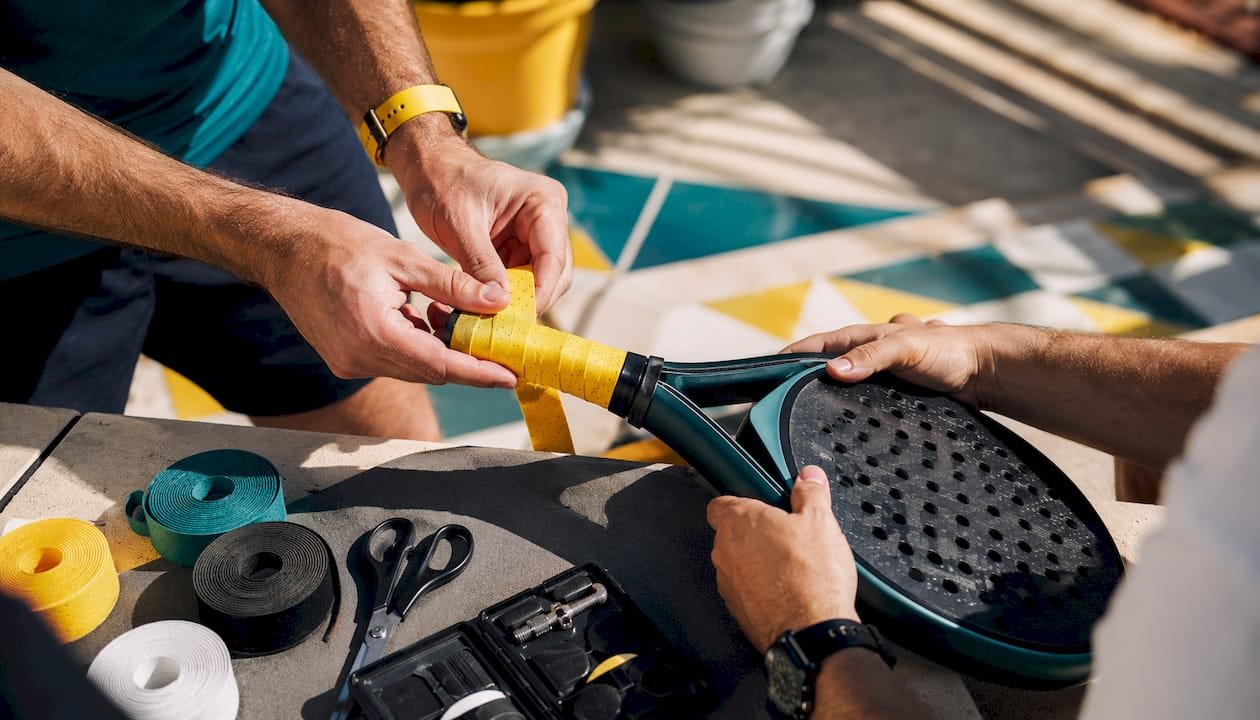
Most grip problems trace back to the overgrip, not the base. Sweat and oils degrade overgrip performance quickly, so the surface layer is almost always the first thing to address.
Replace the overgrip when:
- Your hand slips during rallies or on overhead smashes
- The surface feels smooth, shiny, or saturated
- You’re heading into a competitive match after several training sessions
- You play in a humid indoor club or during summer
Replace the base grip when:
- The padding feels flat or compressed even after a fresh overgrip
- You can feel the hard pallet edges through the grip
- The handle shape feels uneven or the bevels are hard to locate
- You’ve just bought a used racket and don’t know its history
Both at once when:
- You’re setting up a new racket from scratch
- You’ve had persistent hand fatigue or elbow discomfort that a new overgrip didn’t fix
Pro Tip: Before every match, squeeze the handle firmly and run your thumb along one bevel edge. If the cushioning feels flat or you can feel the pallet corner clearly, schedule a base grip replacement that week. If the surface just feels slick, a fresh overgrip is all you need.
How to install and remove each grip correctly
Overgrip installation
- Remove the old overgrip completely. Never wrap a new one over a worn, dirty layer.
- Start at the buttcap, adhesive side down, angling the tape slightly upward.
- Wrap with consistent tension, overlapping each pass by about 1/6 to 1/5 of an inch.
- Work toward the top of the handle, keeping even pressure throughout.
- Trim any excess and secure the end with the finishing tape included in the pack.
Removal is simple: peel from the top down and wipe the base surface clean before the next wrap.
Replacement grip installation
The process is similar in concept but demands more care. Poor installation can alter handle balance and shot consistency, so take your time or ask a coach to walk you through it the first time.
- Strip the old base grip and any adhesive residue from the pallet.
- Start at the buttcap, aligning the adhesive strip carefully before committing.
- Wrap with firm, even tension, keeping the overlap consistent all the way up.
- Secure the top with finishing tape and check that the bevels still feel distinct.
The single most common mistake: rushing the base grip installation and leaving gaps or uneven tension near the top of the handle. That’s where your index finger sits on a padel grip, and any irregularity there will mess with your feel on volleys and smashes. Take an extra two minutes to get it right.
What to keep in your padel bag: spare overgrips (at least three), scissors, finishing tape, and a dry cloth to wipe the handle before wrapping.
How often should you replace each grip?
Competitive players typically replace a base grip every few months; recreational players can stretch that longer if the padding still feels solid. Overgrips turn over much faster.
Wear signs at a glance:
- Overgrip: loss of tack, shiny or slick surface, visible saturation, peeling edges
- Replacement grip: compressed padding, pallet edges noticeable through the grip, uneven handle shape, persistent vibration despite a fresh overgrip
Budget illustration for U.S. players:
| Item | Typical U.S. price | Replacement frequency | Annual cost (estimate) |
|---|---|---|---|
| Overgrip (3-pack) | usually low-cost multipack | Every 3–5 matches | — |
| Replacement grip (single) | around average retail price | Every 4–6 months | — |
Overgrips are the higher-turnover cost, but each unit is cheap. Buying in multipacks reduces the per-use cost significantly, which is why bundles make sense for regular players. The base grip is the less frequent but more consequential purchase.
How do you choose the right grip setup for your game?
Work through these questions before you buy:
- How much do you sweat? Heavy sweaters should prioritize a dry-feel or absorbent overgrip. Drier hands do better with a tacky surface. Matching overgrip style to your sweat profile is the single biggest factor in overgrip selection.
- Match or practice focus? Tournament players need a fresh overgrip before each match. Training-focused players can go a few sessions between changes.
- Do you need more shock absorption? That’s a base grip question, not an overgrip question. A cushioned PU replacement grip handles vibration; an overgrip won’t fix a flat base.
- Is your grip size between factory sizes? One overgrip adds roughly 1/16" of circumference. That’s often enough. If you need more, a thicker replacement grip is the right move, not stacking two overgrips.
- Hot or humid conditions? High humidity shortens overgrip life noticeably. Plan to carry extras and swap mid-session if needed.
Quick profiles:
- Sweaty club player: Absorbent or dry-feel overgrip, standard PU base grip, swap overgrip every 3–5 matches.
- Tournament player: Fresh tacky overgrip before each match, quality cushioned base grip replaced every 4–6 months.
- Beginner on a starter racket: Keep the factory base grip, add one overgrip for feel and sweat control, replace the overgrip monthly or when it feels slick.
Pro Tip: If you’re unsure whether your grip size is right, wrap one overgrip and hold the racket in your playing grip. You should be able to fit one finger between your fingertips and your palm. Too much space means you need a thicker base grip, not more overgrip layers.
Padelhip has the grips you need, shipped to your door
Getting the two-layer system right starts with having the right products on hand before your next session, not scrambling at the court.

Padelhip stocks replacement grips and overgrip multipacks suited to every player profile, from the sweaty club regular who burns through overgrips every few matches to the competitive player who wants a reliable cushioned base. For U.S. buyers, Padelhip ships directly from Spain with fast delivery, 100% authentic products, and easy returns if something doesn’t fit your setup. A simple starting bundle: one quality replacement grip plus a 3-pack of overgrips covers you for a full season of training and gets you into the habit of treating each layer correctly. Browse the full grip selection and padel accessories at Padelhip and check shipping details for U.S. orders before you buy.
Key Takeaways
The most effective grip setup for padel treats the replacement grip as a semi-permanent structural layer and the overgrip as a consumable performance layer you swap out every few matches.
| Point | Details |
|---|---|
| Two-layer system | Always use a base grip under your overgrip; never play on a bare pallet or overgrip alone. |
| Overgrip is consumable | Replace after 3–5 matches; sooner in humid conditions or heavy-sweat play. |
| Base grip timeline | Competitive players should replace the base grip every 4–6 months; check for flat padding and exposed pallet edges. |
| Match sweat level first | Choose tacky overgrips for dry hands, dry-feel or absorbent overgrips for heavy sweaters. |
| Padelhip for U.S. players | Padelhip carries replacement grips and overgrip packs with fast U.S. shipping and easy returns. |
The grip layer most players get wrong
Most players obsess over overgrip brand and color while completely ignoring the base grip until it’s obviously destroyed. The base grip is where your racket’s shock absorption actually lives. A compressed, flattened base grip sends vibration straight up your forearm, and no overgrip, however tacky, fixes that.
The two-layer framing isn’t just a neat mental model. It changes how you shop and how you maintain your racket. Overgrips are a weekly or monthly decision. The base grip is a quarterly replacement for competitive players. When you budget and plan accordingly, you stop chasing the wrong fix when your handle feels off.
One more thing: if you’re picking up padel after years of tennis, the grip dynamics are similar but the sweat factor on indoor padel courts tends to be higher. Plan for faster overgrip turnover than you’re used to, especially in summer.
Useful sources and further reading
- Replacement Grip vs Overgrip: What’s the Difference? – Hesacore Grip
- Best Overgrips for Sweaty Hands in Padel – Padel.us
- Tennis Overgrip vs Replacement Grip: The Complete Guide – Sturdy Racquets
- Tennis Overgrip vs. Replacement Grip: Key Differences – ADV
- Guide to Overgrips vs. Replacement Grips – MyTennisLessons
- The Best Overgrips for Your Racquet – Tennisnerd.net
- What Are the Best Grips for Your Padel Racket? – The Padel Directory
- Browse replacement grips and overgrip packs at Padelhip
Recommended
- Choosing the Right Padel Racket Shape: A Complete Guide – Your online Padel store- Padel Hip-Premier padel shop
- Bullpadel Vertex Vibram 25I Padel Shoes – Pro Stability & Grip – Your online Padel store- Padel Hip-Premier padel shop
- Adidas Match Black/Lime 2026 Padel Racket for Beginner Players – Lightweight Fiberglass All-Round Racquet with Soft EVA Core and Large Sweet Spot – Your online Padel store- Padel Hip-Premier padel shop
- Adidas Match Black/Orange 2026 Padel Racket for Beginner Players with Lightweight Fiberglass Frame and Soft EVA Core for Easy Control and Comfort – Your online Padel store- Padel Hip-Premier padel shop