

Prevent Injuries: 3 Padel Shoe Soles Matched to Your Court

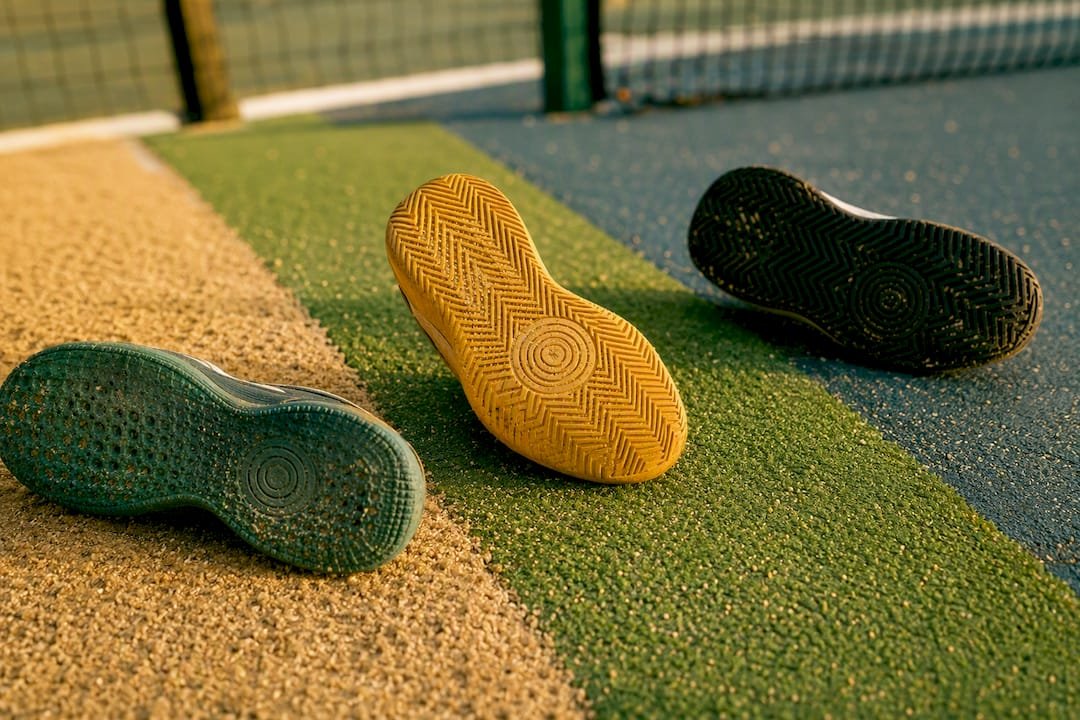
Three sole families cover almost every padel court you’ll play on: herringbone (clay-style), omni (dot pattern), and hybrid. Match herringbone to sandier turf, omni to cleaner or low-sand courts, and hybrid if you rotate between venues. None of that matters, though, if the shoe doesn’t lock your heel and midfoot down first, since fit and cushioning do as much injury-prevention work as the outsole itself.
TL;DR:
- Choosing the correct outsole pattern depends on matching the court surface: herringbone for sandy courts, omni for cleaner turf, and hybrid for variable conditions.
- Proper fit, heel lockdown, midfoot stability, and reinforced sidewalls are equally important in preventing injuries as outsole grip.
- Regularly brushing sand from the grooves and rotating pairs can extend a shoe’s grip life, which typically lasts nine to twelve months with frequent play.
- Slight differences in groove depth, rubber hardness, and pivot zones significantly impact grip consistency, movement, and injury risk during play.
- Using tennis shoes as a short-term fix on sandy courts is possible but not ideal due to reduced lateral stability compared to padel-specific shoes.
Table of Contents
- What Are the Main Types of Padel Shoe Soles?
- How Does Sole Choice Affect Grip, Movement, and Injury Risk?
- How Do You Choose the Right Sole for Your Court and Play Style?
- Why Fit, Midsole Cushioning, and Stability Matter as Much as the Sole
- How Do You Care for Padel Shoe Soles and Know When to Replace Them?
- Padelhip’s Perspective on Choosing the Right Sole Pattern
- Shop Padel Shoes Built Around the Right Sole for Your Court
- Sources
What Are the Main Types of Padel Shoe Soles?
Padel courts aren’t all the same surface, and the sole under your foot needs to match what’s actually on the ground. Three outsole patterns dominate the category, each built around a different sand-to-grip ratio.
Herringbone (clay-style) soles use deep zig-zag grooves that cut through loose sand instead of skating over it. This pattern is widely recommended for sandier artificial turf because the grooves channel sand away from the contact point while still allowing a controlled slide rather than a hard stop. Tennis players moving to padel often recognize this tread from clay courts, though padel’s grooves run shallower and denser.
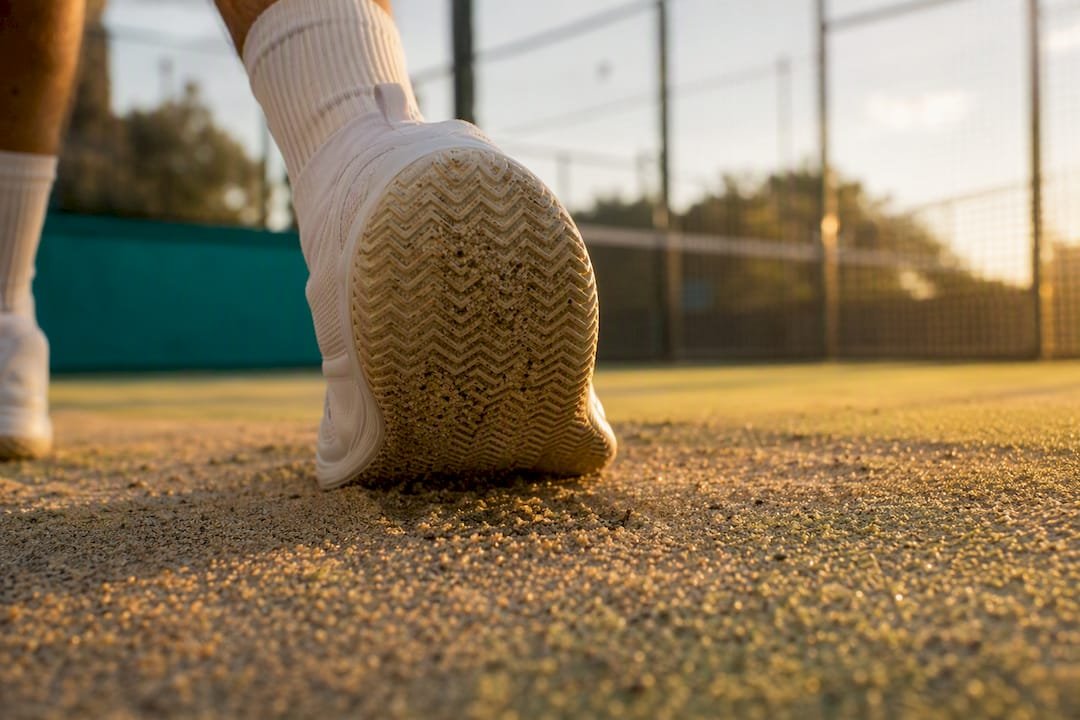
Omni or dot soles trade the deep channels for small circular studs. On cleaner turf with less sand, that pattern gives enough bite without over-gripping, which lets you pivot and rotate more freely during quick direction changes at the net.
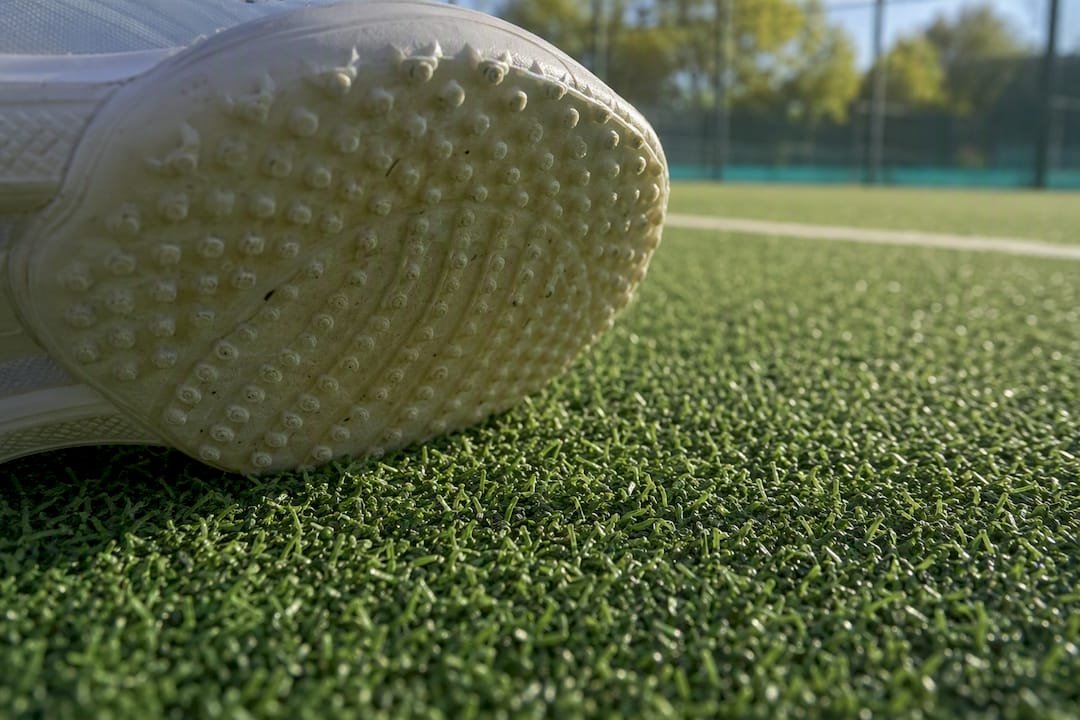
Hybrid soles blend both approaches, sometimes mixing herringbone zones under the forefoot with dot patterns near the heel, or adding reinforced pivot points where players twist most. Hybrid designs tend to work well for players who bounce between clubs with different court builds.
A few technical details separate a good sole from a mediocre one:
- Groove depth determines how much sand the tread can shed before it starts riding on top of it instead of through it.
- Rubber compound hardness affects how long the tread lasts and whether it grips instantly or needs a few steps to “warm up.”
- Pivot zones, often a smoother or slightly recessed patch under the ball of the foot, let you rotate without the sole catching and twisting your knee.
- Wear pattern location tells you a lot: heel-first wear suggests a heavier heel strike, while forefoot wear points to frequent net play and pivoting.
How Does Sole Choice Affect Grip, Movement, and Injury Risk?
More grip isn’t automatically better. Padel movement is built on sudden stops, lateral lunges, and sharp pivots, and every one of those relies on your foot releasing from the surface at the right moment. A sole with too much bite for the court it’s on can grab when it should slide, and that mismatch travels straight up your leg.
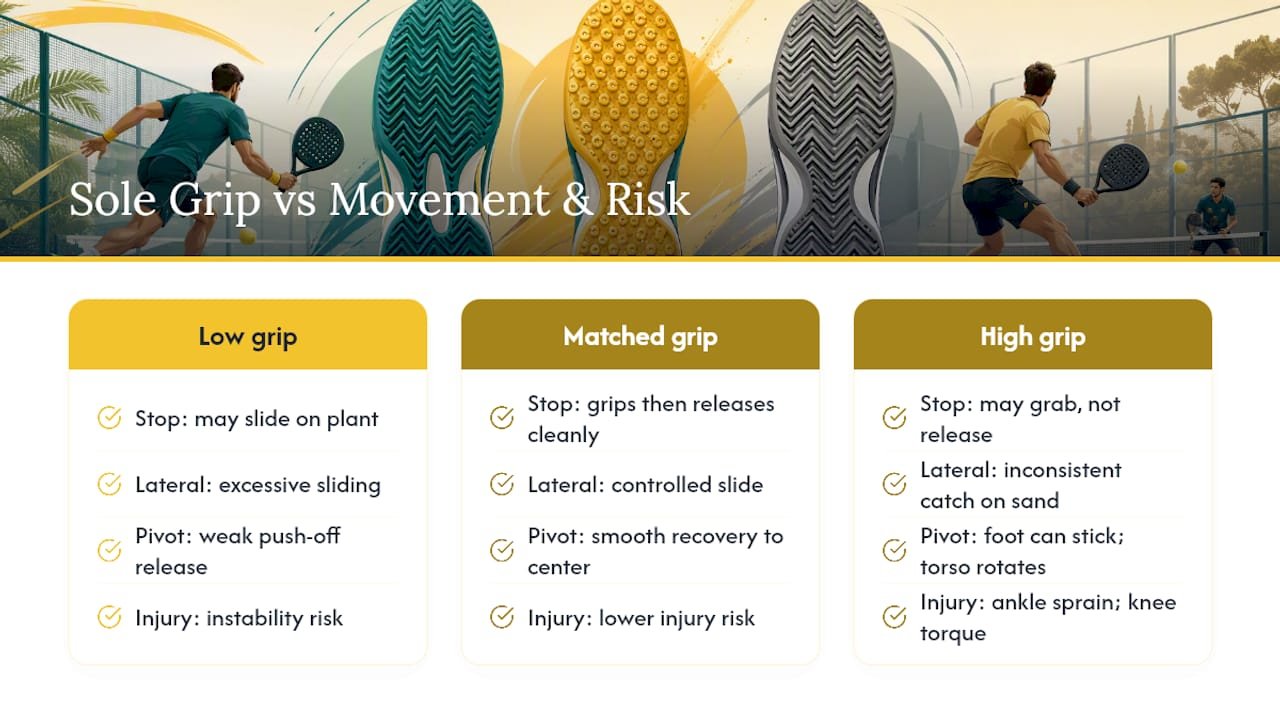
Heavy-sand courts amplify this problem. A herringbone sole cuts through sand as designed, but a dot-pattern sole on the same heavy-sand court can grip inconsistently, catching hard in one step and sliding in the next. That unpredictability is often worse than too much or too little grip on its own, because your body can’t anticipate it.
Think through three common movements. During a defensive lunge, you want the sole to grip through the plant phase, then release cleanly as you push off. During a side step at the net, controlled slide absorbs some lateral force instead of transferring all of it into your ankle. During recovery back to center, a sole that sticks unevenly can leave one foot planted while your torso keeps rotating, which is a common setup for a twisted knee or a rolled ankle.
Poor outsole choice for the surface is one of the recurring threads behind padel injuries: ankle sprains from a foot that grips too suddenly, and knee strain from rotational torque that has nowhere to go except through the joint.
Pro Tip: Before your first point, do three or four hard lateral bursts with a quick stop and recovery step. If the sole feels like it “grabs” and jars your knee on the stop, it’s biting harder than the court needs.
How Do You Choose the Right Sole for Your Court and Play Style?
Picking a sole doesn’t require guesswork if you run through the court and your own habits systematically.
- Inspect the court surface. Drag your shoe across the turf near the baseline. If a visible line of sand piles up, you’re on a higher-sand court that favors herringbone. If the turf feels cleaner and faster underfoot, omni or dot patterns will likely serve you better.
- Identify your primary court. If you play mostly at one club, build your sole choice around that surface first.
- Factor in away bookings. Players who regularly play tournaments or drop into unfamiliar clubs benefit from a hybrid sole, or from keeping two pairs on rotation, one specialist, one adaptable.
- Match the sole to your play style. Sliders and defensive baseliners who rely on controlled slides tend to prefer herringbone’s predictable release. Players who plant, rotate, and explode toward the net often do better with the freer pivot of a dot pattern.
If you’re in a pinch, clay-court tennis shoes can work as a short-term stand-in on sandy padel courts, since the tread logic is similar. They generally lack the lateral stability built into padel-specific uppers, so treat them as a stopgap, not a long-term solution.
Why Fit, Midsole Cushioning, and Stability Matter as Much as the Sole
An outsole with the right pattern can still put you at risk if the shoe around it doesn’t hold your foot in place. Padel’s sideways loading demands a stable platform, not just good tread.
Start with heel lockdown. Your heel shouldn’t lift more than a few millimeters when you walk uphill or push off hard, because heel slip creates friction that leads to blisters and reduces your control during quick stops. Midfoot hold matters just as much: a snug midfoot keeps your foot from sliding sideways inside the shoe when you plant hard for a lunge.
Toe room needs a balance. About half a thumb’s width past your longest toe gives your foot space to splay under load without letting it slide forward and jam into the toe box during a hard stop.
A few features worth checking before you buy:
- A torsional shank running through the midfoot resists twisting when you plant and pivot, which reduces strain on the ankle and knee.
- Firmer midsoles give more court feedback for players who like to feel the surface; softer midsoles protect joints better on harder courts or for players managing existing knee issues.
- Side walls around the forefoot help resist lateral collapse during hard cuts, working alongside the shank rather than replacing it.
That combination, a stability shank paired with reinforced forefoot walls, measurably reduces torsional twist compared to a shoe without either feature. Test it yourself with a few sharp lateral bursts and a quick recovery step in-store rather than just walking around the aisle.
How Do You Care for Padel Shoe Soles and Know When to Replace Them?
Sand works its way into every groove over a season, and a clogged sole loses grip long before the rubber itself wears out. A few habits keep traction reliable:
- Tap and brush sand out of the tread grooves after every session, especially herringbone patterns where sand hides deep in the channels.
- Watch for smooth patches, rounded groove edges, or uneven wear concentrated on one side of the sole, all signs traction is degrading.
- Rotate between two pairs if you play more than twice a week, which spreads compression wear and extends the usable life of both.
- Store shoes away from direct heat or sunlight, since UV exposure and heat accelerate rubber hardening and cracking.
Regular players typically notice a real drop in grip within nine to twelve months, though heavy-sand courts and frequent play can shorten that window considerably.
Padelhip’s Perspective on Choosing the Right Sole Pattern
We treat fit and stability as non-negotiable filters before outsole pattern even enters the conversation. A shoe like the Bullpadel Vertex Vibram 25I shows what that looks like in practice, tread, shank, and upper working together. As the writer curating these picks, I look at the outsole photos and fit specs first, every time.
— Serena
Shop Padel Shoes Built Around the Right Sole for Your Court
Padelhip is the direct route to the sole types this guide just walked through, without spending an afternoon comparing spec sheets across a dozen tabs. Every shoe on the site lists its outsole pattern, shank construction, and fit notes up front, so you can match herringbone, omni, or hybrid to your home court before you check out.
Browse the full padel shoe lineup for outsole comparisons across price points, or go straight to a specific pair like the Drop Shot padel shoes to see tread and fit details up close. Padelhip ships fast with easy returns, so if the fit isn’t right once you’re moving on court, sending it back doesn’t cost you the season. Start on the Padelhip store and filter by sole pattern to find your match.
Sources
- How to Choose Padel Shoes | Safety, Grip, and Fit Explained | SE
- Kuikma PS Pro Review (2026): Decathlon’s Best-Value Padel Shoe? – Padel Mad