

Padel Rules for Beginners: Play Your First Game Today


Padel has five rules every beginner must lock in before stepping on court: know the court and player setup, follow the tennis-style scoring, serve underarm after a bounce, let the ball hit the wall only after it bounces, and avoid the common faults that hand points to your opponents. Get those five right and you can play a real game on day one.
- Court and players: Padel is doubles. Four players, one court, glass and mesh walls all around.
- Scoring: Points go love, 15, 30, 40, game. First to 6 games wins a set. Tiebreak at 6-6.
- Serve: Underarm, one bounce in your box, struck below hip height, aimed diagonally across.
- Wall play: Ball must bounce on the ground first. After that, glass or mesh contact keeps it live.
- Common faults: Double bounce, direct fence hit, touching the net, or double fault all lose the point.
Consistency beats power at every level, but especially when you are just starting out. Keep the ball in play and let the walls do the work.
Key Takeaways
Padel’s core rules are simple enough to learn in one read: serve underarm after a bounce, let the ball hit the wall only after it bounces, follow tennis scoring, and keep the ball in play above all else.
| Point | Details |
|---|---|
| Serve underarm after one bounce | Strike below hip height, aimed diagonally; two attempts per point before a double fault. |
| Wall contact requires a bounce first | Glass and mesh are live after the ball bounces; a direct fence hit is out. |
| Scoring mirrors tennis | Love, 15, 30, 40, game; first to 6 games wins a set; tiebreak at 6-6. |
| Double bounce loses the point | If the ball bounces twice on your side before you return it, the point goes to your opponents. |
| Confirm deuce format before play | Clubs use Classic Advantage, Golden Point, or Star Point; agree before the first serve. |
Table of Contents
- What are the basic padel rules every beginner should know?
- How does padel scoring work?
- How do you serve legally in padel?
- How do the walls work during a rally?
- How do you win or lose a point in padel?
- Who serves first and how does rotation work?
- Simple habits and etiquette that make you a better padel partner
- Quick padel rules cheatsheet you can take to court
- A note from Padelhip on starting your padel journey
- Sources
What are the basic padel rules every beginner should know?
Padel is almost always played as doubles, four players on a court that measures 20 meters long by 10 meters wide. Singles exists but is genuinely rare. Most clubs do not even configure the court for it.
Court layout and dimensions
| Feature | Measurement / Detail |
|---|---|
| Court length | 20 meters |
| Court width | 10 meters |
| Net height (center) | 88 cm |
| Service boxes | Two boxes on each side, separated by the center line |
| Back walls | Solid glass panels (active playing surface) |
| Side walls | Lower glass panels topped with metal mesh fencing |
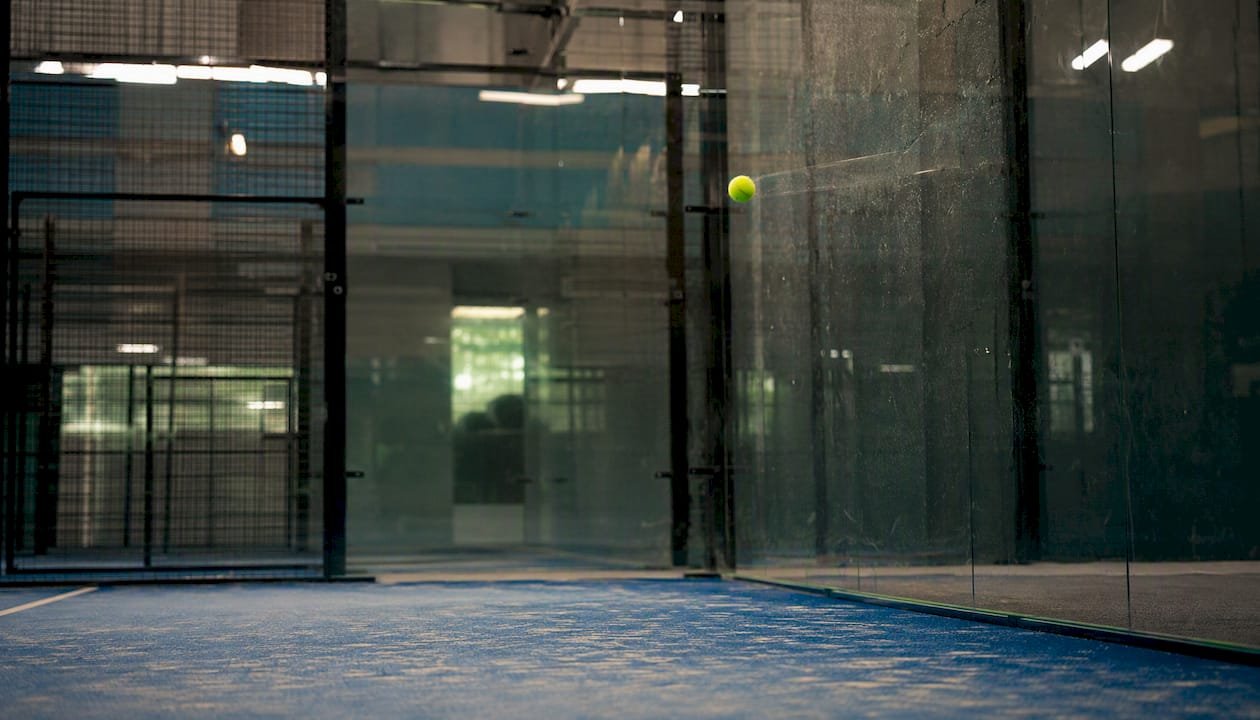
The glass panels and metal mesh fencing are not just boundaries. They are part of the game. A ball that bounces and then hits the back glass is still live. That is what makes padel different from tennis and what gives the sport its distinctive rhythm.
Where players stand
At the serve, the server stands behind the service line on the right or left side. Their partner typically positions near the net on the same side. On the receiving end, one player stands in the diagonal service box to return, while their partner holds a position near the net. During rallies, both pairs move freely across their half of the court. There is no rule forcing you to stay on one side once the point is underway.
Pro Tip: New players often crowd the net too early. Stay back until you have a clear opportunity. Letting the ball come to you, especially off the back glass, gives you far more time to set up a clean shot.
How does padel scoring work?
Padel scoring follows the tennis model exactly: love, 15, 30, 40, game. Win enough games and you take a set. Win enough sets and you win the match.
A set goes to the first team that reaches 6 games with at least a 2-game lead. So 6-4 wins a set. At 6-6, a tiebreak decides it. Most matches are best of three sets.
How a game plays out
Say the score reaches 40-30. The leading team wins the next point and takes the game. Simple. But at 40-40 (deuce), things depend on which format your club uses. Three options exist, and this is where beginners often get confused:
- Classic Advantage: Play continues until one team wins two consecutive points from deuce.
- Golden Point: One sudden-death point decides it. The receiving team chooses which side receives.
- Star Point: A FIP-recognized format from 2026 that functions similarly to Golden Point. Organizers choose which applies.
Always confirm the deuce format before you start. Most American clubs use Golden Point because it keeps matches moving.
How a tiebreak works
At 6-6 in a set, teams play a 7-point tiebreak. First to 7 points with a 2-point margin wins. So 7-5 wins it. At 6-6 within the tiebreak, play continues until someone leads by 2. Service rotates every two points. The player who served last in the set serves the first point of the tiebreak, then service alternates every two points between teams.
Scoreline example: Team A leads 6-5 in games. Team B wins the next game to level at 6-6. A tiebreak starts. Team A reaches 7-6 but needs a 2-point lead, so play continues. Team A wins the next point: 8-6. Team A wins the set 7-6.
How do you serve legally in padel?
The serve is where most beginners pick up their first fault. FIP’s 2026 rules tightened the foot-position requirement and added a clause that the ball may not cross the service line before you strike it. Here is the full checklist:
- Position yourself behind the service line on your side of the center line (right or left service box).
- Bounce the ball once in your own service box before striking it.
- Strike the ball at or below hip height. No overhead swings.
- Aim diagonally into the opponent’s service box on the other side of the net.
- Keep at least one foot behind the service line at the moment of contact. The other foot may be in the air, but neither foot may touch or cross the line before you hit.
- Do not let the ball cross the service line before you make contact.
Two attempts and what happens on a fault
You get two serve attempts per point. A fault occurs when the ball lands outside the diagonal service box, hits the net and does not land correctly, or you break a foot-position rule. One fault means you serve again. Two faults in a row is a double fault and your opponents win the point.
A let happens when the ball clips the net cord and still lands in the correct service box. Under FIP rules, a let is replayed. No fault is recorded.
Pro Tip: The most common beginner serve mistakes are striking the ball above hip height and stepping on the service line at contact. Both are faults. Practice bouncing the ball low and swinging gently upward. You do not need pace on a serve. Placement into the corner of the service box is far more effective.

How do the walls work during a rally?
This is the rule that surprises almost every new player. The core wall rule is straightforward once you say it plainly: the ball must bounce on the ground first. After that bounce, it may hit glass or mesh and remain in play. If it hits the metal fence directly off your racket, without bouncing first, the point is over.
Wall-play examples
- Legal: Ball lands in your court, bounces, then hits the back glass. You play it off the glass. Still live.
- Legal: Ball bounces, hits the side glass, then crosses the net. Your opponents must return it.
- Out: You strike the ball and it hits the metal fence before touching the ground. Point to your opponents.
- Out: Ball bounces twice before you reach it. Point over, regardless of walls.
Volleying and net rules
You may volley at any time during a rally except on the return of serve. The return of serve must be played after the ball bounces. You cannot reach over the net to play a ball. If your racket crosses the net plane, even without touching it, you lose the point.
Wall-play do’s and don’ts
- Do let the ball bounce and hit the back glass before you strike. That extra moment of time is your friend.
- Do use the side glass to angle shots your opponents cannot predict.
- Don’t try to volley a ball that is heading toward the back glass. Let it come off the wall first.
- Don’t assume a ball that hits the fence is always out. Check whether it bounced first.
How do you win or lose a point in padel?
A point ends the moment one team cannot legally return the ball. These are the exact situations that hand a point to your opponents:
- The ball bounces twice on your side before you return it.
- You hit the ball out of bounds (into the fence directly, over the side walls, or outside the court).
- You or your partner touches the net with your body or racket during a point.
- You hit the ball before it crosses the net to your side.
- You double fault on serve.
- The ball hits you or your partner’s body during a rally.
Common beginner faults with examples
- Double bounce: You back up to retrieve a lob and the ball bounces a second time before you swing. Point lost.
- Direct fence hit: You smash the ball and it flies into the metal fence without bouncing. Out.
- Net touch: You rush the net and your racket grazes the tape mid-rally. Immediate point to opponents.
- Early volley on return: You try to volley the serve before it bounces. Fault. The return must bounce first.
On serve, the sequence is simple: first fault means you serve again from the same position. Second fault in the same point is a double fault and the point goes to the receiving team.
Who serves first and how does rotation work?
Before the match starts, decide who serves first with a coin toss or racket spin. The team that wins the toss chooses to serve, receive, or pick a side. The other team takes whichever option remains.
Confirm the deuce format (Classic Advantage, Golden Point, or Star Point) before the first point. Call the score clearly before every serve. These two habits alone prevent most disputes at club level, as most beginner errors are procedural rather than technical.
Service rotation rules
- The same player serves for the entire game. Their partner does not rotate in mid-game.
- Teams alternate serving between games. If Team A served game 1, Team B serves game 2.
- Within a team, partners keep the same serving order from game to game. If Player 1 served game 1, Player 1 serves game 3, and so on.
Side changes
Players change sides whenever the total number of games played in a set is odd. So after game 1, after game 3, after game 5, and so on. During a tiebreak, sides change every 6 points.
Pre-game checklist (60 seconds):
- Confirm deuce format with all four players.
- Check net height at center (88 cm).
- Agree on a warm-up time limit.
- Decide who serves first.
Simple habits and etiquette that make you a better padel partner
The single biggest habit separating beginners who improve quickly from those who stagnate is simple: keep the ball in play. Most beginner points are lost to unforced errors, not to brilliant winners from the other side. Aim for the middle of the court, use topspin if you have it, and let the rally develop.
Pro Tip: When the ball is heading toward the back glass, resist the urge to volley it early. Let it bounce, let it hit the glass, then strike. That sequence gives you an extra second to set your feet and choose your shot. It is the single most effective defensive technique in padel and it is completely legal.
Three beginner drills worth doing before your first real match
- Volley-to-volley mini-drill: Stand at the service line with your partner at the net on the other side. Volley back and forth without letting the ball bounce. Focus on soft hands and control, not pace.
- Serve placement practice: Set up a target (a cone or a spare ball) in the corner of the diagonal service box. Serve 10 balls and count how many land within a racket-length of the target.
- Wall-return drill: Stand near the back glass. Have a partner feed balls that bounce and hit the glass. Practice letting the ball come off the glass before you strike it back.
Court etiquette checklist
- Call the score before every serve. Both teams should hear it.
- Call “mine” or “yours” loudly on any shot near the center of your side. Silence causes collisions.
- Never touch the net, even between points.
- Agree on the deuce format before play, not during a dispute at 40-40.
- If a ball from another court rolls in, stop play immediately and replay the point.
Quick padel rules cheatsheet you can take to court
| Rule | What it means |
|---|---|
| Court size | 20m x 10m; net height 88 cm at center |
| Players | 4 players (doubles standard); singles is rare |
| Scoring | Love, 15, 30, 40, game; first to 6 games wins a set; tiebreak at 6-6 |
| Serve | Underarm, one bounce, below hip, diagonal, two attempts |
| Wall play | Ball must bounce first; glass and mesh after bounce are live; direct fence hit is out |
| Double bounce | Ball bounces twice on your side before you return it: point lost |
| Double fault | Two consecutive serve faults: point to opponents |
| Let on serve | Net cord into correct box: replay the point, no fault |
| Side changes | Change sides when total games in a set is an odd number |
| Deuce format | Confirm before play: Classic Advantage, Golden Point, or Star Point |
Rapid reminders before you walk on court
- Two serve attempts per point. Use both if you need them.
- Serve underarm, after one bounce, below hip height.
- Ball bounces first, then wall contact is legal.
- Double bounce on your side loses the point.
- Call the score before every serve.
- Confirm the deuce format with all four players before game one.
60-second pre-game check: Confirm deuce format. Check net height. Agree on warm-up time. Decide who serves first. Done.
A note from Padelhip on starting your padel journey
Knowing the rules is only half the picture. The other half is showing up with gear that does not slow you down. Padel-specific shoes make a real difference on court because they are built for the lateral movement and quick direction changes the game demands. A solid beginner racket, something with a round or teardrop shape and a forgiving sweet spot, lets you focus on placement rather than fighting the equipment.
At Padelhip, we stock rackets, padel shoes, apparel, and accessories for players at every level, with fast shipping and easy returns. If you are choosing your first racket, our beginner racket guide walks you through what to look for without the jargon.

Sources
- FIP_Rules-of-Padel-1.pdf
- How to get started playing padel as a beginner
- Padel Rules for Beginners: Scoring, Serve, Glass & Common Mistakes
- Padel rules for beginners
Recommended
- Best Beginner Padel Rackets: Top Picks for 2026
- Padel Shoes vs Tennis Shoes: What Padel Players Need
- Padel Racket Prices: What to Buy at Every Budget
- Adidas Match Black/Lime 2026 Padel Racket for Beginner Players – Lightweight Fiberglass All-Round Racquet with Soft EVA Core and Large Sweet Spot – Your online Padel store- Padel Hip-Premier padel shop
What stands out about blog in this post is that it acknowledges the variation in difficulty across years, which a lot of generic prep advice ignores entirely. The section on padel rules for beginners: play your first game today is where most aspirants actually lose marks, not on the concepts they have studied. One thing worth mentioning for anyone reading this mid-prep: the studio test or situation test component often gets under-practised because there is less structured material available for it. Spending time on that specifically in the last two months tends to have a disproportionate impact on the final score.