

Padel Racket Protector: Protect Your Frame Without Losing Feel

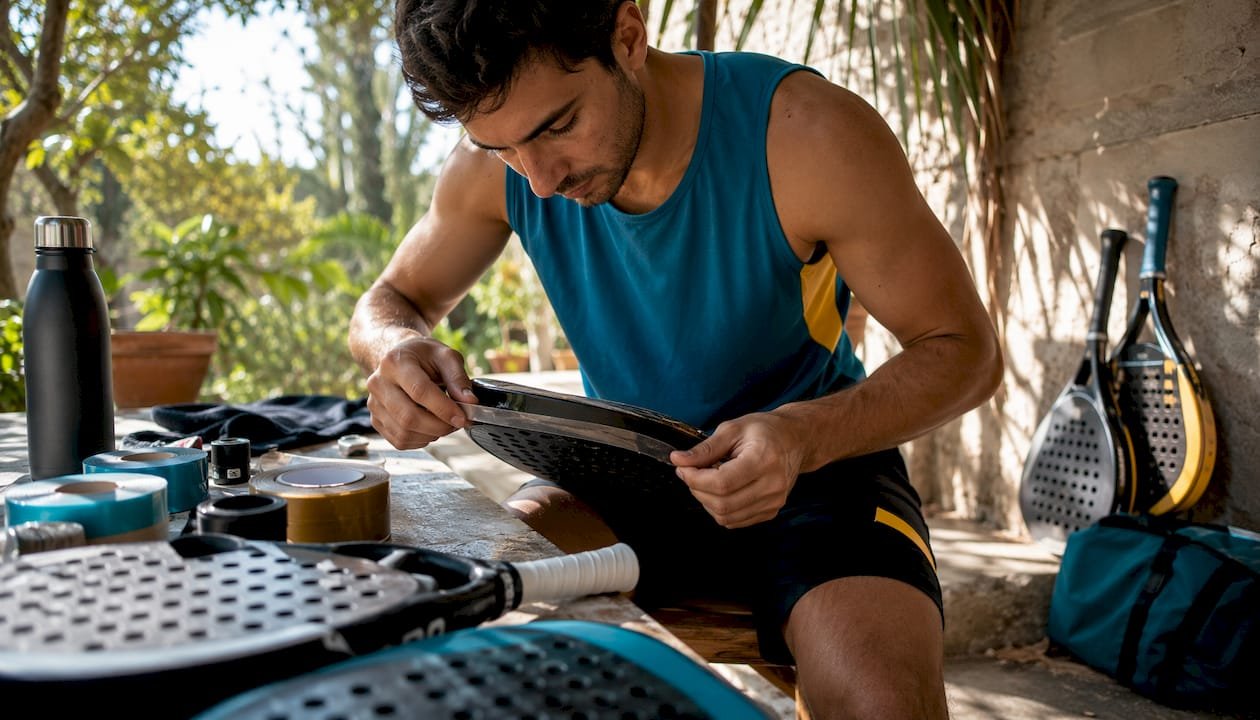
A TPU edge protector is the right buy for most players. It wraps the frame, takes the abuse from glass walls and court drags, and adds so little weight you genuinely won’t notice it during play. If you want a straightforward option, Padelhip carries a TPU padel racket protector that ships to the US with easy returns. The only players who can reasonably skip one: casual indoor-only players who never scrape the walls and aren’t worried about resale value.
- Best overall: TPU edge/frame tape or pre-cut TPU guard
- Best for heavy hitters: full bumper guard with silicone shock absorption
- Skip it if: you play purely recreational indoor sessions with no wall contact
Table of Contents
- What types of padel racket protectors are actually for sale?
- Which material actually holds up: TPU, PVC, or silicone?
- How to choose the right protector for your racket
- How to apply a frame protector yourself
- How to measure your racket and choose the right protector size
- How long do protectors last, and what do they cost in the US?
- Do protectors actually change how your racket plays?
- Key Takeaways
- The case for not overthinking this
- Padelhip has your protector ready to ship
- Sources and further reading
What types of padel racket protectors are actually for sale?
The market breaks into six distinct forms, and picking the wrong one is the most common buying mistake.
- Edge/frame tape (roll): A continuous strip you cut to length and wrap around the frame perimeter. Flexible, works on any racket shape, and the cheapest option. Dunlop’s protection tape markets this format as suitable for any size padel bat.
- Pre-cut edge guards: Shaped strips sized for standard padel frames. Faster to install than rolls, but you need the right dimensions or they gap at the corners.
- Full bumper guards: Cover the entire top arc of the frame. More protection, slightly more visible, and a touch heavier.
- Clear sticker strips: Ultra-thin transparent film, closer to screen protectors than structural guards. Good for cosmetic scratch prevention, less effective against hard wall impacts.
- Silicone bumpers: Thick, shock-absorbing sections that attach at the most impact-prone areas. High protection, but they add noticeable bulk.
- Protective covers (soft/rigid): Full racket sleeves or hard cases for transport. Not a substitute for frame protection during play.
| Type | Protection level | Visibility | Install difficulty |
|---|---|---|---|
| Edge/frame tape (roll) | Medium-high | Low (transparent available) | Easy |
| Pre-cut edge guard | Medium-high | Low to medium | Very easy |
| Full bumper guard | High | Medium | Easy |
| Clear sticker strips | Low | Very low | Very easy |
| Silicone bumpers | Very high | High | Moderate |
| Protective cover | Play-only: none | N/A | N/A |
Men’s Health’s padel gear roundup highlights transparent stick-on protectors around $10 as a practical entry point, calling out their scratch protection and low cost.
Which material actually holds up: TPU, PVC, or silicone?
Material is where most buyers stop reading too early. The label “protector” covers a wide range of actual performance.
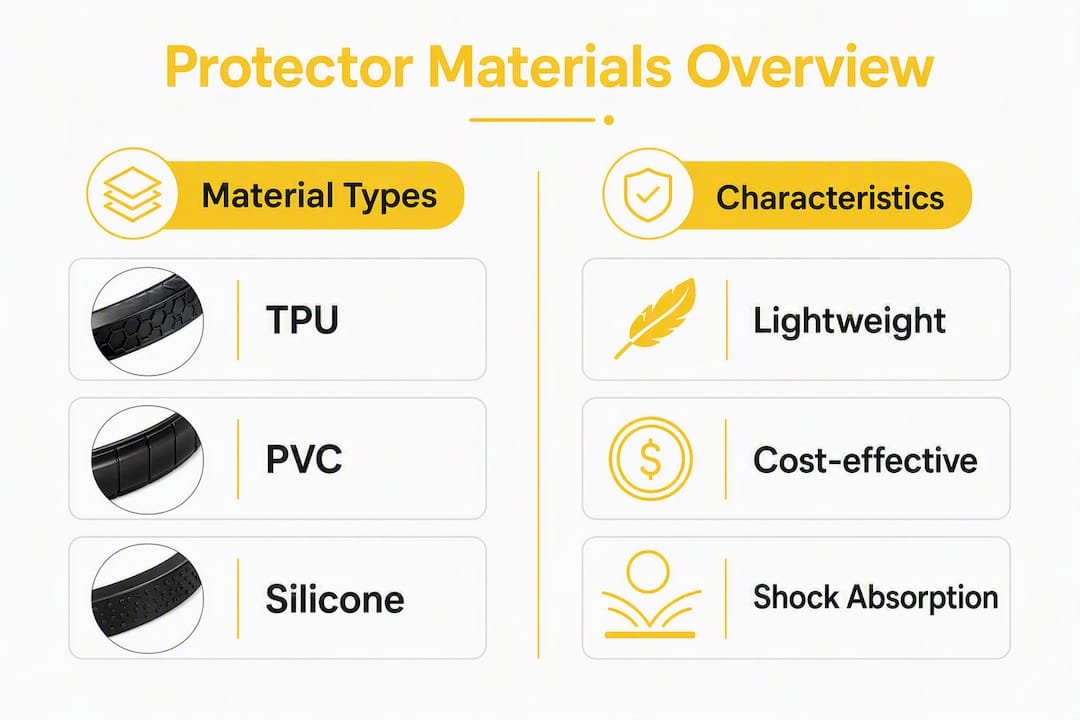
TPU (thermoplastic polyurethane) is the standout choice for most players. It’s lightweight, abrasion-resistant, and thin enough to sit flush against the frame without altering the racket’s swing weight. Padelhip’s product pages reference TPU and lightweight constructions specifically because they preserve feel on performance rackets. For competitive players and club regulars, TPU is the clear pick.
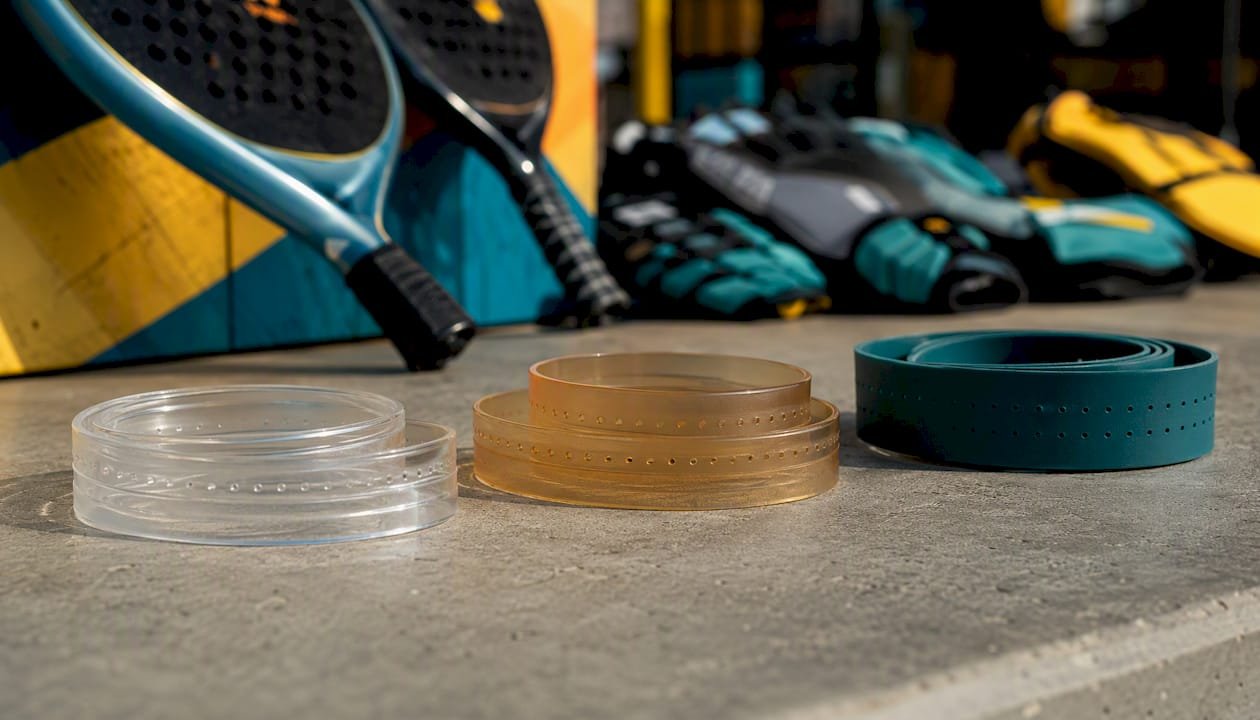
PVC costs less and handles heavy abrasion reasonably well, but it’s stiffer and tends to yellow with UV exposure. On a racket you care about aesthetically, PVC tape can look worn within a season. It’s a workable budget option for beginners who are still figuring out their game and don’t want to spend much.
Silicone and rubber bumpers absorb shock better than either TPU or PVC, which matters if you play aggressively and frequently drag the frame along the glass. The trade-off is thickness. A silicone bumper adds a few millimeters to the frame perimeter, which can shift the balance point slightly on lighter rackets.
Quick material guide by player type:
- Competitive players: — TPU pre-cut guard or thin TPU tape. Minimal weight, maximum discretion.
How to choose the right protector for your racket
Run through this checklist before you add anything to your cart.
Material: TPU for performance preservation, PVC for budget, silicone for maximum shock protection.
Thickness: Thinner profiles (0.5–1 mm) sit flush and don’t affect feel. Anything above 2 mm starts to change how the frame interacts with the ball near the edges.
Adhesive type: Peel-and-stick with a pressure-sensitive adhesive is the standard. Look for 3M-grade adhesive or equivalent. NOX’s frame protector specifically calls out high-quality adhesive for full-contour coverage, which is the right benchmark to hold other products to.
Length/width and pre-cut vs. roll: Pre-cut guards are faster but require matching your racket’s exact frame circumference. Rolls give you flexibility but demand a clean cut. Most standard padel frames run 60–70 cm around the top arc; confirm before ordering.
Racket shape compatibility: Diamond-shaped frames have sharper corners where pre-cut guards can gap or lift. Round and teardrop shapes are more forgiving. If you play with a diamond frame, a roll gives you better corner coverage.
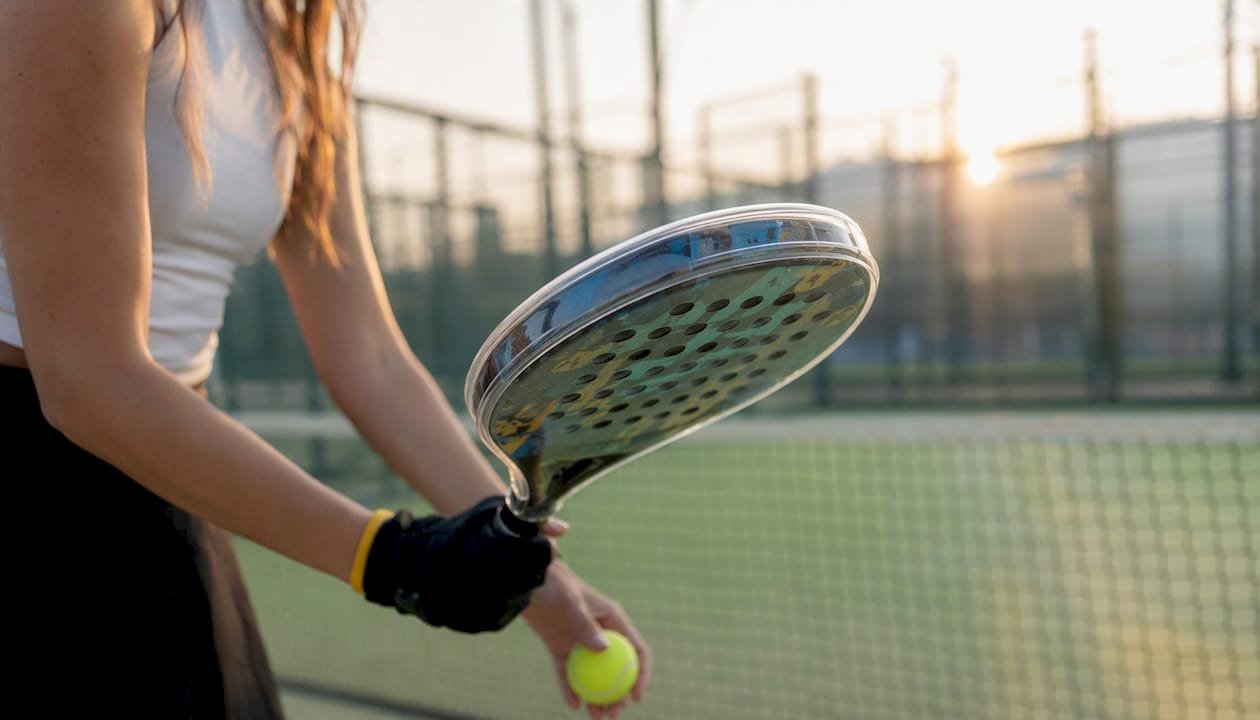
Visibility: Transparent finishes protect without hiding the racket’s graphics. Market messaging consistently favors transparent options for exactly this reason. Colored or textured options exist but are a style preference, not a performance one.
Price: Budget rolls are available at low cost. Mid-range pre-cut TPU guards are moderately priced. Premium pre-cut TPU with strong adhesive and precise sizing costs more.
Red flags to avoid:
- No dimensions listed in the product description
- Adhesive described only as “strong” with no brand or spec
- Product photos that only show the protector flat, never installed on an actual racket
- Negative reviews specifically mentioning peeling within the first few sessions
| Criterion | What to look for | Red flag |
|---|---|---|
| Material | TPU or 3M-adhesive tape | “Rubber-like” with no spec |
| Thickness | 0.5–1 mm for feel preservation | Over 2 mm with no note on balance |
| Adhesive | Pressure-sensitive, named brand | “Strong glue” with no detail |
| Dimensions | Exact mm listed | “Fits most rackets” only |
| Finish | Transparent available | Only opaque, no option |
How to apply a frame protector yourself
You can install a padel racket protector in under ten minutes. The Keepadel installation tutorial lays out the standard peel-and-stick sequence, and it’s straightforward once you’ve done it once.
- Clean the frame. Wipe the entire frame edge with isopropyl alcohol and a lint-free cloth. Any dust, oil, or old adhesive residue will cause lifting within days.
- Dry-fit first. Hold the protector against the frame without peeling the backing. Confirm it covers the full arc and that the ends meet cleanly at the throat.
- Start at the throat. Peel back about 3 cm of the backing and press the starting end firmly at one side of the throat.
- Work in sections. Peel 5–8 cm of backing at a time as you wrap around the frame. Apply firm, even pressure with your thumb as you go. Don’t stretch the material aggressively or it will spring back and lift.
- Navigate the corners. At sharp corners (especially on diamond frames), make small relief cuts in the backing paper so the protector lies flat without bunching.
- Finish at the throat. Press the end down firmly. If there’s overlap, trim cleanly with scissors rather than tearing.
- Press the full length. Run a soft cloth or a squeegee along the entire protector to eliminate air pockets.
- Cure time. Let the racket sit for at least 30 minutes before play. Overnight is better for maximum adhesion.
Pro Tip: If you’re installing in cold weather (below 60°F), warm the adhesive side briefly with a hair dryer on low heat for 10–15 seconds before pressing. Cold adhesive bonds poorly and peels faster.
Troubleshooting:
- Bubbles: Press from the center outward with a soft cloth. For stubborn bubbles, lift the edge slightly, smooth out, and re-press.
- Wrinkles at corners: Lift and re-apply with smaller sections. Don’t try to smooth a wrinkle that’s already bonded.
- Edge lifting after a few days: The surface wasn’t clean enough. Remove, clean with alcohol, and reapply a fresh protector.
How to measure your racket and choose the right protector size
Mis-measuring is the single most common reason players return protectors. A quick measurement takes two minutes and eliminates that problem entirely.
What to measure:
- Frame arc length: Run a flexible tape measure along the outer edge of the frame from one side of the throat, over the top, to the other side of the throat. Most standard padel rackets measure 60–70 cm along this arc. That’s the minimum length your protector needs to cover.
- Frame width (edge width): Measure the thickness of the frame edge itself, the flat surface the protector adheres to. Standard padel frames have an edge width that falls within a typical narrow range. Your protector’s width should match or slightly exceed this.
Roll vs. pre-cut:
- A standard roll (typically 50 cm or 100 cm long, 10–12 mm wide) covers one to two rackets depending on length. Rolls work for any shape.
- Pre-cut guards are shaped for specific frame profiles. Always cross-reference the listed dimensions against your own measurement before buying.
Shape compatibility:
- Round and teardrop frames: Pre-cut guards fit well. The gradual curves don’t stress the adhesive at corners.
- Diamond frames: The sharper top corners are where pre-cut guards gap most often. A roll gives you control over corner coverage. If you play with a diamond-shaped racket, measure the corner radius and confirm the guard’s listed compatibility before ordering.
Pro Tip: Take a photo of your racket’s frame edge next to a ruler before shopping. It takes ten seconds and gives you a reference you can compare directly against product photos.
How long do protectors last, and what do they cost in the US?
Lifespan depends on play intensity and frequency of hitting walls.
Price ranges (US market):
- Budget rolls and clear sticker strips are inexpensive, with transparent options affordable and suitable for beginners or players seeking basic scratch protection.
- Mid-range pre-cut guards typically cost a moderate amount, usually PVC or entry-level TPU, offering decent adhesion and reasonable durability.
- Premium TPU pre-cut guards are higher priced with thin profiles, strong adhesive, and precise fit, fitting well for club players and competitors.
Lifespan by usage:
- Heavy play with frequent sessions on outdoor courts involving glass walls requires more frequent replacement.
- Moderate play results in a protector lasting several months before performance degrades.
- Occasional or casual play can allow a protector to last a full season or longer if wall contact is rare.
When to replace:
- Visible peeling or lifting at the edges
- Cracks or gouges in the protector surface (it’s done its job; replace it)
- The protector has compressed and you can feel the frame edge through it
- Any noticeable change in swing weight or balance that wasn’t there before
Do protectors actually change how your racket plays?
The short answer: a high-quality, thin TPU protector won’t change feel for the vast majority of players. Thicker silicone bumpers can shift the balance point on lighter rackets, but that’s the exception.
Adidas’s padel racket protector product page specifically states that its protector maintains racket balance and feel, and that’s the standard well-made TPU guards are designed to meet. The logic is straightforward: a thin, flexible strip that adds less than 5 grams to a 340–380 gram racket isn’t going to register in your hand.
The one scenario where feel does change: a thick bumper guard on a lightweight teardrop racket. If your frame weighs under 340 grams, even a modest addition at the top arc shifts the balance toward head-heavy. That’s worth knowing before you buy a silicone bumper for a lightweight carbon racket.
One practical step: install the protector, then take a 15-minute hitting session before your next competitive match. If anything feels off, you’ll know immediately. In most cases, you won’t notice a thing.
Key Takeaways
A thin TPU edge protector is the best padel racket protector for most players because it shields the frame from abrasion and wall contact while adding negligible weight and preserving feel.
| Point | Details |
|---|---|
| Best material choice | TPU offers the best balance of abrasion resistance, low weight, and feel preservation for most players. |
| Measure before you buy | Measure your frame arc (60–70 cm for most rackets) and edge width (8–12 mm) to avoid returns. |
| Price expectation | Budget options start around $10; premium TPU pre-cut guards run $20–35 in the US market. |
| Replace on schedule | Heavy players should replace every 6–10 weeks; moderate players every 3–5 months. |
| Padelhip’s option | Padelhip carries TPU padel racket protectors with US shipping and easy returns for a supported purchase. |
The case for not overthinking this
Most players spend more time debating protectors than the decision actually warrants. The frame protector category is genuinely simple once you accept one truth: the material and adhesive quality matter far more than the brand name on the packaging.
What gets overlooked in most buying guides is the installation step. A $30 premium TPU guard applied to a dusty, oily frame will peel within a week. A $10 transparent roll applied correctly to a clean surface will outlast it by months. The prep work is the product.
There’s also a tendency to skip protectors entirely on expensive rackets because players don’t want to “change the feel.” That logic is backwards. A $300 carbon fiber frame that takes a hard glass hit without a protector can crack at the edge. A $15 TPU strip prevents that. The asymmetry is obvious when you say it plainly.
For competitive players specifically: use transparent TPU, keep a spare roll in your bag, and replace it at the first sign of lifting. That’s the whole system.
Padelhip has your protector ready to ship
Padelhip stocks TPU padel racket protectors alongside its full range of rackets, bags, and accessories, all sourced authentically and shipped directly to US customers. The difference from hunting through generic marketplaces: you get accurate product specs, a team that knows padel gear, and a returns process that doesn’t require a fight.

Every order ships from Spain with tracking, and Padelhip’s shipping and returns policy is straightforward for US buyers. If you’re unsure about sizing after reading this guide, the support team can confirm compatibility for your specific racket model before you order. Protectors are a small purchase, but getting the right one the first time saves the hassle of a return.
Browse the full accessories range and pick up your protector at Padelhip’s padel store.
Sources and further reading
- How to put on a padel protector step by step — Keepadel
- Best padel gear roundup — Men’s Health
- Adidas padel racket protector product page — Smashinn/Tradeinn
- Dunlop protection tape — Dunlop Sports US
- NOX padel frame protector tape — Racketworld UK
- Padelhip accessories and racket catalog
- Padelhip shipping and returns for US orders
- Padel racket protectors on Amazon US
- Community discussion: racket protectors — r/padel
Recommended
- Drop Shot Canyon Pro Comfort 1.0 Padel Racket – High Comfort Carbon Control Racquet with Soft Feel and Large Sweet Spot for Advanced Players – Your online Padel store- Padel Hip-Premier padel shop
- Choosing the Right Padel Racket Shape: A Complete Guide – Your online Padel store- Padel Hip-Premier padel shop
- Head Speed Motion Padel Racket | Lightweight Teardrop Carbon Hybrid Racket for Advanced Control & Power Players 2026 – Your online Padel store- Padel Hip-Premier padel shop
- Bullpadel Vertex Advance 26 Padel Racket – Diamond Shape High Power Racquet with Carbon Frame for Intermediate and Advanced Players – Your online Padel store- Padel Hip-Premier padel shop