

Padel Racket Wrist Strap Rules: What You Need to Know

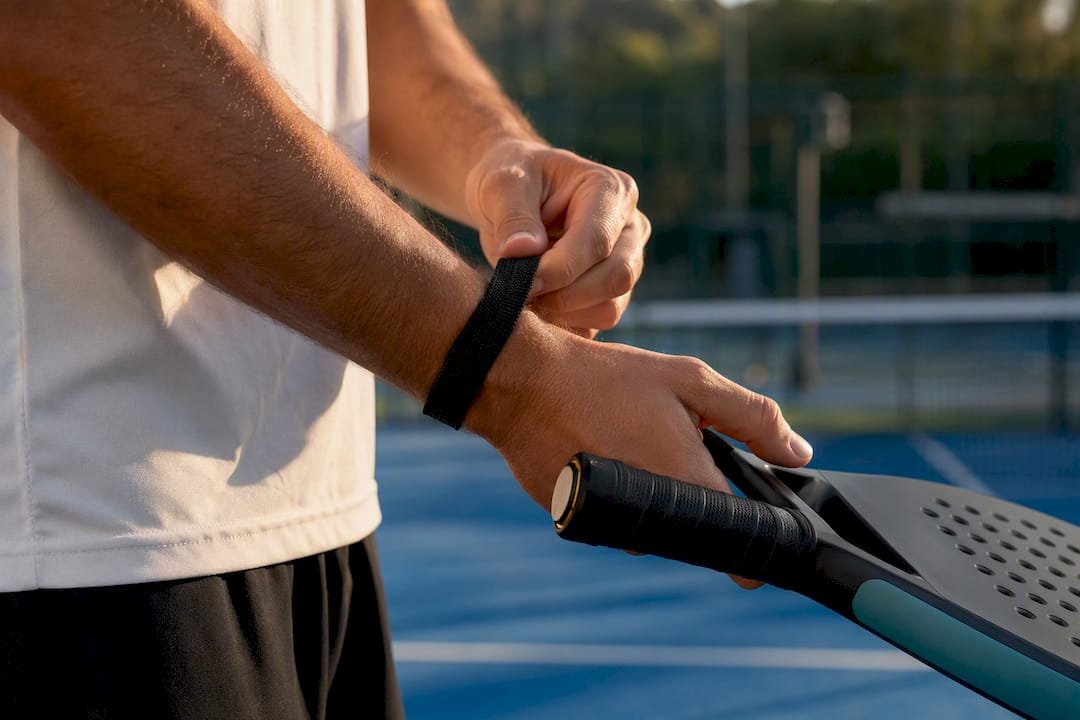
Yes, a padel racket wrist strap is mandatory: the International Padel Federation requires a non-elastic strap attached to the racket handle, wrapped around your wrist, no longer than 35 centimeters. Any compliant strap works as long as it meets those three criteria, and Padelhip stocks options built to spec so you’re not guessing at checkout.
TL;DR:
- The strap must be non-elastic, attached directly to the handle, and no longer than 35 centimeters to meet regulation standards.
- Braided cords are lightweight and rule-compliant, while padded wristbands offer comfort but add bulk, and removable buttcap straps require compatible racket systems.
- Correct fitting involves looping snugly around the wrist with one finger’s space, checked during warm-up, and replaced once fraying or stiffness appear.
- Pre-purchase checks should verify material, length, attachment security, profile type, and whether the strap is washable or replaceable.
- Regular maintenance includes gentle washing of padded straps and inspecting for wear signs like fraying or stiffness to prevent mid-match failures.
Table of Contents
- What the padel wrist strap rule actually requires
- What types of wrist straps are available for padel rackets?
- How do you fit a wrist strap without limiting your swing?
- What should you check before buying a padel wrist strap?
- How do you clean and maintain a padel wrist strap?
- A coach’s view on the mistakes players keep making
- Get a compliant wrist strap from Padelhip today
- Sources
What the padel wrist strap rule actually requires
The rule sounds simple until you’re standing on court trying to remember the exact wording. Here’s what officials check: the strap can’t be elastic (stretchy cords defeat the safety purpose), it has to be physically attached to the handle, and it must wrap around the player’s wrist, capped at 35 centimeters in length.
The logic behind it isn’t complicated. A padel racket flying off a sweaty hand mid-swing is a genuine hazard, both to the player and to whoever’s standing nearby on a shared court. Think of the strap the same way you’d think about a seat belt: it’s not there for the swings that go fine, it’s there for the one that doesn’t. A strap catches the racket before it becomes a projectile.
Coaches and referees expect players to have the strap on before warm-up starts, not after the first serve. That’s not just etiquette. Warm-up is when you’re testing swing mechanics, and a loose or missing strap during overheads is exactly when a slip happens.
- Strap must be non-elastic
- Must attach directly to the handle
- Maximum length of 35 cm
- Worn around the wrist during play, including warm-up
What types of wrist straps are available for padel rackets?
Not every strap looks or feels the same, and the differences matter more than most players realize until they’re mid-match adjusting one that’s wrong for their grip style.
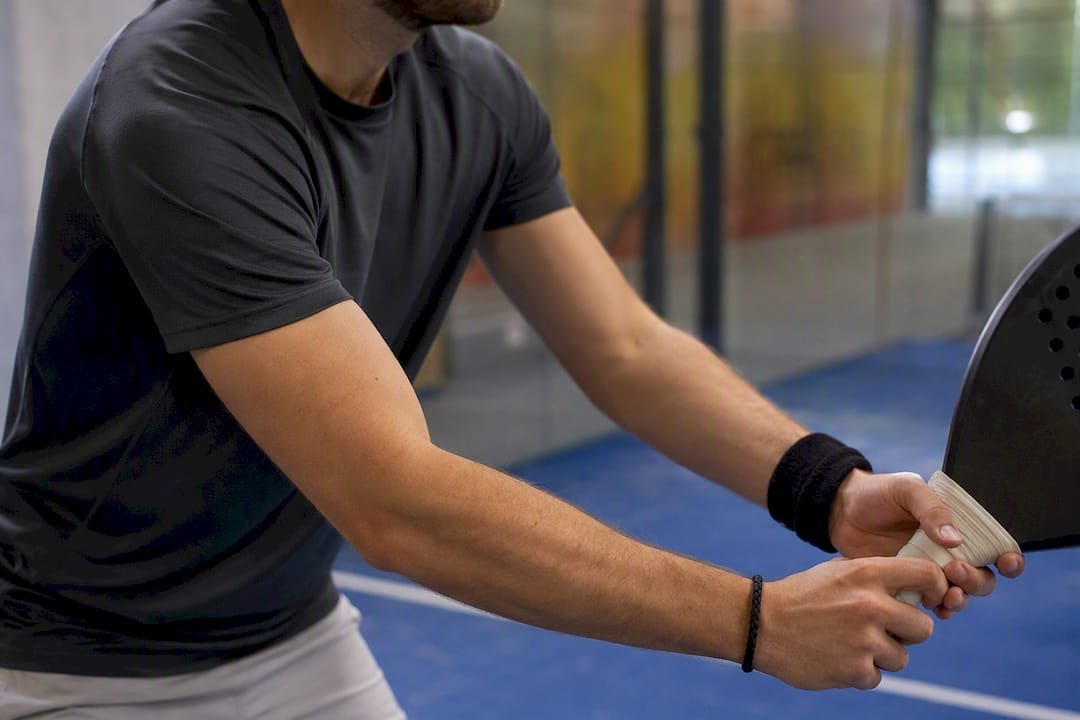
Braided cord or loop straps are the low-profile option. They’re thin, rule-compliant by design, and don’t add bulk near your wrist during fast net exchanges. Players who volley a lot often prefer these because a padded wristband can interfere with quick wrist snap at the net.
Padded wristbands trade that low profile for comfort and sweat control. They’re the better pick if you play in hot conditions or tend to grip tighter than most, but check the bulk against your stroke clearance before committing to one for competitive play.
Removable buttcap straps, like systems built around SMART BUTTCAP attachments, let you swap colors or replace a worn strap without retying anything. The catch: your racket needs a compatible buttcap system. Confirm compatibility with your specific model before buying, since a fixed knot or sewn loop won’t accept a removable design.
- Braided cord: lightweight, minimal bulk, rule-compliant
- Padded wristband: better sweat control, bulkier profile
- Removable buttcap: easy swapping, requires compatible racket
How do you fit a wrist strap without limiting your swing?
Fitting a strap correctly takes two minutes and prevents both a rule violation and a mid-match adjustment. Here’s the sequence coaches actually teach:
- Locate the attachment point on the handle, usually a small loop or slot near the buttcap, and thread the strap through in the manufacturer’s recommended orientation.
- Loop it around your wrist and pull it snug, not tight. You want it close enough to catch the racket if your grip slips, loose enough that your wrist rotates freely through a serve.
- Test it during warm-up. Hit a few overheads and volleys. If you feel any pinching or your hand starts tingling, loosen it a notch.
- Recheck between sets. Straps shift slightly with sweat and movement, so a quick tension check costs nothing.
Pro Tip: A good gauge is the one-finger test: you should be able to slide one finger between the strap and your wrist when it’s on. Any tighter and you’re restricting circulation; any looser and it won’t hold the racket if your hand opens up.
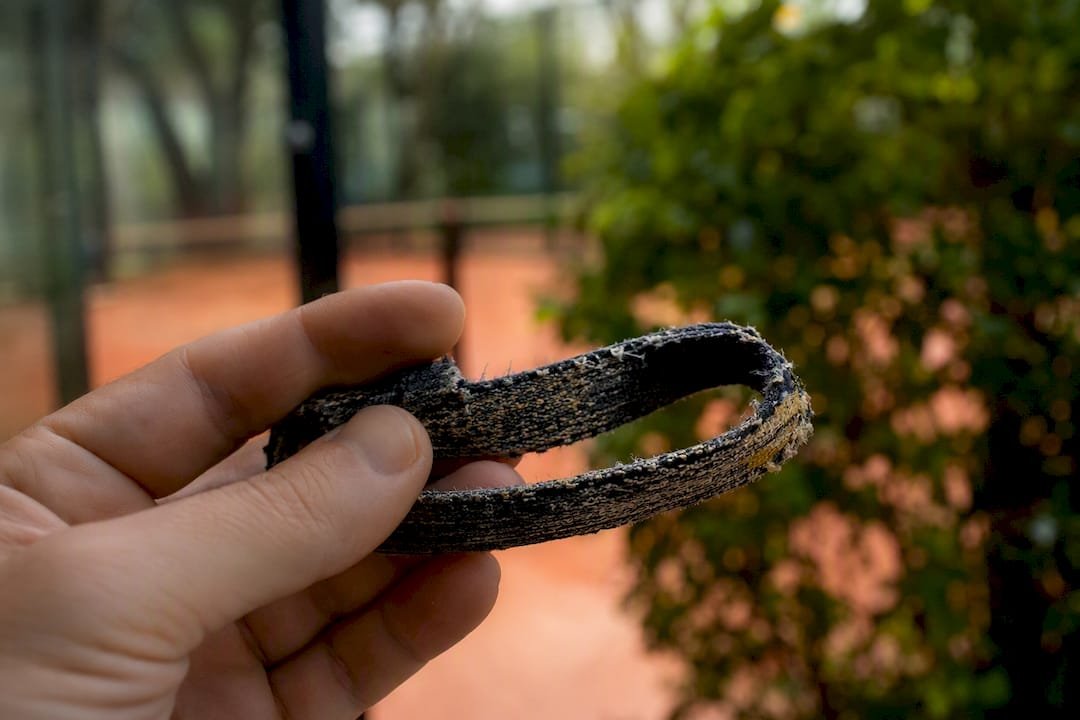
Watch for wear signs too. A fraying cord, a stretched loop, or a stiff, cracked wristband means it’s time to replace, not repair. A strap that’s lost its structure won’t catch a racket the way it’s supposed to.
What should you check before buying a padel wrist strap?
A few minutes of checking before checkout saves you from buying something you can’t legally use in a sanctioned match or league night.
Run through this before adding one to your cart:
- Material: confirm it’s non-elastic, not a stretchy cord marketed for other racket sports
- Length: verify it sits at or under 35 cm once attached and adjusted
- Attachment: make sure it locks to the handle securely, whether tied, looped, or buttcap-mounted
- Profile: decide if you want low-bulk cord or a padded band based on how you play
- Washability: if it’s a padded wristband, confirm it’s machine-washable; cord styles usually just need a wipe-down
Material choice affects how long a strap lasts. Nylon and polyester cords tend to hold their shape longer under repeated sweat exposure, while some interchangeable padded straps are designed specifically for easy swapping when hygiene matters more than longevity. If you’re eyeing a removable buttcap style, check your racket’s manual or ask the retailer directly, since proprietary systems don’t always cross over between brands. Pairing a compliant strap with the right racket shape for your play style rounds out the setup.
How do you clean and maintain a padel wrist strap?
Keeping a strap functional is mostly about catching wear before it fails you mid-rally.
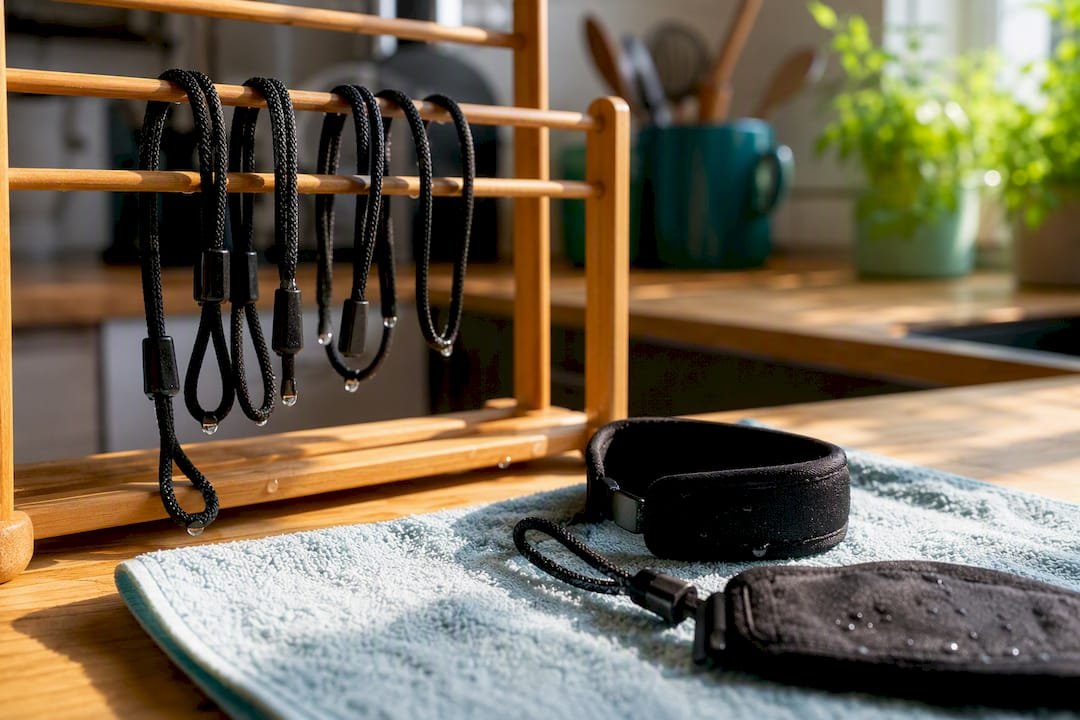
Padded wristbands generally go straight into a mesh laundry bag on a cold, gentle cycle, then air dry flat. Braided cords usually just need a damp wipe since machine washing can weaken the weave over time. Either way, avoid high heat drying, which breaks down the fibers faster than normal play does.
Watch for three failure signs: fraying at the stress points, a loop that’s stretched out of shape, or a wristband that’s gone stiff and lost its cushioning. Any of those means replacement, not more washing. If you play multiple sessions a week, keeping two straps in rotation gives one time to dry fully and cuts down on the smell and bacteria buildup that comes with constant sweat exposure.
A coach’s view on the mistakes players keep making
The most common mistake isn’t skipping the strap entirely, it’s wearing one that’s either strangling the wrist or so loose it’s doing nothing. New players tend to overtighten out of nerves, then wonder why their hand goes numb by the second set. Others forget the strap during warm-up and only remember once a coach or referee flags it, which is exactly the window where a slip is most likely.
A simple fix: make putting the strap on part of the same routine as tightening your shoelaces or checking your grip tape. Muscle memory beats reminders every time.
Worn cords are the other blind spot. Players keep using a fraying strap for months because it “still works,” right up until it snaps mid-swing. If you’re shopping for a reliable replacement, Padelhip lists strap and accessory options with authenticity guarantees, which matters when a $10 part is the thing standing between your racket and the fence.
— Serena
Get a compliant wrist strap from Padelhip today
Padelhip carries wrist straps built to the non-elastic, 35 cm standard, so you’re not stuck cross-checking spec sheets before a tournament. Every listing on Padelhip’s padel store notes attachment type, so you can confirm buttcap compatibility with your racket before you buy, whether that’s a fixed loop or a removable system.

Shipping runs from Spain with clear delivery and returns details listed upfront, so a strap that doesn’t fit your buttcap isn’t a dead end. Pair a new strap with a compatible frame like the Drop Shot Canyon Pro Comfort 1.0 if you’re upgrading both at once, or check the overgrip versus replacement grip guide if your handle feel needs attention too. If you’re also playing partner-matched games regularly, a resource like Conppi can help you find local players who take the same rules seriously.
Browse Padelhip’s strap and accessory selection now and get a compliant setup on court before your next match.
Sources
- The wrist strap in padel: It’s mandatory | Padel Magazine
- Wrist Strap | Babolat
- Padel Wrist Strap Black 2-P | STIGA Sports
- Flo Wrist Straps – Flo Padel