

The Best Padel Ball Collector for Players and Coaches

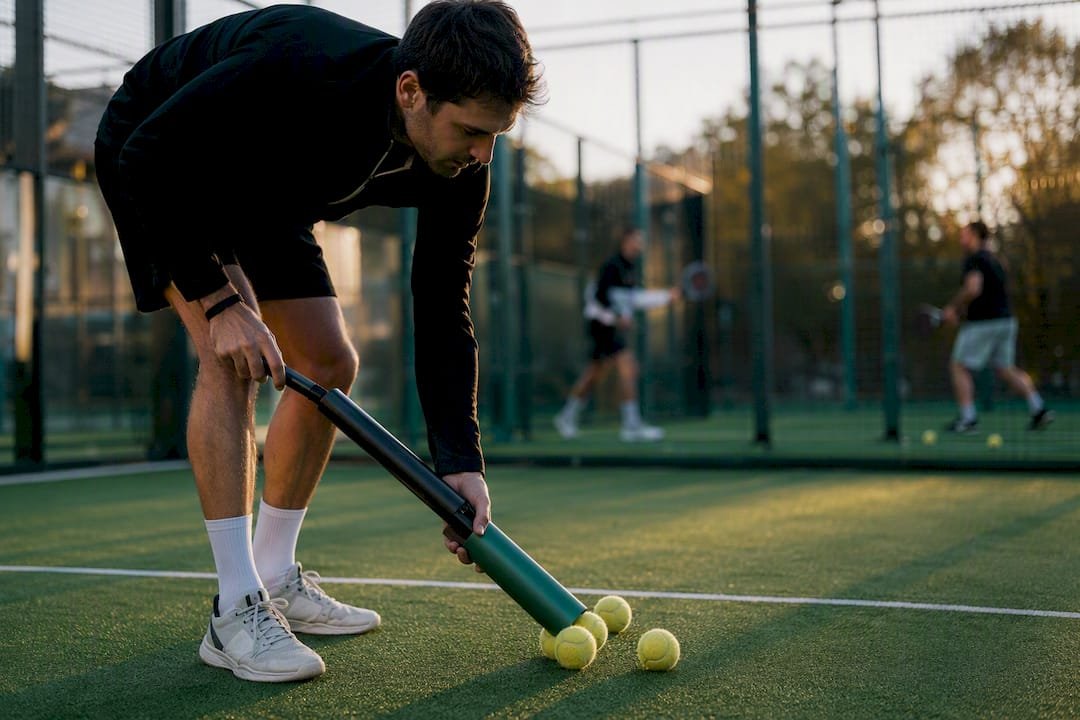
For most players, a lightweight ball tube or a racket-mounted picker is your best bet. For coaches and clubs running drills all day, a high-capacity hopper or wheeled collector saves far more time. The logic is simple: fewer bends, fewer stoppages, more actual play.
Padelhip stocks accessories built around that same principle, and it’s the most straightforward place to buy once you know which type fits your game.
- Casual or frequent players: a ball tube (14 to 15 balls) or a racket-mounted picker
- Senior players or anyone managing back or knee strain: racket-mounted picker for instant, no-bend pickups
- Coaches and clubs: a hopper or basket in the 50 to 120 ball range, sometimes paired with a wheeled collector for full-court cleanup
TL;DR:
- Racket-mounted pickers are ideal for players managing joint pain, as they are lightweight and allow for quick, strain-free ball recovery between points.
- Ball tubes offer a cost-effective solution for casual players practicing once a week, providing portability without sacrificing performance in open court areas.
- Hoppers and baskets are best for coaches or clubs dealing with high volumes, as they can collect up to 120 balls and significantly reduce cleanup time.
- Rigid tubes perform poorly in enclosed courts with glass walls, making forked hopper bases more suitable for corner reach in such environments.
- Durability varies, with tubes prone to cracking if dropped or exposed to sun, and adhesive-mounted pickers requiring proper curing to prevent early detachment.
Table of Contents
- Which Padel Ball Collector Fits Your Use Case?
- How Each Padel Ball Picker Type Actually Works
- What Should You Look for in a Ball Collector?
- How Do You Use and Maintain a Ball Collector?
- Padelhip’s Picks for Every Collection Need
- Do Ball Collectors Work on Every Court Surface and Ball Type?
- How Durable Are Padel Ball Collectors, and What Warranty Should You Expect?
- What Do Player and Coach Reviews Say About Popular Models?
- What Should You Expect to Pay for a Ball Collector?
- How Do These Designs Actually Prevent Strain?
- What Most Buying Guides Get Wrong About Ball Collectors
- Get the Right Collector Without the Guesswork
- Sources
Which Padel Ball Collector Fits Your Use Case?
Matching the tool to the job matters more than chasing the “best” collector on paper. Here’s how the main categories split by who actually uses them.
- Racket-mounted pickers suit individual players who want a ball back in hand between points without breaking rhythm. They weigh next to nothing and clip or stick directly to the racket frame, so they don’t interfere with your swing.
- Ball tubes (14 to 15 capacity) hit the sweet spot of cost, portability, and volume for most players. You press the tube down over a ball, it slides in, and you walk off court without ever bending your knees.
- Hoppers and baskets (50 to 120 capacity) are built for coaches running back-to-back drills or clubs clearing a court between bookings. Fewer trips to empty means less downtime for everyone waiting on the sideline.
- Wheeled or mower-style collectors exist for high-volume situations, like a club sweeping several courts after a tournament. They cost more and take up storage space, but they turn a 20-minute cleanup into a five-minute pass.
Pick based on how often you’ll use it and how many balls you’re dealing with at once, not on whichever option looks the most impressive.
How Each Padel Ball Picker Type Actually Works
Every collector on the market solves the same problem (getting balls off the ground without bending) but the mechanics differ enough that it’s worth knowing what you’re buying.
Tube pickers work on light pressure. You line the open end over a ball and push down; a flexible collar lets the ball pop through and settle into the tube above it. Retail listings put standard tube capacity around 14 balls, with some models like the Osaka collector holding up to 15. Most run close to 96 centimeters long, which keeps you upright while you sweep a baseline.
- Pros: cheap, portable, no assembly, easy to carry in a bag
- Cons: rigid tubes struggle in tight court corners where balls sit against the glass
That corner problem is real enough that some manufacturers build dedicated pickup forks specifically because rigid tubes underperform against enclosed padel walls.
Racket-mounted pickers attach to the racket face using adhesive or a clip, letting you scoop a ball without crouching mid-point. Product documentation from PadelGrab lists weights from roughly 9 grams up to 16 grams, light enough that you won’t notice it during a rally. The catch is the mounting: adhesive-backed versions need real curing time before they’ll hold.
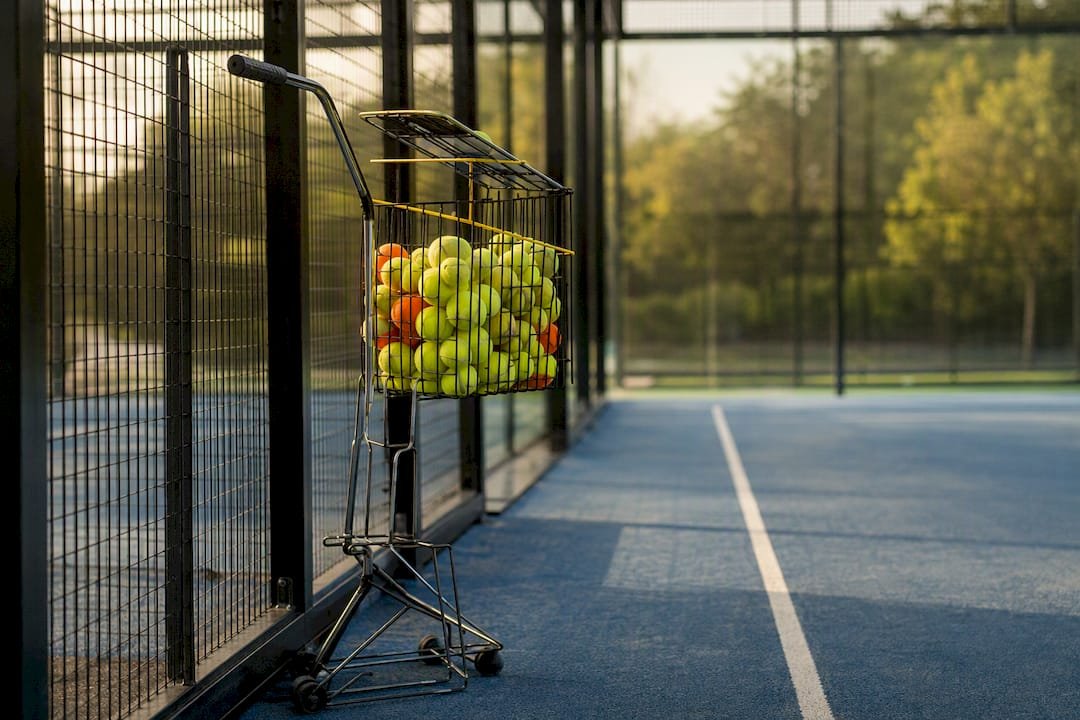
Hoppers and baskets flip open at the top for fast loading and closed for storage, often with a forked base designed to scoop balls out of corners where tubes fail. Capacity examples run from 80 balls up to 120 in mower-style club collectors.
Robotic or mechanized options exist mostly for high-traffic training centers. They’re expensive and add moving parts to maintain, so they only make sense when a club is collecting hundreds of balls daily across multiple courts.
What Should You Look for in a Ball Collector?
Coaches and players weigh these criteria differently, and knowing which one matters most to you narrows the decision fast.
If you’re coaching, capacity and corner reach come first. Rigid tubes leave you wrestling balls out of tight spaces mid-drill, which kills momentum. If you’re a player, weight and how easily the thing fits in a bag matter more than raw capacity.
A rough rule of thumb: if you’re running back-to-back group drills, go with a 50-ball-plus hopper. If you mostly play singles or doubles for your own practice, a tube or racket-mounted picker covers you completely.
| Criteria | Best for players | Best for coaches |
|---|---|---|
| Best for | Individual practice, casual matches | Group drills, club sessions |
| Capacity | 14 to 15 balls | 50 to 120 balls |
| Portability/weight | Very light, single-digit grams (racket-mounted) to a few hundred grams (tube) | Heavier, often needs a handle or wheels |
| Corner reach | Limited on rigid tubes | Strong with forked hopper bases |
| Ease of emptying | Tilt and pour | Flip-top lid, fewer stops needed |
| Price/value | Lower upfront cost | Higher cost, justified by time saved per session |
Watch for a few red flags before you buy: adhesive-backed pickers that skip curing instructions entirely, large hoppers sold without a carry handle, and rigid tubes marketed as “corner friendly” with no design feature to back that claim up.
Pro Tip: If you coach multiple sessions a day, don’t force one tool to do everything. A hybrid setup, one hopper for bulk collection plus a tube for the edges, cuts downtime during live drills better than either tool alone.
How Do You Use and Maintain a Ball Collector?
Getting the technique right extends the life of the tool and saves you from mid-session frustration.
- Tube pickers: position the open end directly over the ball, press down with steady pressure, and tilt the tube toward a basket or bag to empty once it’s full.
- Racket-mounted pickers: clean the racket frame before mounting. If it’s adhesive-backed, rest the racket upside down for 24 hours before your next session to let the bond set properly.
- Hoppers: carry with both hands on the handle when full, and empty into a ball bag rather than dumping loose balls that can roll under nearby equipment.
Pro Tip: Wipe grit out of tubes after outdoor sessions. Sand and clay dust wear down the internal collar faster than normal use, which shortens the life of the pressure mechanism.
Store everything out of direct sun. UV exposure degrades plastic tubes and hopper frames faster than regular wear does, and a warped tube won’t seal properly no matter how new it is.
Padelhip’s Picks for Every Collection Need
Padelhip focuses on authentic, performance-grade padel gear at prices that don’t punish beginners for wanting decent equipment, backed by fast shipping and straightforward returns.
- For compact ball storage between drills, the Head Padel One Ball Box covers players who need a simple, portable container rather than a full tube.
- Pair any collector with a bag built for court transport, like the Aca Padel Backpack, so gear and balls move together.
- Full details on delivery timelines and returns sit on the Padelhip shipping page.
Do Ball Collectors Work on Every Court Surface and Ball Type?
Most padel ball collectors are built to handle the surfaces you’ll actually encounter: artificial turf, concrete, and the synthetic panels used in glass-walled courts. Tube pickers rely on a pressure collar that grips a standard padel ball’s felt surface, so they work consistently regardless of whether the court is outdoor turf or an indoor hard surface.
Where things get trickier is at the walls. Glass and mesh enclosures push balls into tight corners that a straight tube physically can’t reach without awkward angling. This is exactly why forked hopper attachments exist. Coaches running sessions on fully enclosed courts benefit more from a hopper with a corner-scoop base than from a tube alone.
Ball type matters less than court geometry. Standard, pressurized padel balls all sit within a narrow size and compression range, so any tube or hopper sized for regulation balls will handle both practice balls and match-grade balls without issue. The one exception is heavily worn or waterlogged balls picked up after rain. A softened, swollen ball can stick in a tube’s collar more than a fresh one does, so outdoor coaches working in damp conditions often lean on hoppers or racket-mounted pickers instead, since neither depends on a tight-tolerance mechanism to function.
If you split time between indoor and outdoor courts, a tube built with a slightly wider collar tolerance handles both conditions better than a budget model designed for one surface only.
How Durable Are Padel Ball Collectors, and What Warranty Should You Expect?
Build quality varies more by category than by brand. Tube pickers are usually molded plastic or reinforced polymer, which holds up well to normal court use but can crack if dropped repeatedly on concrete or left baking in direct sun for a full season. Hoppers, built from thicker frames and mesh or plastic basket construction, tend to outlast tubes simply because they carry less repetitive stress on a single moving part.
Racket-mounted pickers face a different durability question: it’s the adhesive bond, not the plastic piece itself, that fails first. A picker that’s mounted correctly and given a full curing period tends to stay attached through months of regular play. One installed in a rush, without cleaning the frame first, is far more likely to come loose within weeks.
Warranty terms are rarely headline features on these products, and most retailers don’t publish long-term guarantees for small accessories like tubes or pickers. What you can rely on instead is a retailer’s general returns policy. That’s one reason it’s worth buying from a source with a clear returns process rather than a marketplace listing with no recourse if a product arrives defective or the adhesive fails to bond on delivery.
Treat a collector the way you’d treat any piece of court equipment exposed to sun and grit: inspect it every few weeks, replace it when the mechanism stops gripping cleanly, and don’t expect a $15 tube to last as long as a $150 hopper.
What Do Player and Coach Reviews Say About Popular Models?
Feedback across retailer listings and coaching forums tends to cluster around three points: weight, corner performance, and how fast a collector empties.
Tube pickers get consistently positive marks for portability and price, but corner retrieval is the recurring complaint, especially from players on enclosed courts who describe wrestling balls loose from the glass. Hopper and basket models draw the opposite feedback. Coaches report smoother drill sessions and fewer stoppages, particularly with forked bases designed for corner work, though the tradeoff is a bulkier item to carry and store between sessions.
Racket-mounted pickers get some of the most specific praise, largely from senior players and anyone managing joint pain, who note the near-instant recovery between points. The complaints that do surface almost always trace back to installation. Riders skip the curing period, mount the piece to a dirty frame, and end up with a picker that detaches within a few sessions.
Wheeled and mower-style collectors see far fewer individual reviews simply because they’re a club purchase, not a personal one. Where feedback exists, it centers on time saved during full-court cleanups rather than day-to-day play.
The pattern across every category is the same: reviewers rate collectors highly when the tool matches how they actually train, and poorly when it’s mismatched, like a tube bought for corner-heavy drills or a hopper bought by someone who just wanted a lighter bag.
What Should You Expect to Pay for a Ball Collector?
Price scales almost exactly with capacity and mechanical complexity, which makes budgeting straightforward once you know your use case.
Racket-mounted pickers sit at the low end of the range, reflecting their minimal materials and simple adhesive or clip mount. Ball tubes cost more than a picker but less than a hopper, and they deliver the best balance of price to capacity for anyone practicing solo or in pairs. Hoppers and baskets cost noticeably more, which tracks with their larger build and the corner-reach hardware coaches actually need. Wheeled and mower-style collectors sit at the top of the price range and function more like club equipment than personal gear, justified by the amount of court-clearing time they save across a full day of bookings.
Cost-effectiveness depends entirely on how often you’re collecting balls. A player who practices once a week gets full value from a $15 to $20 tube and never needs to think about it again. A coach running four sessions a day burns through the time savings of a hopper within the first week, making the higher upfront cost easy to justify. Buying a hopper as a solo player, or trying to run a coaching business off a single tube, is where most cost-effectiveness complaints originate, not from the products themselves but from mismatched expectations.
How Do These Designs Actually Prevent Strain?
The ergonomic pitch behind every collector on this list boils down to one motion you’re no longer making: the repeated squat-and-reach to pick a ball off the ground. Over a two-hour coaching session, that motion repeated dozens of times adds up to real strain on the lower back and knees, which is the reason retailers lean so heavily on the ergonomic angle in their product copy.
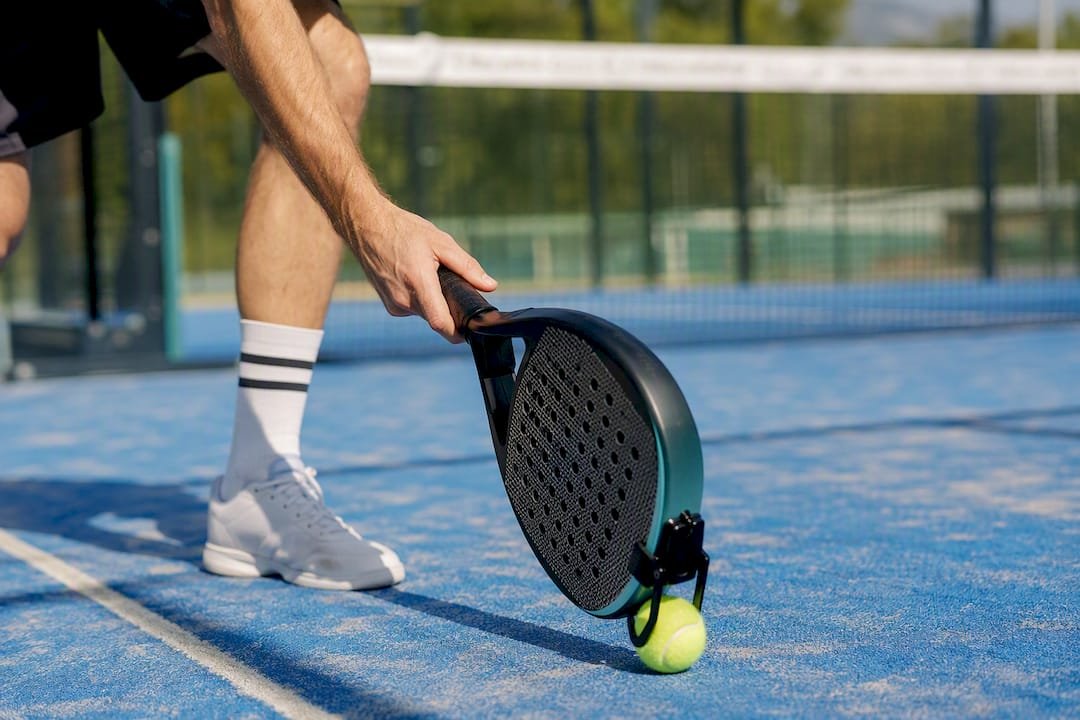
Tube pickers cut that strain by letting you stay upright and simply lower the tube, not your body, to the ball. The tube length (typically extended to around 96 centimeters) is calibrated so an average adult doesn’t need to bend the spine at all. Racket-mounted pickers go a step further for anyone managing chronic joint pain: there’s no separate tool to hold, so the pickup motion is just an extension of a shot you’re already making.
Hoppers introduce a different strain consideration. A full 80 or 120 ball basket has real weight to it, so ergonomic hopper designs prioritize a balanced handle placement and a low center of gravity to prevent wrist and shoulder strain when carrying it between courts. Minimizing physical fatigue during a session isn’t just about comfort. Less time spent recovering from strain translates directly into more time spent actually training, which is the entire point of buying a dedicated collector instead of just bending over.
The takeaway for buyers: if joint strain is your main concern, prioritize a racket-mounted picker or a well-balanced tube over raw capacity every time.
The most efficient collector is the one matched to how often you play or coach, not the one with the highest ball capacity on the label.
| Point | Details |
|---|---|
| Match tool to frequency | Casual players get full value from a tube; daily coaches need hopper capacity to avoid downtime. |
| Corner reach separates categories | Rigid tubes struggle against glass walls; forked hopper bases handle enclosed-court corners better. |
| Adhesive pickers need cure time | Rest a racket-mounted picker upside down for 24 hours after mounting to avoid early detachment. |
| Price tracks capacity and mechanics | Racket-mounted pickers cost the least; wheeled mower-style collectors cost the most and suit club-scale use. |
| Padelhip supports the setup | Padelhip stocks accessories like the Head Padel One Ball Box and offers fast shipping with easy returns. |
What Most Buying Guides Get Wrong About Ball Collectors
Most advice on this topic treats “best padel ball collector” as a single ranking question, as if one product wins for everyone. It doesn’t work that way. The research behind every product type here points to the same conclusion: capacity and corner reach matter enormously for coaches, and they matter almost not at all for a player practicing twice a week.
The conventional advice oversells hoppers to casual players who’ll never fill them and undersells racket-mounted pickers for anyone managing joint strain, probably because pickers look like a minor accessory rather than a “real” purchase. That’s backwards. For a player dealing with knee or back pain, a nine-gram picker changes the experience of practice more than any tube ever will.
If you take one thing from this guide, prioritize honesty about your own usage before you look at a single spec sheet. A coach running four sessions a day and a weekend player have almost nothing in common in what they need, even though they’re shopping in the same product category.
— Serena
Get the Right Collector Without the Guesswork
Padelhip carries the accessories that match exactly what this guide recommends, at prices that don’t punish you for buying quality gear. If a compact ball box fits your practice routine better than a full tube, the Head Padel One Ball Box is in stock and ready to ship. Pair it with a bag built for the job, like the Aca Padel Backpack, so your collector, balls, and racket travel together instead of rattling around loose.
Every order ships with the same authenticity guarantee and straightforward returns process outlined on the Padelhip shipping page, so there’s no risk in trying gear built specifically for padel rather than repurposed tennis equipment. Browse the full accessory range on Padelhip and pick up your collector before your next session.
Sources
- Court Ball Collector – SportIT
- PadelGrab™ product pages
- Vermont Tennis Ball Collector Mower – Net World Sports