

Padel Clothing Sizing: How to Get the Right Fit Every Time

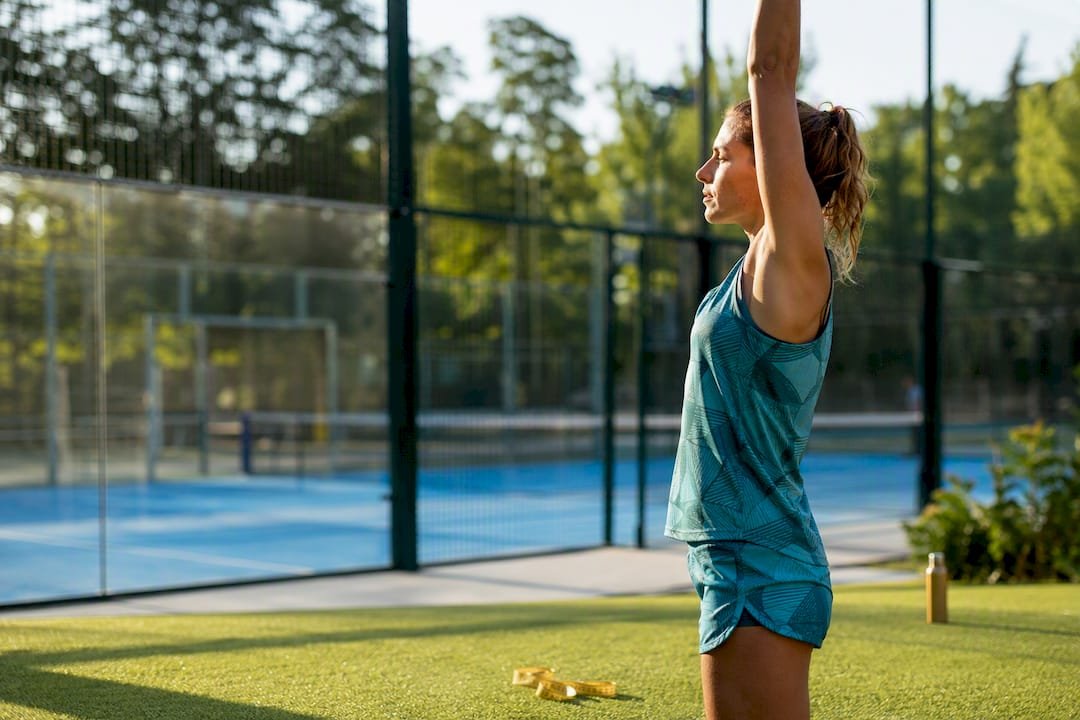
Pick tops by your measured chest, bottoms by your waist and hips, and shoes by foot length tested with actual sport socks. Then check the specific brand’s chart before you buy, because a men’s medium from one label can run several centimeters different from another. Cuera’s own chart, for instance, lists men’s medium chest range that is typically wider than women’s medium chest range, a gap that a generic “M” label does not specify between these chest ranges.
Before you order anything, run through this:
- Measure chest, waist, hips, and foot length with a soft tape, not a guess based on your usual size.
- Match the measurement that governs the garment: chest for tops, waist/hips for bottoms.
- Pull up the actual brand’s size chart in centimeters, not their letter-size shorthand.
- Factor in the season. Padeloupe’s fit guidance recommends breathable fabrics in summer and layered thermal pieces in winter, which changes how much room you need.
- Confirm the return window before checkout. Padelhip built its sizing content and easy exchanges around exactly this problem.
Key Takeaways
Correct padel clothing sizing comes down to matching measured chest, waist, hip, and foot length to a brand’s own centimeter chart rather than trusting a letter size.
| Point | Details |
|---|---|
| Measure before you shop | Take chest, waist, hip, inseam, and foot length with a soft tape before checking any chart. |
| Match measurement to garment | Use chest for tops and waist/hip for bottoms when your numbers fall between sizes. |
| Test in motion | Try overhead reaches, squats, and lateral shuffles to catch restriction before wearing gear on court. |
| Size shoes with sport socks | Measure foot length and try shoes with the socks you’ll actually wear, leaving thumb-width toe room. |
| Adjust for layering season | Size outer shells slightly roomier in winter to fit base and mid layers underneath. |
| Check Padelhip’s charts and returns | Padelhip publishes garment-specific size charts and a clear returns policy to reduce online sizing risk. |
Useful size charts and store resources
Cross-check your measurements against the manufacturer charts referenced throughout this guide before finalizing a purchase.
Table of Contents
- How do you measure your body for padel clothing?
- How do you read a brand’s size chart correctly?
- What’s the right fit for tops, shorts, dresses, and jackets?
- How should you size padel shoes?
- Do you need to size differently for summer and winter?
- What should you check before buying padel clothing online?
- Where can you find accurate size charts and easy returns?
- Sources
How do you measure your body for padel clothing?
Get this right and every chart makes sense; get it wrong and no chart will save you.
- Chest: Wrap the tape under your arms, across the fullest part of your chest, keeping it level front to back. Breathe normally, don’t puff up.
- Waist: Measure at your natural waistline, roughly an inch above your belly button, not where your pants happen to sit.
- Hips: Find the widest point around your seat and thighs, keeping the tape parallel to the floor.
- Inseam: Measure from the crotch seam of a well-fitting pair of pants down to the ankle bone.
- Foot length: Stand on a sheet of paper, mark heel and longest toe, then measure the distance in centimeters.
A few things trip people up. Keep the tape snug but not compressing skin, and always measure standing straight rather than hunched over a mirror. If you can, get someone to help with chest and hip measurements. It’s nearly impossible to keep the tape level while checking a number over your shoulder.
Pro Tip: Before locking in a size, raise your arms overhead and do a shallow squat while wearing your closest-fitting current top and shorts. If either restricts that motion, size up rather than settling for tight and hoping the fabric stretches.
How do you read a brand’s size chart correctly?
Letter sizes are marketing shorthand. Centimeters are the actual measurement. That distinction matters more in padel than in everyday clothing because you’re reaching, lunging, and pivoting constantly, and a “medium” that fits standing still can bind the second you stretch for a volley.
The process is simple once you have your numbers: measure, then find where you land inside the brand’s published ranges, then choose based on how much ease you want. NOX’s textile size chart lays out chest, waist, hip, and length in centimeters for tops, bottoms, and outer layers, so you can line up your own numbers against theirs rather than assuming a size carries over from another brand.
The biggest mistake shoppers make isn’t measuring wrong. It’s skipping the measurement entirely and ordering “whatever size I usually wear,” then blaming the brand when it doesn’t fit.
Watch for these pitfalls:
- Assuming a size is universal across brands, or even across product lines from the same brand.
- Relying on your usual size from casual wear instead of your actual measurement.
- Ignoring fabric content. A cotton-blend tee and a compression top in the same listed size fit very differently.
When you fall between two sizes, prioritize chest for tops and waist or hip for bottoms, whichever is larger relative to the chart. Converting between international systems (EU, UK, US, JP) adds another layer, since a UK 10 isn’t an EU 38 in every brand’s system. Centimeter measurements sidestep that problem entirely, which is why they’re worth the extra thirty seconds every time.
What’s the right fit for tops, shorts, dresses, and jackets?
Fit rules change by garment because the job each piece does on court is different.
Tops need enough ease across the shoulders and chest to let you reach and swing without the fabric pulling. Too tight and your serve motion feels restricted; too loose and extra fabric flaps during sprints. Some brands, including guidance from T-Jersey Padel, actually recommend sizing up on jerseys specifically because of this range-of-motion demand.
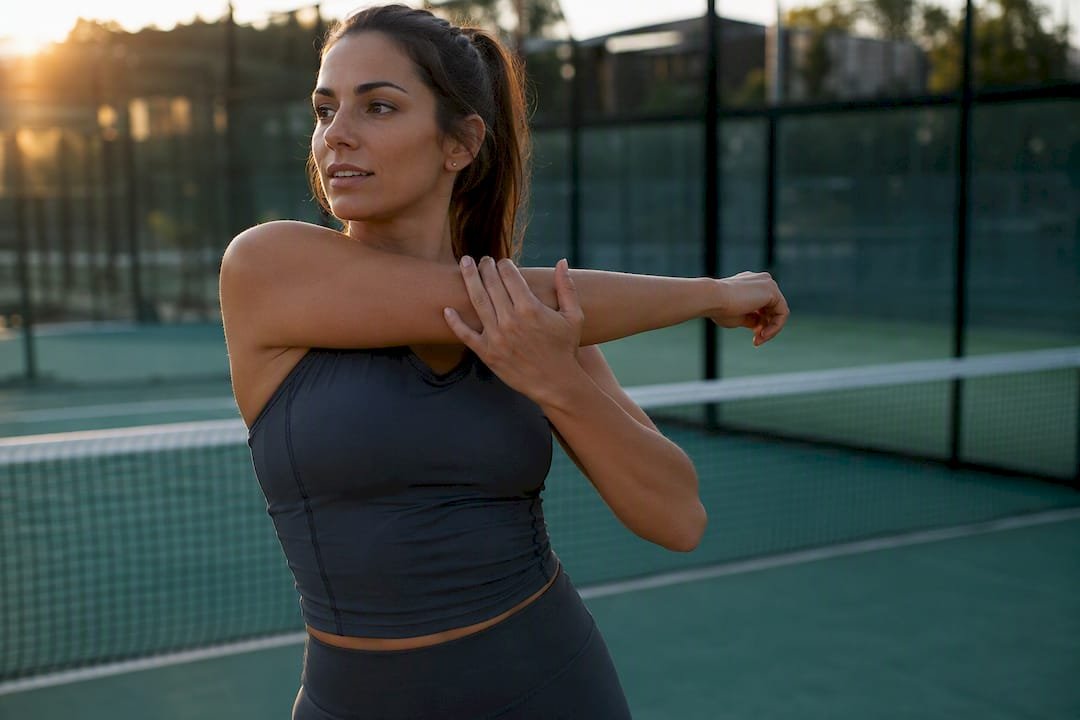
Shorts and skorts are the opposite case. That same T-Jersey guidance suggests sizing down on shorts, since waistbands with elastic or drawstrings run generously and a properly snug fit prevents slipping mid-rally. For skorts with built-in shorts, like the Bullpadel Breca skirt, check the hip measurement on the chart rather than the waist, since that’s usually the tighter constraint.
Dresses follow the same hip-first logic, and a piece like the Nox Pro Blackberry dress publishes its own chart for exactly this reason.
Jackets and outer layers, such as the Head Blur men’s padel jacket, need room to layer underneath and sleeve length that doesn’t ride up on a full overhead swing.
Base layers flip the rule again: size snug, since a loose thermal layer traps less heat and bunches under your main kit. Women’s fit guidance from Freddy makes the case for trying multiple cuts rather than assuming one size covers every style, since construction varies enough between brands that “your size” isn’t a fixed number.
Pro Tip: Try the actual overhead smash motion in the fitting room or at home, not just a mirror check. Static fit and in-motion fit are two different tests.
How should you size padel shoes?
Shoes are where sizing mistakes hurt the most, because padel’s stop-start lateral movement punishes anything loose or cramped.
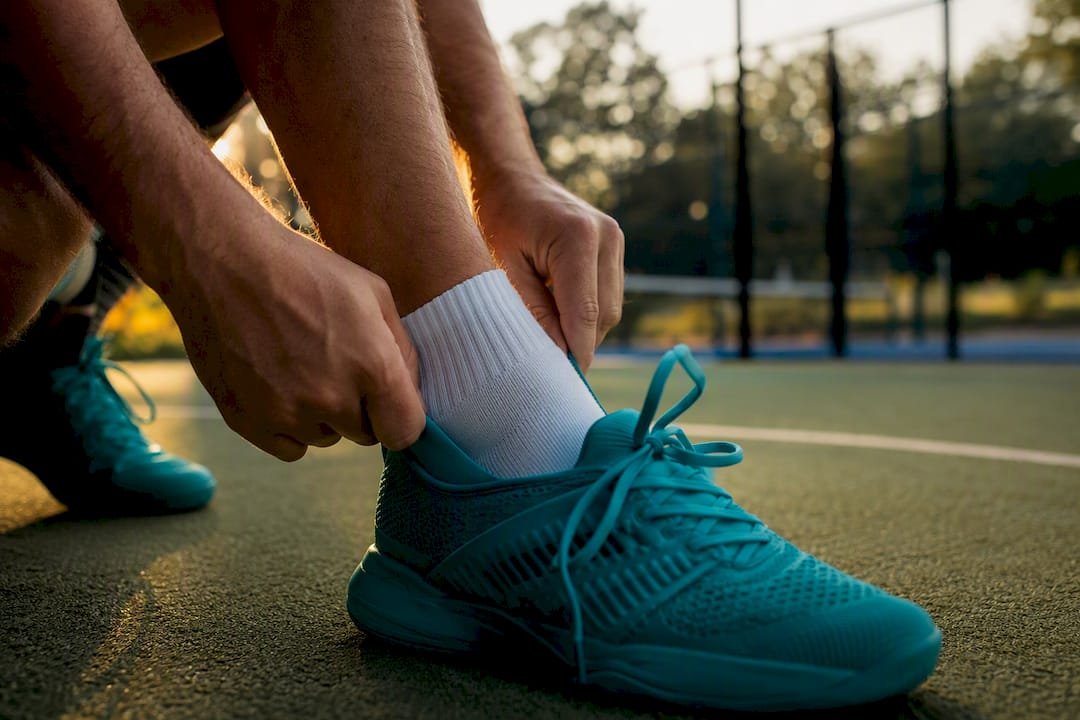
Start with heel-to-toe foot length in centimeters, measured standing, and match it against the brand’s own chart rather than your usual sneaker size. Padel shoes run differently from running shoes and often differently from tennis shoes too, since the sport demands more lateral stability. A detailed comparison of padel versus tennis shoes breaks down why the sole pattern and lateral reinforcement matter more than raw cushioning.
Always try shoes with the socks you’ll actually wear on court. Thicker sport socks can eat up half a size of room. Leave a thumb’s width of space at the toe, and check width too. A shoe can be the right length and still pinch across the forefoot if the last runs narrow.
A shoe that’s a half size too small won’t just feel uncomfortable. It will cost you a step on every lateral shuffle, because your toes are already jammed against the front before you even push off.
If you get hotspots or heel slip during your first indoor session, that’s a fit issue worth exchanging, not something insoles will fix.
Do you need to size differently for summer and winter?
Layering changes what “correct size” even means, since you’re no longer dressing one body, you’re dressing one body plus however many layers the weather demands.
The structure that works: a snug moisture-wicking base layer, an athletic-fit mid layer sized to your normal measurements, and a slightly roomier outer shell that has to fit over both without restricting your swing. Padeloupe’s seasonal breakdown backs this layering order and stresses breathable fabrics in warm months against windproof, thermal options in cold ones.
- Summer: prioritize breathable, moisture-wicking fabric and true-to-measurement sizing since there’s no layering buffer.
- Winter: size your outer shell one notch roomier than your usual chart pick to accommodate a base and mid layer underneath.
- Base layers always fit snug regardless of season. Loose thermal wear loses its insulating function.
Get the outer shell sizing wrong in winter and you’ll either restrict your swing or trap cold air where warmth should be. Neither helps your game.
What should you check before buying padel clothing online?
Most sizing regret comes from skipping steps that take thirty seconds. Run this before you check out:
- Open the specific product’s size chart, not a generic brand-wide chart from another category.
- Read any garment-specific fit notes (runs small, true to size, relaxed cut).
- Confirm the return and exchange window before you commit. Padelhip’s shipping and returns page spells out exactly what that window looks like.
Once it arrives, test it before cutting tags off if you can avoid it:
- Squat and hold for five seconds, checking for pulling across the thighs or waistband.
- Lunge forward on each leg to test crotch and hip room.
- Reach overhead and rotate your torso to test shoulder and chest ease.
- Shuffle laterally a few steps to check how bottoms and shoes move with you.
If a garment restricts any of those four movements, that’s not something that “breaks in.” That’s a return.
Photograph the fit issue and note which specific movement exposed it. That detail speeds up any exchange conversation considerably.
A note from the Padelhip team
. The sizing question we hear most often isn’t “what’s my size,” it’s “why does my usual medium not fit this brand,” and the honest answer is always the same: check the actual chart… Our sizing resources exist because we’d rather you order once and keep it.
Where can you find accurate size charts and easy returns?
Padelhip built its product pages around the one thing generic size guides can’t give you: the exact chart for the exact garment you’re about to buy. Rather than a universal size grid that ignores brand differences, every listing carries garment-specific measurements and fit notes, so you’re matching your own numbers to that product, not to an assumption.

Browsing shoes, for example, the Drop Shot padel shoes page lists the exact length range so you can check it against your own heel-to-toe measurement before you order. On the apparel side, product pages like the Adidas performance shorts and the Nox Pro Blackberry dress both carry their own charts and fit notes rather than a one-size-fits-all label. Padelhip carries gear from Bullpadel, Adidas, Babolat, and Head, and each brand’s chart is published on its own product page rather than buried in a generic FAQ.
If the fit still misses once it arrives, the shipping and returns page walks through the exchange process plainly. Pull your measurements, check the chart on the product you want, and order with a real number behind your choice instead of a guess.