
The Padel Accessories List: What to Buy First

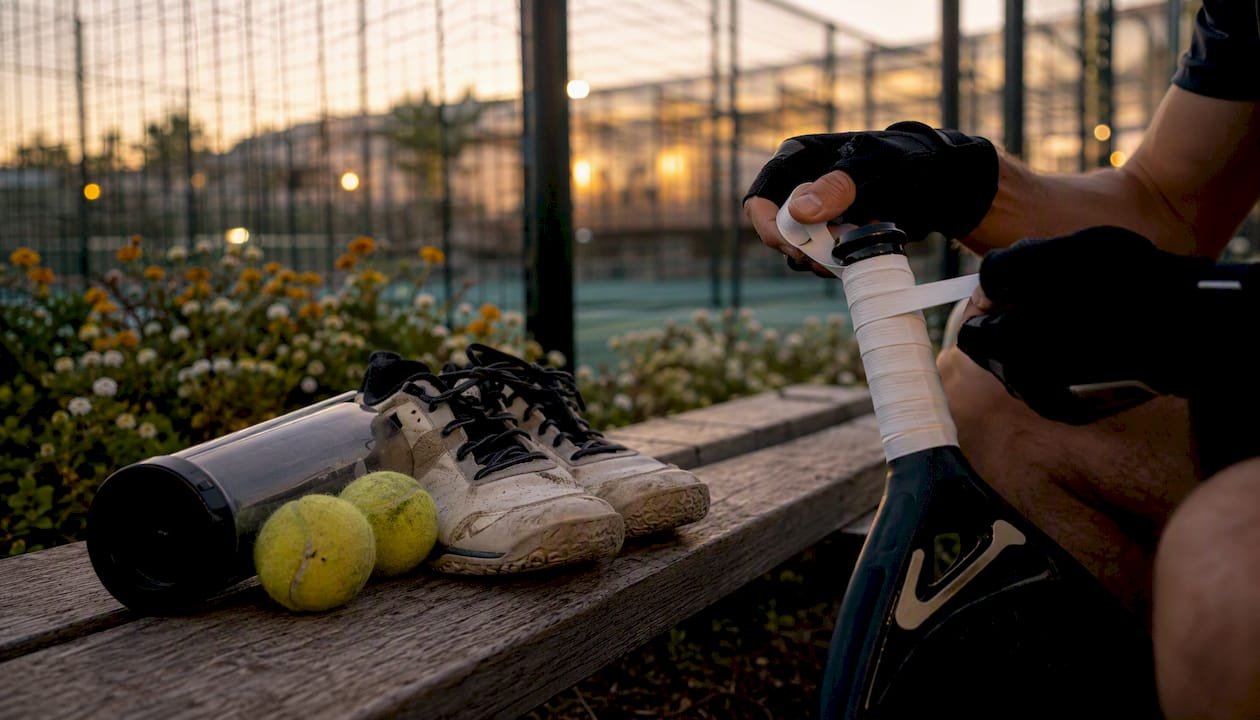
If you’re just getting into padel, the short answer is this: buy a racket, padel shoes, and a tube of balls first. Everything else follows. The essential padel accessories most coaches and retailers agree on break down into a clear priority order:
- Padel racket (control-oriented, beginner-friendly)
- Padel-specific shoes
- Padel balls (one tube of three to start)
- Grip or overgrip
- Padel bag or backpack
- Bumper strip or edge protector
- Moisture-wicking socks and basic sports clothing
Items like vibration dampeners, wristbands, and cleaning kits are worth having eventually, but none of them affect your first session. Spend your budget on the top three, then fill in the rest over the following weeks.
Pro Tip: Padelhip ships authentic padel gear to Ireland with easy returns, so you can order your starter kit without the risk of being stuck with the wrong size.
Key Takeaways
Racket, shoes, and balls are the only items you genuinely need to start playing padel. Everything else improves comfort and protects your investment, but none of it replaces getting the core three right first.
| Point | Details |
|---|---|
| Buy core gear first | Racket, padel shoes, and balls are the only items you need for your first sessions. |
| Protect your racket early | Apply a bumper strip the day you buy your racket to prevent frame damage from wall contact. |
| Replace overgrips regularly | Swap overgrips every 3–6 sessions; a slippery handle costs you control before you notice it. |
| Try before you upgrade | Rent a racket for your first few sessions and use the Padel Federation’s guidance before buying advanced gear. |
| Padelhip for Irish buyers | Padelhip stocks authentic padel gear with fast Irish shipping and easy returns, covering everything from starter kits to accessories. |
Table of Contents
- What counts as core equipment vs. padel accessories?
- Which padel balls should you buy, and when do you replace them?
- Grips and overgrips — what’s the difference and how often should you replace them?
- Racket bumpers and vibration dampeners — do you actually need them?
- What should you look for in a padel bag?
- Why padel shoes matter more than most beginners expect
- Clothing and small accessories for Irish conditions
- Maintenance accessories that extend your gear’s life
- How to prioritize purchases and budget your starter kit
- Common beginner mistakes and what coaches actually recommend
- A practical note on buying padel gear in Ireland
- Padelhip makes it easy to get your starter kit in Ireland
- Sources
What counts as core equipment vs. padel accessories?
The distinction matters more than most beginners realize. Core equipment means you literally cannot play without it: a racket, shoes, and balls. Accessories are everything that improves comfort, protects your gear, or adds convenience.
For beginners, the priority is simple: get the core right before spending on extras. A forgiving, control-oriented racket and a pair of properly fitted padel shoes will do more for your game than any add-on. The Padel School’s gear guide makes this point clearly: beginners who start with high-performance pro equipment often progress more slowly because those rackets offer less feedback and forgiveness.
Core items (buy first):
- Padel racket (round or teardrop shape for beginners)
- Padel-specific shoes
- Padel balls
Accessories (buy as needed):
- Grip and overgrip
- Padel bag
- Bumper/edge protector
- Dampeners, wristbands, towel, cleaning kit
Pro Tip: Skip pro-level accessories in your first month. A €5 overgrip and a basic bag serve a beginner just as well as premium versions costing three times as much.
Which padel balls should you buy, and when do you replace them?
Padel balls look like tennis balls but are slightly smaller and pressurized differently, which affects bounce and feel on a padel court. Using the wrong balls, or worn-out ones, changes how the game plays in ways that make learning harder.
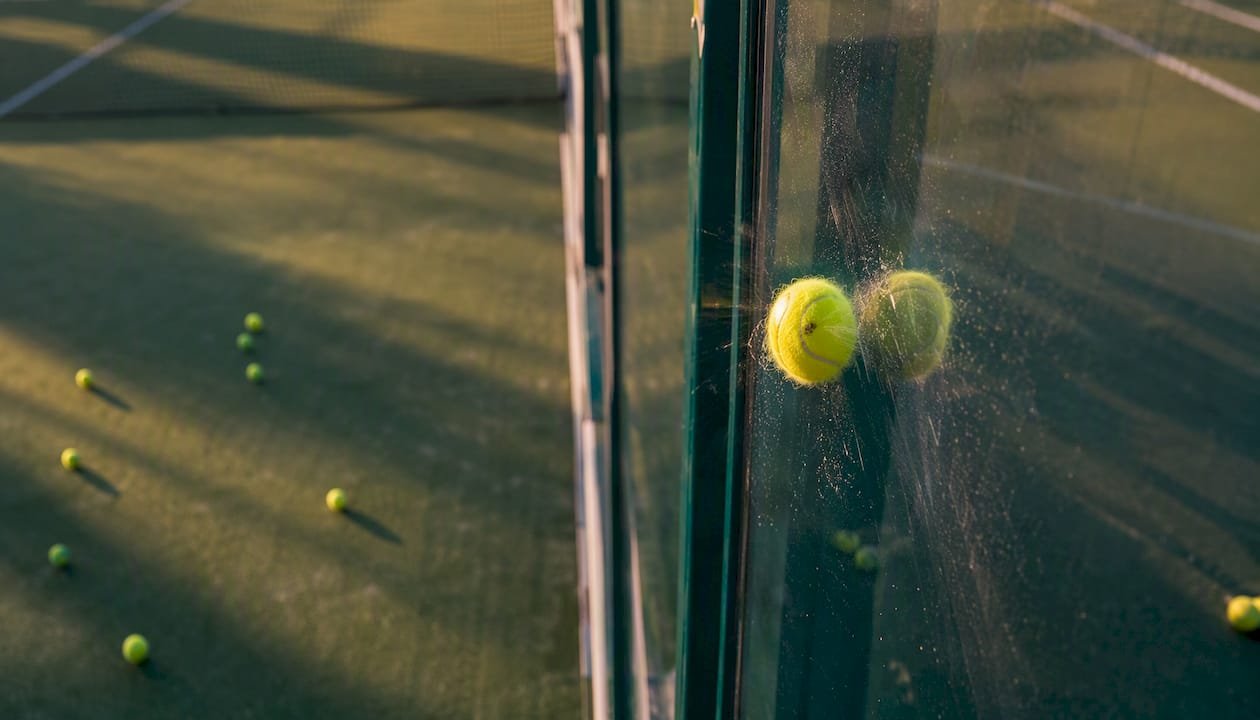
For a standard session, bring at least one tube of balls. If you’re playing back-to-back sessions or a longer club evening, two tubes cover you comfortably. Babolat’s equipment guide lists balls as a standard essential alongside rackets and shoes, and most clubs in Ireland expect players to share a fresh tube per session.
Signs your balls need replacing:
- Noticeably flat bounce (the ball doesn’t spring back cleanly off the wall)
- Felt worn smooth or visibly peeling
- Loss of pressure after sitting unused for more than a few weeks
Balls lose pressure faster in cold, damp storage, which is a real consideration in Ireland. Store them in their tube with the cap on, somewhere dry and at room temperature. A tube of padel balls typically costs €5–€9 in Ireland, so replacing them regularly is one of the cheaper maintenance habits you can build.
Pro Tip: Pop a ball against the court wall before your session starts. If it sounds dull and doesn’t bounce back sharply, open a fresh tube.
Grips and overgrips — what’s the difference and how often should you replace them?
These two items get confused constantly, and the difference is worth knowing before you buy.
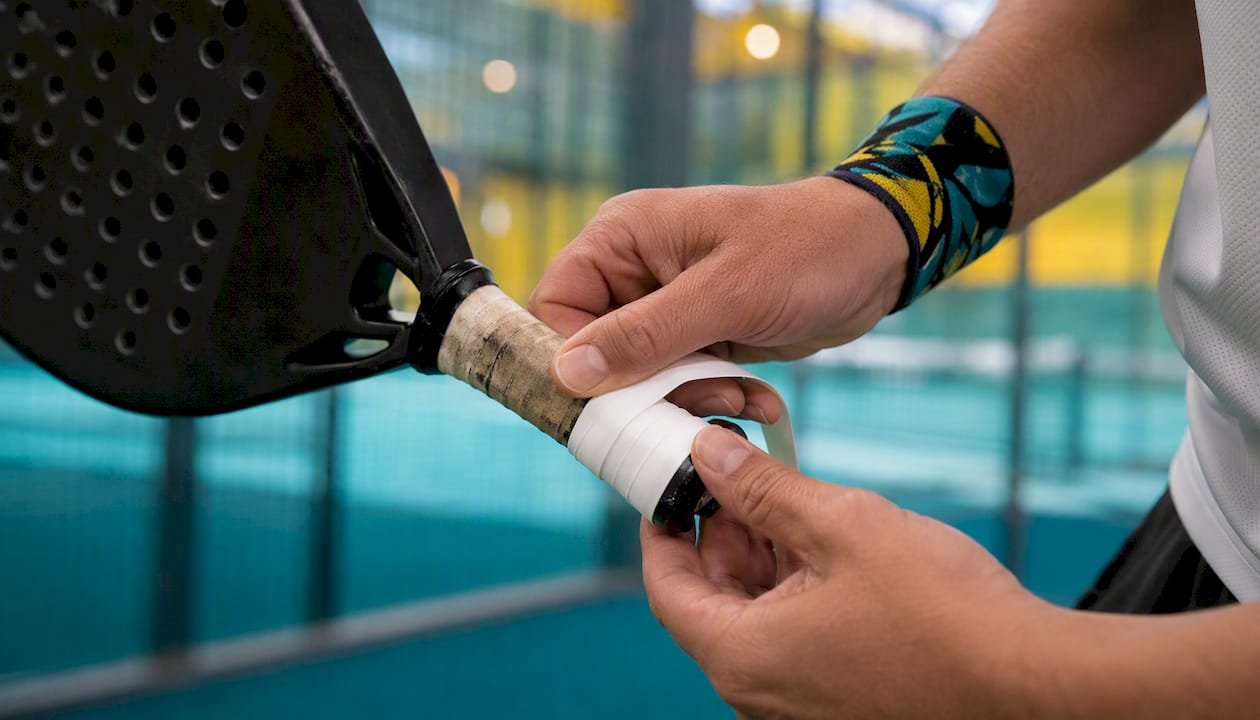
The grip is the original handle wrap that comes on your racket from the factory. It’s thicker, provides cushioning, and absorbs some shock. The overgrip is a thin wrap you apply on top of the grip. It’s cheaper, absorbs sweat better, and is replaced far more often.
Most players keep the base grip for months and replace the overgrip every few sessions, depending on how much they sweat. If your hand slips during a shot or the surface feels slick, that’s the overgrip telling you it’s done.
Choosing the right type:
- Tacky overgrips give better grip in dry conditions and suit players who prefer a firm feel
- Soft/cushioned grips reduce vibration and suit players with elbow sensitivity
- Perforated overgrips wick sweat faster and work well in warmer indoor courts
Replacement cadence:
- Overgrip: every 3–6 sessions (sooner if you sweat heavily)
- Base grip: every 3–6 months, or when it compresses noticeably
- Check both before a tournament or important match
Overgrips typically cost €2–€5 each and come in multipacks. Buying a pack of five or ten is the practical move.
Racket bumpers and vibration dampeners — do you actually need them?
Short answer: yes to the bumper, maybe to the dampener.
A bumper strip is a plastic or rubber guard that wraps around the top edge of your racket frame. Padel involves a lot of wall contact, and without protection, that frame takes chips and dings within weeks of regular play. Applying a quality protector strip early prevents frame damage from wall contact and preserves resale value — a point experienced players consistently make. If you buy a racket and don’t add edge protection in the first week, you’re gambling with a piece of equipment that cost you €80–€200+.
What to know about bumpers and edge tape:
- Bumper strips are pre-shaped for the racket head and click or glue into place
- Edge tape is a thinner alternative that wraps the entire frame perimeter
- Both cost €5–€15 and take under ten minutes to apply
- Replace when you see visible wear or lifting at the edges
Vibration dampeners are small inserts that fit into the strings near the throat of the racket. They soften the feel of off-center hits and reduce string vibration. Some players love them; others find they dull the feedback they need to improve. Try one for a few sessions before committing to it as a permanent fixture.
Pro Tip: Apply your bumper strip the same day you unbox your racket. One session without it on a concrete-backed glass court is enough to leave permanent marks.
What should you look for in a padel bag?
A padel bag is more than storage. The right one protects your racket, keeps your shoes separate from your clothes, and makes the commute to the club significantly less annoying.
Most players in Ireland carry either a backpack-style bag or a mid-size shoulder bag. Backpacks work better for commuting by bike or public transport; shoulder bags suit players who drive to the club. The Aca Padel BackPack is a solid example of what a well-designed padel bag offers: padded racket sleeve, separate shoe compartment, and a water bottle pocket that keeps hydration accessible without soaking your gear.
Features worth prioritizing:
- Padded racket sleeve or dedicated racket compartment (protects the frame in transit)
- Separate shoe compartment (keeps court grime away from clothing)
- Thermal section or insulated pocket (keeps balls at stable temperature)
- Water bottle pocket on the outside
- Ventilated back panel if you’re commuting on foot
Skip the oversized tournament bags until you’re playing multiple times a week. A compact backpack handles everything a beginner or intermediate player needs.
Why padel shoes matter more than most beginners expect
Padel shoes are not optional. Running shoes, cross-trainers, and even tennis shoes lack the lateral support and sole pattern that padel courts demand. The sport involves constant side-to-side movement, quick direction changes, and braking against glass walls, and a shoe not designed for it puts real stress on your ankles and knees.
The difference between padel and tennis shoes comes down to the sole. Padel courts in Ireland are typically artificial turf or sand-filled synthetic surfaces, and padel shoes use a herringbone or omni-directional tread pattern that grips those surfaces without catching or sliding unpredictably. Tennis shoes use a flatter sole designed for hard courts, which can slip on padel turf.
What to look for when buying:
- Herringbone or padel-specific tread pattern
- Reinforced lateral upper for side-to-side support
- Snug fit through the midfoot (not just length, but width)
- Breathable mesh upper for indoor court ventilation
Try shoes on before buying if you can, or order from a retailer with easy returns. Sizing can run slightly different between brands, and a shoe that’s even half a size off becomes painful after an hour of play.
For socks, choose moisture-wicking synthetic or merino wool blends with a thin profile. Thick cotton socks bunch inside padel shoes and cause blisters faster than almost anything else.
Pro Tip: Buy padel shoes half a size up from your street shoe size. Your foot swells during play, and the extra room prevents black toenails on long sessions.
Clothing and small accessories for Irish conditions
Padel is an indoor sport most of the year in Ireland, but many clubs also have outdoor courts, and the weather makes layering a practical habit rather than a preference.
Clothing basics:
- Breathable, moisture-wicking top (polyester or nylon blend)
- Shorts or leggings depending on season
- A lightweight mid-layer for outdoor courts in cooler months
- Padel-specific dress or skirt for women (built-in shorts underneath)
Small accessories worth packing:
- Small towel (court-side use between games)
- Cap or visor (outdoor courts, summer)
- Wristband (sweat management, especially in heated indoor courts)
- Sunglasses with UV protection (outdoor play)
- Basic first-aid kit: a few plasters, sports tape, and a blister pad
Ireland’s climate means you’ll often move between a cold car park and a warm indoor court. A waterproof outer bag or a bag with a rain-resistant shell keeps your gear dry in transit. Hydration matters even in cool conditions: bring at least 500ml of water per hour of play.
Maintenance accessories that extend your gear’s life
Padel equipment takes a beating. Rackets hit walls, shoes drag across gritty turf, and bags sit in damp club changing rooms. A small maintenance kit costs very little and adds months to the life of your gear.
Maintenance checklist:
- Soft microfiber cloth for wiping down the racket face after play
- Mild cleaning spray safe for synthetic materials (avoid harsh solvents on the frame)
- Spare laces for your padel shoes
- Sports tape for minor frame nicks or grip repairs between sessions
- Small multi-tool or screwdriver for adjusting bag buckles or strap fittings
Storage matters as much as cleaning, particularly in Ireland’s damp climate. Never put a wet racket or damp shoes into a sealed bag and leave them overnight. Wipe everything down after play, leave the bag unzipped in a ventilated space, and store rackets away from direct heat sources like radiators, which can warp the frame over time.
Pro Tip: A €3 microfiber cloth and five minutes after each session will keep your racket face clean and your overgrip lasting longer. It’s the simplest maintenance habit with the biggest return.
How to prioritize purchases and budget your starter kit
The buying decision is simpler when you break it into tiers. Here’s a practical plan based on racket price bands and typical accessory costs in Ireland.
Step-by-step buying order:
- Rent or borrow a racket for your first two or three sessions
- Buy padel shoes before you buy a racket (injury prevention comes first)
- Purchase a beginner-friendly racket once you know you’ll keep playing
- Add grip/overgrip, balls, and a basic bag in the same order
- Apply a bumper strip the day you buy your racket
- Add clothing, socks, and small accessories as needed
The Padel Federation of Ireland’s equipment guide specifically recommends trying or renting before committing to advanced gear, which is sound advice for anyone unsure whether padel will become a regular habit.
For most beginners, the entry tier covers everything needed to play comfortably for six to twelve months. Upgrade the racket when your technique outgrows it, not before.
Common beginner mistakes and what coaches actually recommend
The most consistent mistake beginners make is buying gear for the player they want to be rather than the player they are right now. A diamond-shaped, hard-frame pro racket feels impressive in a shop and punishes every off-center hit on court. A round or teardrop beginner racket with a softer core forgives those same hits and lets you focus on footwork and positioning.
Mistakes worth avoiding:
- Buying pro-level gear before developing consistent technique
- Choosing shoes based on looks rather than sole type and fit
- Skipping grip maintenance until the handle becomes slippery mid-match
- Overpacking a bag with accessories you don’t use yet
What coaches recommend buying first:
- A forgiving, control-oriented racket (see beginner racket options for guidance)
- Padel-specific shoes with the right sole for your club’s court surface
- A fresh tube of balls and a pack of overgrips
The Padel Federation of Ireland’s equipment guidance is clear: beginners should focus on core gear and try or rent before investing in advanced accessories. Getting the racket and shoe fit right from the start produces faster improvement than any premium add-on.
A practical note on buying padel gear in Ireland
Starting out in Ireland has one genuine advantage: most clubs will let you borrow or rent a racket for your first few sessions, which takes the pressure off buying immediately. Use that window to figure out what weight and shape feels natural in your hand before spending money on your own.
When you’re ready to buy, prioritize trying shoes in person if you can. Padel shoe sizing varies enough between brands that ordering blind carries some risk, especially if you’re between sizes. Demo days at clubs are worth watching for, as they occasionally let you hit with different rackets before committing.
For everything else on the padel accessories list, ordering online from a supplier with easy returns is the practical route. You’re not going to know whether you prefer a tacky or soft overgrip until you’ve played with both.
Padelhip makes it easy to get your starter kit in Ireland
Putting together a complete kit doesn’t have to mean visiting five different shops or paying import fees on gear shipped from outside Europe. Padelhip is an Irish-based padel retailer stocking authentic rackets, shoes, bags, balls, and accessories from brands like Bullpadel, Babolat, Head, and more, all with fast shipping and a straightforward returns policy.
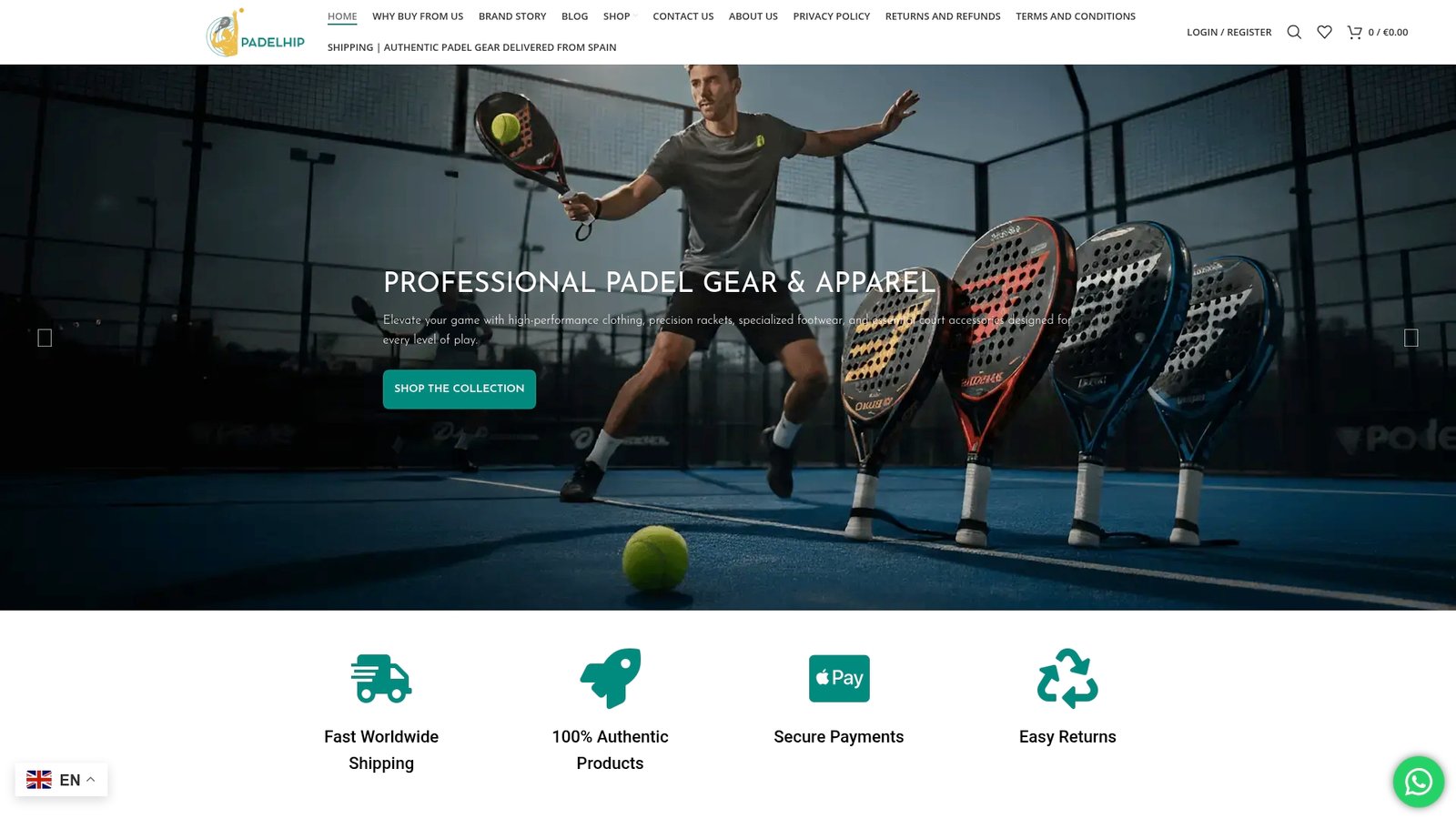
The real advantage for beginners is the curation: Padelhip’s product range is padel-specific, so you’re not sifting through tennis gear to find what you need. Whether you’re picking up a starter pack or just replacing overgrips and balls, the store ships quickly to Ireland and backs every order with 100% authenticity. Browse the full range at Padelhip’s online store and check the shipping page for current delivery times to your area.
Sources
- Padel Equipment Guide
- The Padel School — Gear essentials
- Essential Padel Equipment and Accessories – Macron USA
- All the equipment you need to play padel | Babolat Official Website
- Padel accessories you must have in 2026