

Indoor vs Outdoor Padel Shoes: How to Pick by Court

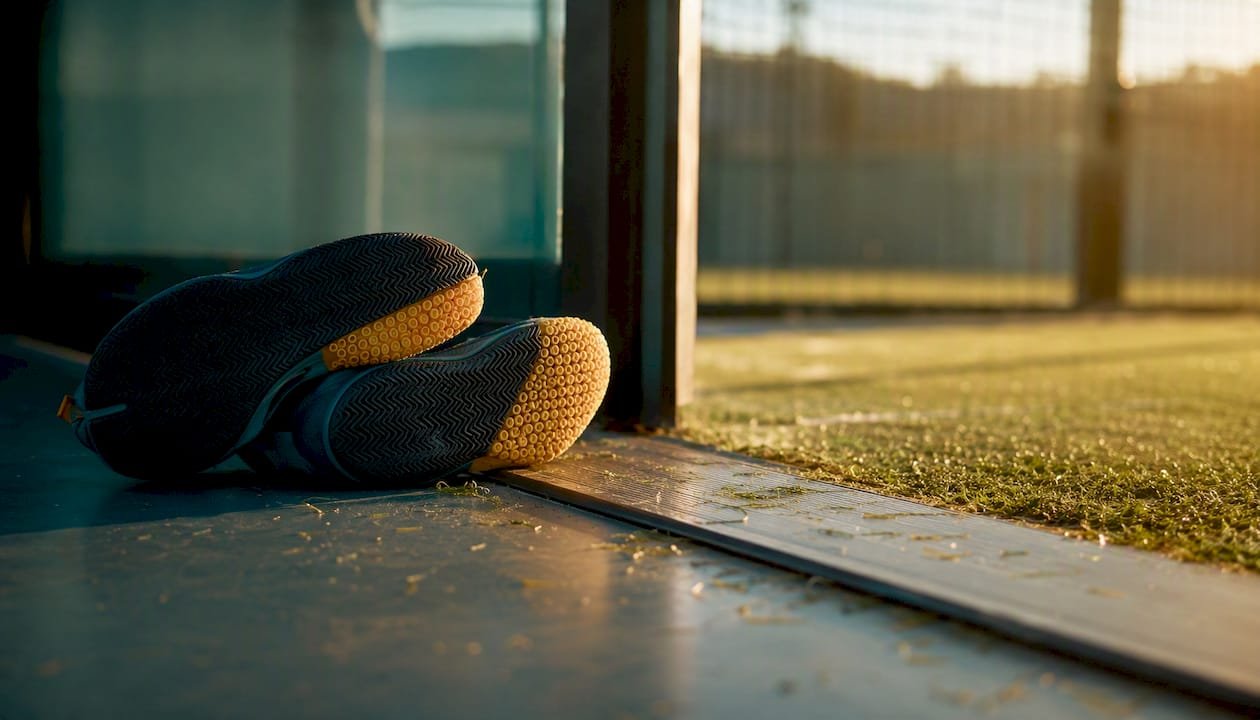
Most club players are better off in outdoor turf shoes with a herringbone outsole, because most padel courts worldwide use sand-infilled artificial turf. Indoor synthetic and painted concrete courts each call for a different sole, so the real question isn’t “indoor or outdoor” but “what is my court actually made of?”
- Sand-infilled turf (the majority of courts globally): herringbone outsole, stability-leaning build.
- Indoor synthetic or painted concrete: omni, hybrid, or non-marking gum-rubber soles built for grip without shredding smooth flooring.
If you split time between venue types, a hybrid outsole from a model like the Bullpadel Indiga W 26V Pomelo or the Padelhip catalog’s other stocked pairs solves more problems than owning two specialized pairs.
Key Takeaways
Matching your outsole pattern to your actual court surface, not to an “indoor” or “outdoor” label, is the single decision that most improves grip, safety, and shoe lifespan.
| Point | Details |
|---|---|
| Surface beats label | Check whether your court is sand-infilled turf, indoor synthetic, or painted concrete before picking a sole. |
| Herringbone for turf | Deep V-groove herringbone is the near-default choice on sand-infilled artificial turf. |
| Non-marking rule indoors | Many indoor clubs require non-marking, softer-compound soles to protect smooth flooring. |
| Fit follows foot shape | Wider feet and orthotic users lean toward stability lasts; narrower feet suit lighter speed builds. |
| Shop by surface at Padelhip | Padelhip stocks stability, speed, and hybrid models like the Bullpadel Indiga W 26V Pomelo for multi-venue players. |
Table of Contents
- Indoor vs Outdoor Padel Shoes: What Actually Differs?
- Which Outsole Pattern Fits Your Court Surface?
- How Should Fit and Playstyle Change Your Choice?
- When Do Hybrid or Multi-Surface Shoes Make Sense?
- How Do You Care for Padel Shoes and Know When to Replace Them?
- Weight and Durability Trade-Offs
- Where to Buy the Right Padel Shoes for Your Court
- Frequently Asked Questions
- Sources
Indoor vs Outdoor Padel Shoes: What Actually Differs?
The labels “indoor” and “outdoor” are shorthand for four real engineering choices: sole pattern, rubber compound, midsole structure, and lateral reinforcement. Get the surface right and the rest follows.
Sole pattern is the first fork in the road. Herringbone (V-shaped grooves) is the default on turf because it bites into sand infill and releases cleanly mid-slide. Omni patterns (small circular or hexagonal studs) grip smooth indoor flooring well but can pack with silica sand if you ever cross onto turf. Hybrid soles blend both in zones.
Rubber compound matters more than most players realize. Indoor facilities frequently require non-marking soles made from a softer, gum-like rubber that grips smooth flooring without leaving black scuffs, a rule enforced at many clubs precisely because standard outdoor compounds mark up indoor surfaces. Outdoor compounds trade that grip profile for abrasion resistance, since turf and concrete chew through soft rubber fast.
Midsole and lateral support separate a padel shoe from a running shoe entirely. Padel-specific builds add reinforced side panels and firmer midsoles because the sport is constant shuffling, sudden stops, and sharp pivots, a demand casual sneakers simply aren’t built for. Stability-focused models run a bit heavier with wider platforms; speed-focused models shave weight and narrow the last for quicker first steps.
- Stability builds: reinforced sidewalls, firmer midsole, wider platform.
- Speed builds: lighter upper, lower stack height, narrower fit.
- Weight difference between the two categories often runs a full ounce or more per shoe.
Pro Tip: If you’ve had ankle issues or play mostly at the baseline defending, prioritize a stability-first build even if it costs you a step of speed. Net rushers with clean injury histories can afford to go lighter.
Which Outsole Pattern Fits Your Court Surface?
Three surfaces cover almost every court you’ll play on, and each rewards a different sole.
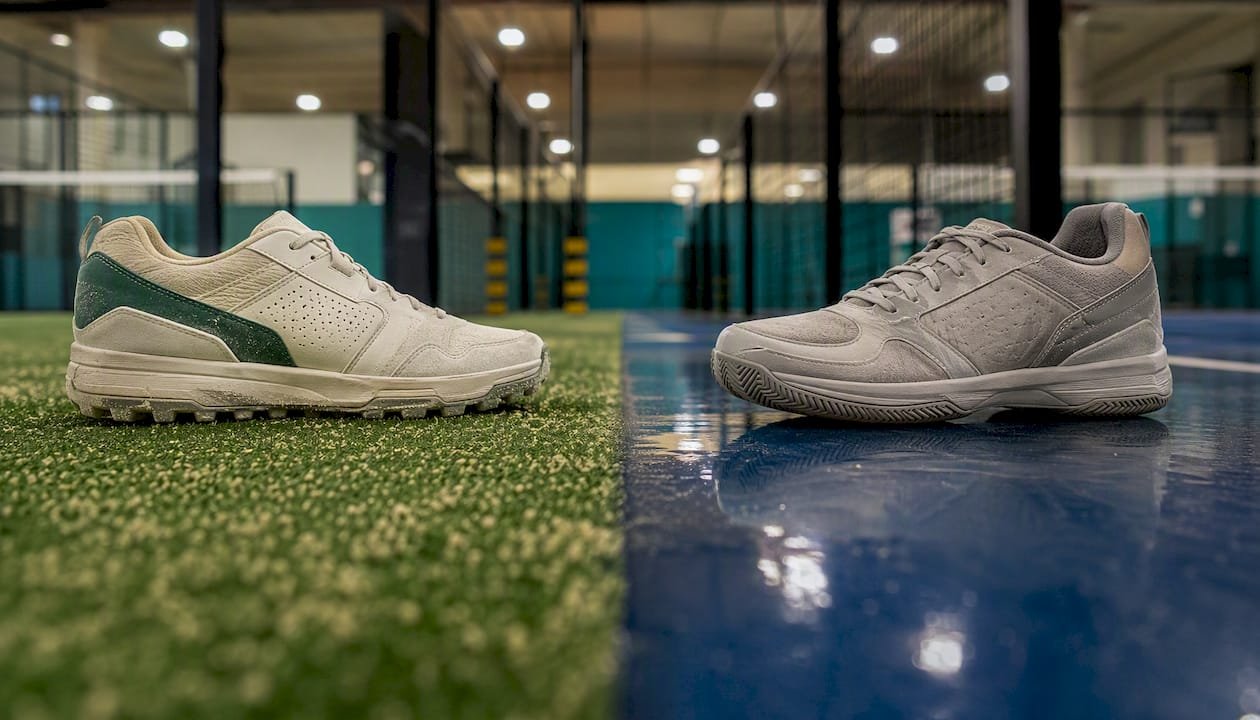
Sand-infilled artificial turf plays soft underfoot with a slight give, and it’s the standard surface in most countries where padel has taken off. Herringbone is the near-default choice here because the grooves channel sand instead of trapping it, giving you predictable slide-and-stop control.
Indoor synthetic or low-pile turf is firmer, faster, and doesn’t have the sand cushion. Omni soles or shallow-herringbone hybrids work best since they grip a harder floor without the deep tread you need for sand release. A regional breakdown of court surfaces shows turf dominance varies by country and even by club, which is exactly why checking your specific court beats assuming based on “indoor” or “outdoor” labeling.
Painted concrete or hard court is the least common but still shows up, especially at converted tennis facilities. Tennis-style hard-court outsoles or non-marking gum compounds handle this surface better than either turf pattern.
Herringbone dominates the market for good reason: on courts that use sand-infilled turf, deep V-grooves are close to a universal correct answer, and omni soles only make sense once the surface goes dry and hard with minimal sand, according to a UK equipment review.
Watch for the packing problem: omni studs jammed with silica lose grip fast and won’t self-clean the way herringbone grooves do. If you genuinely can’t predict which surface you’ll face on a given night, a hybrid outsole is the sensible middle ground rather than gambling on one pattern.
- Sand-infilled turf → deep herringbone
- Indoor synthetic → omni or shallow-herringbone hybrid
- Painted concrete → hard-court or non-marking gum compound
How Should Fit and Playstyle Change Your Choice?
Outsole pattern gets you halfway there. The other half is your foot shape and how you actually move on court.
Wider feet and anyone using orthotic insoles generally do better in stability-first lasts, which run roomier through the midfoot and forefoot. Narrower feet tend to prefer speed-focused models, which hug closer and shave grams everywhere they can. Testing on the ASICS Resolution and Solution Speed lines shows this split clearly: the wider, more cushioned build suits players who need extra support, while the lighter build favors quick, narrow feet chasing the net.
There’s no single best padel shoe, only the best shoe for your priority, whether that’s stability, speed, versatility, or raw durability. Baseline defenders who slide and reset constantly need support and cushioning. Net attackers who explode forward need low weight and quick lateral response. All-rounders and heavier players usually land safest with a balanced, mid-weight build rather than chasing either extreme.
Before you buy, run through this quick checklist:
- Bring the socks you actually play in, not gym socks.
- Test a few hard lateral cuts in the store or on carpet, not just a straight-line walk.
- Check heel lockdown, there should be zero slip when you plant hard.
- Confirm a thumb’s width of toe room without your foot sliding forward on stops.
- Wear them for five to ten minutes before deciding, tight spots don’t loosen much in padel shoes.
If you rotate between multiple pairs, note that break-in periods differ by model — a detail covered in our guide to the best software for padel tournaments helps organizers and players optimize their events. A stiffer stability shoe like the Wilson Hurakn Lite needs more sessions to soften than a flexible speed model, so don’t judge fit off one wear.
When Do Hybrid or Multi-Surface Shoes Make Sense?
If you regularly bounce between a turf-heavy club and a low-pile indoor facility, owning two specialized pairs is overkill for most weekly players. A hybrid outsole trades a bit of peak grip on either surface for consistent, adequate performance on both, and that trade-off is usually worth it if you can’t predict which court you’ll get.
The compromise is real. A hybrid won’t release from sand quite as cleanly as deep herringbone, and it won’t bite a smooth indoor floor as hard as a true omni pattern. Real-world comparisons between balanced, all-round models and surface-specific ones consistently find club players prefer the versatile option once venue-switching enters the picture.
A short, stock-aware shortlist worth knowing:
- Bullpadel Indiga W 26V Pomelo, available at Padelhip, leans indoor-friendly with a stability-oriented women’s last.
- HEAD Motion Pro 1.5 splits the difference well for players who want one all-around pair without picking a surface extreme.
- ASICS Gel-Resolution X Padel brings tennis-brand cushioning and a wider platform for baseline defenders.
- Babolat Premura 3 trims weight for net rushers who prioritize first-step speed.
- Joma Slam and Drop Shot padel shoes both sit in accessible price ranges with durable turf-ready outsoles.
Travelers between venue types should treat a hybrid pick or a two-pair rotation as the practical answer rather than hunting for one perfect shoe that does everything.
How Do You Care for Padel Shoes and Know When to Replace Them?
Basic upkeep is simple: knock silica sand out of the outsole grooves after every session, air-dry instead of tossing them near a heater, and rotate two pairs if you play multiple times a week so foam has time to recover between uses.
Skip the washing machine. Heat and agitation break down midsole glue and foam faster than normal wear ever will.
Watch for three replacement signals: smoothed-out tread with no visible grooves left, heel foam that stays compressed instead of springing back, and a noticeable loss of lateral stability during hard cuts. For a player on court two to three times a week, that usually lands somewhere between six and twelve months. Weekend-only players can stretch that timeline; daily competitors will wear through a pair faster.
Quick Safety Tips When Switching Between Indoor and Outdoor Shoes
Warm up with side shuffles and short slides before your first point when moving to a stiffer or stickier outsole. Check studs for packed sand before you step on court, a clogged outsole loses grip without warning. Ease off aggressive pivots for the first few games on a new indoor compound until your muscles adjust to the extra stick.
Weight and Durability Trade-Offs
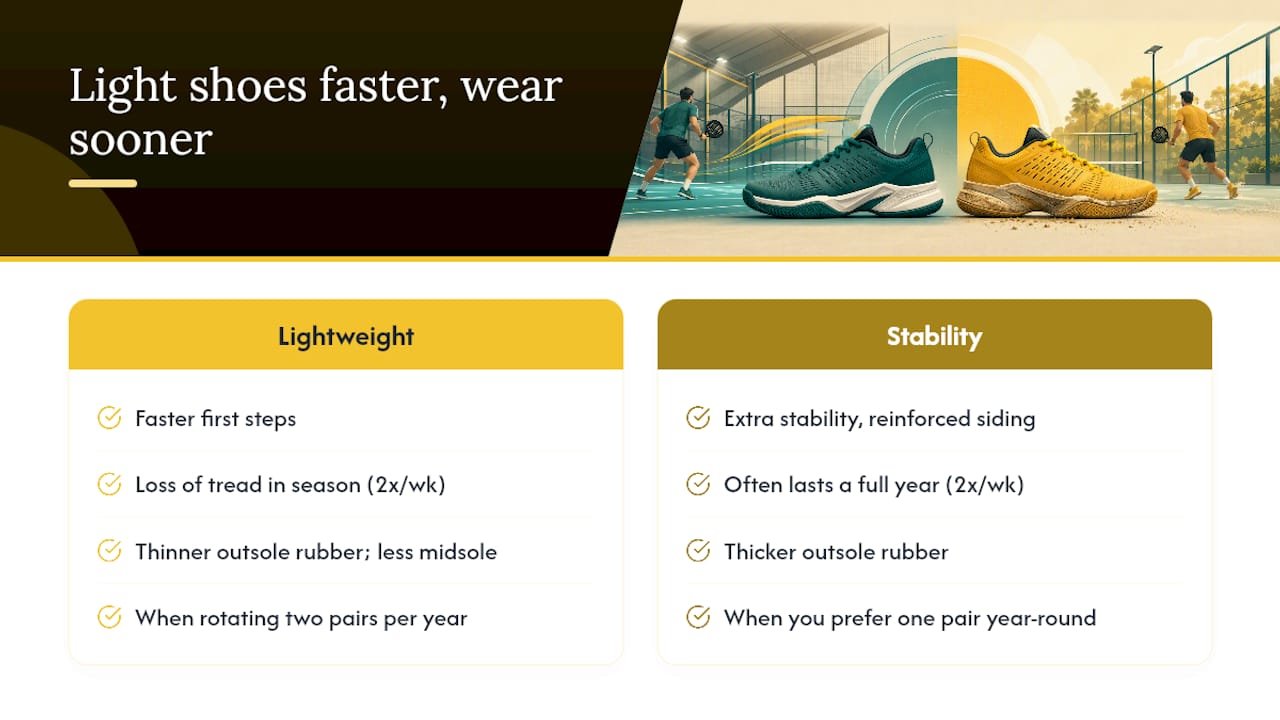
Lighter shoes feel faster off the mark, but that weight savings usually comes from thinner outsole rubber and less midsole material, both of which wear out sooner. A speed-focused pair built for net rushers might lose noticeable tread depth in a season of twice-weekly play, while a heavier stability shoe with reinforced siding can often go a full year under the same conditions.
This isn’t a reason to avoid lightweight builds. Net attackers who need quick first steps will play worse in a heavy, durable shoe than they will benefit from the extra lifespan of one. The trade-off is about matching your priority to your realistic budget for replacement. If you’re buying two pairs a year anyway to rotate, leaning into a lighter, faster build makes sense. If you’d rather buy one pair and stretch it, a stability-oriented shoe with thicker outsole rubber holds up longer under the same number of sessions.
Durability also depends on surface, not just shoe. Concrete and painted hard courts chew through outsoles faster than turf does, since there’s no give in the surface to absorb impact. A shoe rated for solid turf durability can wear noticeably faster if you’re playing most of your sessions on concrete instead.
Publisher perspective: Padelhip’s short take
Padelhip stocks a wide range of padel shoes precisely because no single model fits every court, and our team leans on surface-first advice built from fitting hundreds of players against real venue conditions. If sizing feels off once you get them home, our returns process makes swapping straightforward, no guesswork required.
Where to Buy the Right Padel Shoes for Your Court
Picking the right outsole pattern only matters if you can actually find the shoe in your size, in stock, from a seller who stands behind it. That’s the gap Padelhip fills: authentic stock sourced directly, sizing support if a model runs narrow or wide, and straightforward shipping from Spain so you’re not stuck waiting on a backordered pair before your next match.
A few quick buying cues before you check out: go wider-last if you have a broad forefoot or use orthotics, lean toward a hybrid outsole if your club mixes turf and indoor synthetic courts, and pair any new shoe with fresh insoles if your current ones are more than a season old. Browse the full padel shoe buying guide for side-by-side model notes, check the Bullpadel Vertex Vibram 25I if you want maximum stability, or start from the Padelhip homepage to filter by surface and playstyle. If you’re also due for a grip refresh, our overgrip vs replacement grip guide is worth a look while you’re browsing.
Frequently Asked Questions
Can I use the same shoes for indoor and outdoor padel?
You can, but a true hybrid outsole handles the switch far better than a shoe built purely for one surface. Deep herringbone models built for turf tend to feel less grippy on smooth indoor flooring, and omni soles built for indoor courts can pack with sand outdoors.
Do indoor padel courts really require non-marking soles?
Many do, since standard outdoor rubber compounds can scuff smooth indoor flooring. Check your club’s policy before showing up in turf-specific shoes if you’re playing indoors for the first time.
How do I know if my padel shoes need replacing?
Look for smoothed-out tread with no visible groove pattern, heel foam that no longer springs back, and any noticeable loss of stability during hard lateral cuts. Most players playing two to three times weekly replace shoes every six to twelve months.
Are padel shoes really different from tennis or running shoes?
Yes. Padel demands constant side-to-side shuffling and sharp pivots that require reinforced lateral support most running shoes and even many tennis shoes don’t provide.
On the Label Everyone Trusts Too Much
Here’s what I think most players get backwards: they buy “indoor” or “outdoor” shoes based on the box label, then wonder why grip feels off at their actual club. The label is marketing shorthand. The court surface is physics. A shoe marketed as “outdoor” that happens to have a shallow herringbone pattern will often outperform a dedicated “indoor” shoe with the wrong stud depth for your specific turf infill.
The bigger blind spot is fit obsession over surface obsession. Players will spend twenty minutes comparing cushioning foams and five seconds checking whether their club uses concrete or turf. Get the outsole pattern right for your actual court first. Fit and cushioning are real, but they’re the second decision, not the first. If Padelhip’s shortlist above teaches you anything, let it be that: check your court before you check the reviews.
Sources
- Best padel shoes by court surface 2026 — Padel Browser
- Best padel shoes 2026 — Actu-padel
- Best padel shoes & top picks — TennisMindset
- Best indoor padel shoe (non-marking) — PadelSetup
Recommended
- Padel Shoes vs Tennis Shoes: What Padel Players Need
- Best Padel Shoes for 2026: Top Picks and Buying Guide
- Bullpadel Indiga W 26V Pomelo Women’s Indoor Court Shoes – Flexible Padel Shoes Designed for Comfort, Grip and Quick Movements – Your online Padel store- Padel Hip-Premier padel shop
- Wilson Hurakn Lite W Women’s Padel Shoes – Lightweight Court Footwear with Breathable Upper and High Grip Outsole for Padel Performance – Your online Padel store- Padel Hip-Premier padel shop