

Padel Shoe Durability: How to Make Them Last

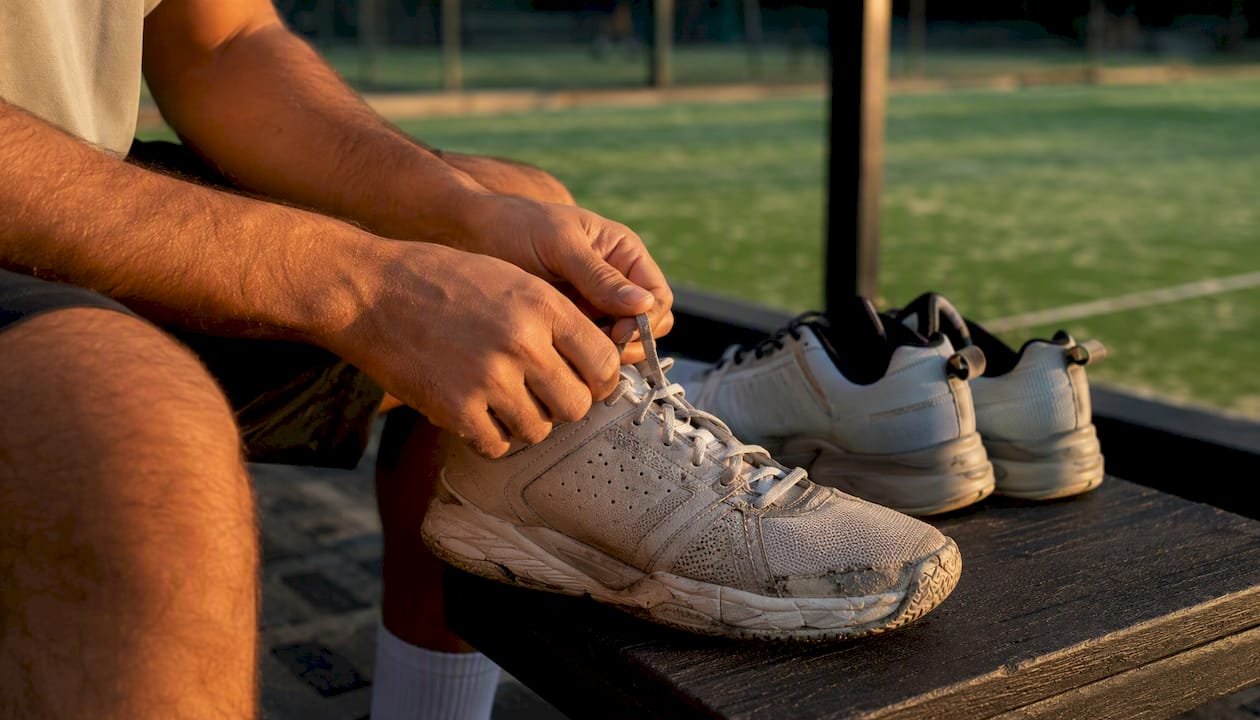
Most padel shoes last roughly 60–100 playing hours before grip and structure drop below a safe performance threshold. For a player on court twice a week, that’s about 4–6 months per pair. Three actions protect that window immediately:
- Rotate two pairs so midsole foam recovers between sessions instead of compressing continuously.
- Match your sole pattern to your court (herringbone for sand-dressed grass, omni for indoor/hard surfaces) to avoid premature tread wear.
- Keep shoes off asphalt and concrete outside of play — road surfaces shred outsoles faster than any court ever will.
Padelhip stocks durable padel shoe models built for Irish courts, including the Bullpadel Vertex Vibram 25I and Drop Shot padel shoes, both available with fast shipping to Ireland.
Pro Tip: Buy your second pair before the first one dies. Waiting until a shoe is worn out means playing on compromised grip while you wait for delivery.
Key Takeaways
Padel shoes last 60–100 playing hours, and the three factors that most extend that range are rotating pairs, matching the sole to your court surface, and keeping shoes off non-court surfaces entirely.
| Point | Details |
|---|---|
| Lifespan baseline | Most padel shoes last 60–100 playing hours, which is roughly 4–6 months depending on play frequency. |
| Match sole to court | Herringbone for sand-dressed grass, omni for indoor/hard courts; wrong sole wears faster and raises injury risk. |
| Rotate pairs | Alternating two pairs allows midsole foam to recover and meaningfully extends the life of both. |
| Replace at two failed checks | If the sole pattern is smooth AND the midsole twists easily, replace the shoe regardless of how the upper looks. |
| Padelhip in Ireland | Padelhip stocks durable models including the Bullpadel Vertex Vibram 25I and Drop Shot shoes, with fast delivery across Ireland. |
Table of Contents
- How long do padel shoes actually last?
- What actually determines padel shoe durability
- How to recognize when your shoes are past their effective life
- Practical steps to extend padel shoe life
- When to replace your padel shoes
- How to choose a durable padel shoe
- Why running shoes fail on the padel court
- Padelhip picks for durable padel shoes in Ireland
- The durability-versus-performance tradeoff, from a retailer’s view
- Durable padel shoes, delivered to Ireland by Padelhip
- Sources
How long do padel shoes actually last?
The 60–100 playing-hour consensus is a useful baseline, but the real number depends on how hard you play, what surface you’re on, and how the shoe is built. An aggressive baseline player grinding laterally on abrasive sand-dressed courts will hit 60 hours and feel it. A recreational player on a well-maintained indoor court might push past 90 without noticing much change.
Here’s how that range converts to real time based on how often you play:
Heavy players training five times a week should budget for a new pair every two to three months. Casual players who hit the court once a week can reasonably expect a pair to hold up for most of a year, though midsole compression often becomes the limiting factor before the outsole visibly wears out.
What actually determines padel shoe durability
Construction factors
The outsole compound is the single biggest durability variable. Premium rubber compounds like Michelin, Adiwear, and Duralast resist abrasion on sand-dressed courts far longer than generic rubber. Tread pattern matters too: a herringbone cut into soft rubber wears down faster than the same pattern in a harder compound, even if both look identical new.
Toe and lateral reinforcements are where budget shoes cut corners most visibly. A reinforced toe cap (like Adidas’s Adituff) protects the area that drags on every split-step and lunge. Without it, the upper fabric tears through in weeks for aggressive movers. Lateral cage reinforcements on the sides of the shoe prevent the upper from blowing out during sharp direction changes.
Midsole foam density determines how long cushioning holds up under repeated compression. Denser foams resist flattening longer but feel firmer underfoot. Some models use anti-compression chassis systems or TPU shanks that maintain structure even after the foam softens. These add weight but extend functional life considerably.
Player and environment factors
- Playing style — Aggressive lateral movers and players who drag their toes on serve put far more stress on reinforcement zones than players with upright, controlled footwork.
- Court surface — Sand-dressed artificial grass is the most abrasive surface for outsoles. Indoor hard courts are gentler on rubber but harder on midsoles due to impact forces.
- Playing frequency — More hours equals faster wear, but continuous daily use without rotation also prevents midsole recovery between sessions.
- Off-court use — Walking on asphalt, gravel, or concrete in padel shoes accelerates outsole wear faster than almost anything that happens on court.
The weight-versus-durability tradeoff is real. Lighter shoes use thinner materials and softer compounds that feel responsive but wear faster. Heavier, durability-focused models sacrifice a few grams for reinforced zones and harder rubber. For players training multiple times a week, the heavier shoe almost always wins on cost-per-hour.
How to recognize when your shoes are past their effective life
1. Check the sole pattern depth
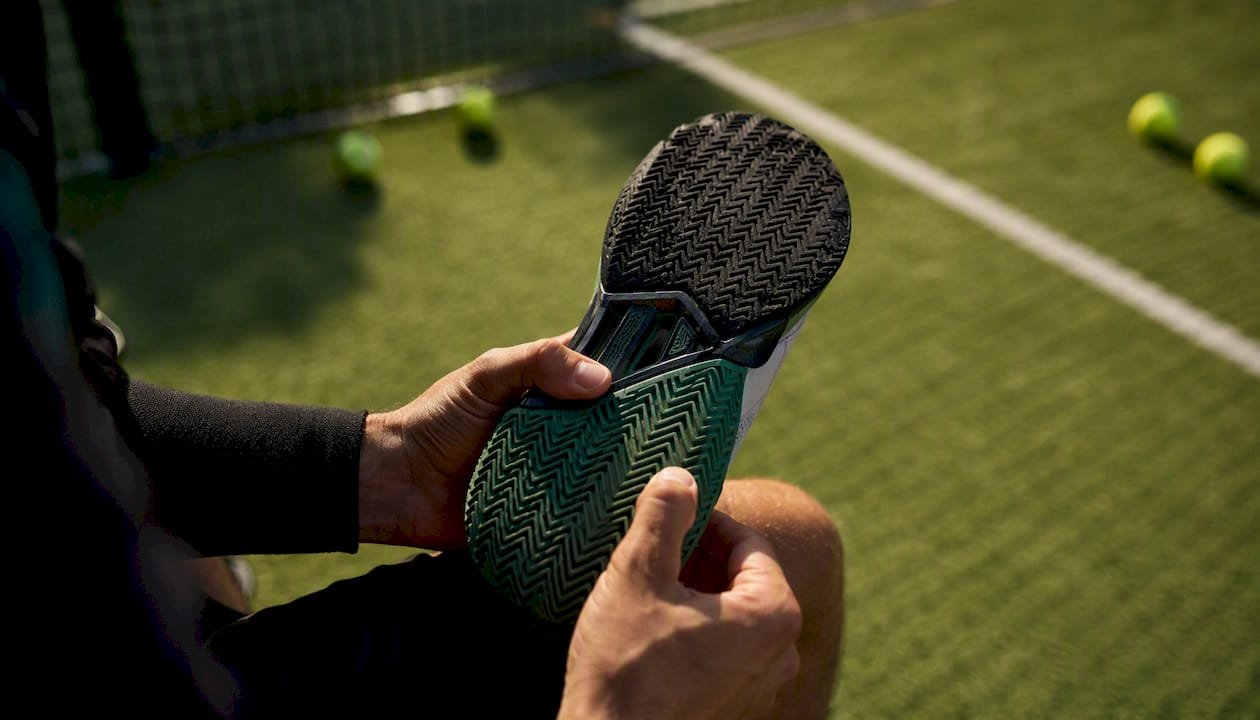
Run your thumb across the tread. On a new shoe, the grooves catch your fingernail. On a worn shoe, the surface feels smooth or the pattern has flattened to shallow ridges. Grip decays well before visible holes appear, so don’t wait for the outsole to look destroyed before acting.
2. Look at the outer edge wear
Flip the shoe over and look at the lateral edge of the outsole, particularly under the forefoot and heel. Uneven wear concentrated on one edge indicates the shoe has lost its structural balance. Creasing or cracking in the midsole foam visible from the side is a sign the cushioning has compressed permanently.
3. Test midsole twist resistance
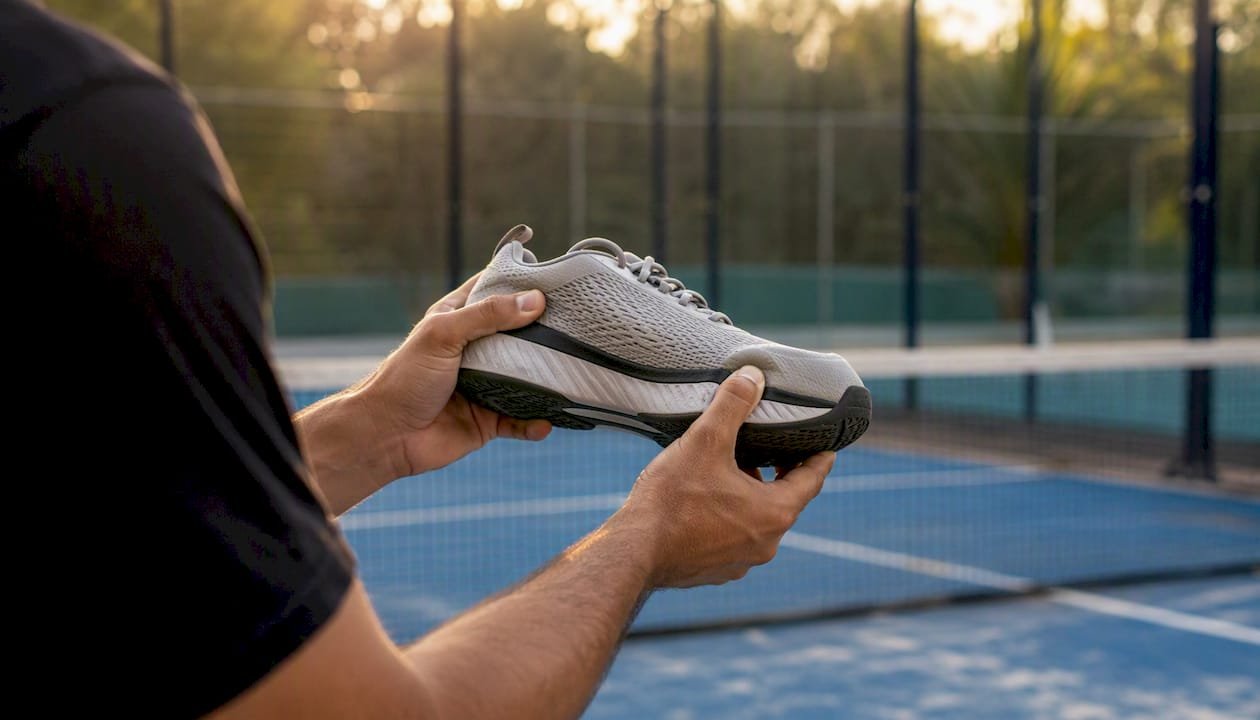
Hold the shoe at the toe and heel and try to twist it. A structurally sound shoe resists this with firm, even resistance. A shoe with a fatigued midsole twists easily and unevenly. This test takes five seconds and tells you more about remaining support than any visual inspection.
4. Pay attention to on-court feel
Slipping during lateral cuts when you weren’t slipping before is the clearest signal. So is a sudden increase in foot fatigue or knee soreness after sessions. The shoe may look fine from the outside while the midsole has already lost its ability to absorb impact properly.
Pro Tip: Take a photo of the outsole when the shoes are new. Three months later, compare it to the current state. The difference is usually more dramatic than you’d expect from daily wear.
Grip decays well before visible holes appear. By the time a padel shoe looks worn out, it has usually been underperforming for weeks.
Practical steps to extend padel shoe life
- Rotate two pairs. Alternating between pairs gives midsole foam 24–48 hours to decompress between sessions. A single pair used daily compresses continuously and loses cushioning faster.
- Clean the outsole after every session. Sand and grit embedded in the tread act as abrasives that grind the rubber from the inside. A stiff brush and water takes 60 seconds and meaningfully extends tread life.
- Never wear padel shoes off-court. Asphalt and concrete destroy outsole rubber faster than any padel surface. Walk to the car in something else.
- Dry naturally, away from direct heat. Stuffing shoes in a bag after play traps moisture that degrades adhesives and foam. Remove insoles, loosen laces, and let them air at room temperature.
- Replace insoles before the shoe is worn out. Aftermarket insoles like Superfeet or Sidas extend midsole comfort life and are far cheaper than a new pair. Swap them every 40–50 hours.
- Skip the washing machine. Machine washing breaks down adhesives and warps midsole foam. Hand-wash the upper with a damp cloth and mild soap if needed.
- Re-texturize the outsole when grip fades but pattern remains. Light sanding with fine-grit sandpaper can restore surface grip on a sole that has glazed over without losing tread depth. This is a short-term fix, not a replacement for new shoes, but it buys a few more sessions.
Pro Tip: Resoling padel shoes is rarely cost-effective unless the upper is in excellent condition and the model is premium. Most cobblers aren’t set up for sport-specific outsoles. A new pair from Padelhip is usually the better investment.
For players training three or more times weekly, a simple schedule works well: clean outsoles after every session, inspect tread depth monthly, and plan a replacement pair at the 60-hour mark rather than waiting for failure.
When to replace your padel shoes
Two or more failed diagnostic checks from the section above is a clear replacement signal. If the sole pattern is smooth AND the midsole twists easily, the shoe is done regardless of how the upper looks.
Replace immediately if you notice ankle instability during lateral cuts. A shoe that no longer holds the foot securely during direction changes is a direct injury risk, and no amount of maintenance changes that.
If the outsole is worn but the upper is intact and structurally sound, consider keeping the pair as a dedicated training shoe for lower-intensity sessions while using a newer pair for competitive play. This extends the total value of both pairs.
A note on warranties: some models, particularly those with premium outsole compounds, come with manufacturer durability guarantees. Check the product page or ask the retailer before buying. Padelhip’s easy returns policy also means that if a shoe fails unusually fast, there’s a clear path to resolution.
Pro Tip: Set a calendar reminder at the 60-hour mark. Most players lose track of wear time and only notice the problem when they’re already sliding around on court.
At the 60–100 hour threshold, even shoes that look acceptable on the outside may have lost enough midsole support to affect joint loading during play.
How to choose a durable padel shoe
The construction checklist below applies whether you’re buying in a store or online. Run through it before committing to any model.
Construction features to prioritize:
- Outsole rubber compound — Look for named compounds (Michelin, Adiwear, Duralast) rather than generic “high-grip rubber.” Named compounds signal a manufacturer commitment to abrasion resistance.
- Tread pattern matched to your court — Herringbone for sand-dressed grass, omni for indoor/hard, hybrid if you split time across surfaces. Excessive grip on the wrong surface increases rotational load on the knee and ankle.
- Reinforced toe cap — Non-negotiable for aggressive movers. Adituff and similar hard-wearing overlays protect the highest-stress zone on the shoe.
- Lateral cage reinforcement — A TPU or welded overlay on the medial and lateral sides prevents upper blowout during sharp cuts.
- Midsole anti-compression system — A TPU chassis or shank inside the midsole maintains structure after foam softens.
- Durable eyelets — Reinforced lace holes prevent tearing under tension, a small detail that extends upper life.
Questions to ask before buying:
- What is the outsole compound, and is it matched to my primary court surface?
- Does the model carry a durability guarantee or warranty?
- What is the recommended play surface for this model?
Red flags: A shoe marketed primarily on weight or speed with no mention of outsole compound or reinforcement zones is likely optimized for performance over longevity. That’s a valid tradeoff for elite players who replace shoes frequently, but not for most players in Ireland looking to maximize cost-per-hour.
The weight-versus-durability tradeoff deserves a direct answer: for players training twice a week or more, prioritize durability. The performance gain from a lighter shoe is marginal for most skill levels; the cost of replacing a worn-out pair every two months is not.
For a broader comparison of padel-specific versus general court shoes, Padelhip’s guide on padel shoes vs tennis shoes covers the structural differences in detail.
Why running shoes fail on the padel court
Using running or multi-court trainers for padel is one of the most common and costly mistakes recreational players make. Footwear experts are consistent on this: running shoes are engineered for forward motion and heel-to-toe transitions. Padel demands repeated lateral cuts, split-steps, and rotational loads that running shoe construction simply isn’t built to handle.
The consequences show up in two ways. First, the shoe wears out faster because the outsole compound isn’t designed for abrasive artificial grass. Second, the lack of lateral cage reinforcement means the upper fails structurally, often within weeks for players who move aggressively. Neither outcome is recoverable with maintenance.
Hands-on reviews of padel-specific models consistently highlight that purpose-built outsole compounds and chassis systems deliver durability that no running shoe can match on court. The structural difference isn’t marginal. It’s the difference between a shoe that lasts 80 hours and one that’s falling apart at 30.
The injury risk argument is equally important. Padel’s lateral movement patterns place significant stress on the ankle and knee. A shoe without a reinforced lateral cage and a stable midsole chassis transfers that stress directly to the joint. Reactive strength and lateral stability training can reduce that load, but only a properly constructed padel shoe provides the structural base those movements require.
Padelhip picks for durable padel shoes in Ireland
Padelhip stocks several durability-focused models for Irish players, with fast shipping and easy returns. Here are the standout picks based on construction features and outsole quality.
The Vibram outsole is the headline feature here. Vibram is one of the most respected rubber compounds in performance footwear, known for exceptional abrasion resistance on demanding surfaces. The Vertex 25I pairs that outsole with a reinforced upper and a stable midsole chassis, making it a strong choice for players who train frequently on sand-dressed courts. Estimated lifespan: toward the upper end of the 60–100 hour range for most players. Available now through Padelhip with delivery to Ireland.
Drop Shot Padel Shoes
Drop Shot builds shoes with reinforced lateral zones and durable outsole compounds suited to abrasive courts. The brand has a strong reputation in the padel-specific footwear space for balancing durability with a reasonable price point, making these a practical choice for regular players who want longevity without paying premium prices. Check the Padelhip product page for current sizing and availability in Ireland.
Head Motion Pro Padel Shoes
Head’s Motion Pro is built around lateral stability and outsole durability, with a reinforced toe area and a structured midsole. It sits in the middle of the weight-versus-durability spectrum, offering enough protection for frequent players while staying light enough for players who prioritize court feel. Available through Padelhip for Irish buyers.
The Jet Viva is the lighter option in this group, designed for beginner and intermediate players who want grip and comfort without the weight of a full durability build. The tradeoff is a shorter lifespan for aggressive movers, but for casual players on court once or twice a week, it offers solid value and a comfortable fit. A good entry point for players still developing their movement patterns.
Pro Tip: Check Padelhip’s full padel shoe buying guide if you’re unsure which model fits your play style. It covers the full catalog with notes on surface compatibility and player profile.
The durability-versus-performance tradeoff, from a retailer’s view
The question Padelhip hears most often is some version of: “Do I need the heavy, durable shoe, or can I get away with the lighter one?” The honest answer depends on one thing: how often you play.
For players on court once a week, a lighter shoe with a good outsole compound is usually fine. The wear rate is slow enough that the shoe’s lifespan won’t feel punishing, and the comfort and responsiveness of a lighter build are genuinely noticeable at that frequency.
For players training three or more times a week, the calculus flips. A durability-focused shoe with a reinforced toe, lateral cage, and premium outsole compound will outlast a lightweight model by 30–40 hours in real use. At that frequency, you’re replacing shoes every two to three months if you buy light. A heavier, better-built shoe stretches that to four or five months. The cost difference over a year is significant.
The one scenario where a lighter shoe makes sense even for frequent players: when the court surface is forgiving (well-maintained indoor hard courts) and the player’s movement style is controlled rather than aggressive. In that case, the outsole wears more slowly and the midsole compression is the limiting factor, which a lighter shoe handles nearly as well as a heavier one.
Durable padel shoes, delivered to Ireland by Padelhip
Every shoe in the Padelhip catalog is sourced directly from the brands, so you’re getting the real outsole compound and construction, not a knockoff with a premium label. Returns are straightforward if the fit isn’t right, and the shipping process is built for speed. Browse the full range of durable padel shoes at Padelhip and filter by court surface, play style, or brand to find the right pair for your game. If you’re replacing a worn-out pair or buying your second pair to rotate, the product pages include surface compatibility notes and sizing guidance to make the decision easy.
Sources
- 6 Best Padel Shoes in 2026: Top Padel Shoes for Men
- Wilson Rush Pro 4.0 Padel Shoe Review: The Stability King Tested – Padel Mad
Recommended
- Padel Shoes vs Tennis Shoes: What Padel Players Need
- Best Padel Shoes for 2026: Top Picks and Buying Guide
- Bullpadel Vertex Vibram 25I Padel Shoes – Pro Stability & Grip – Your online Padel store- Padel Hip-Premier padel shop
- Aca Padel Magic White Padel Shoes for Men – Your online Padel store- Padel Hip-Premier padel shop