

Padel Racket Balance: Choose the Right Type for Your Game

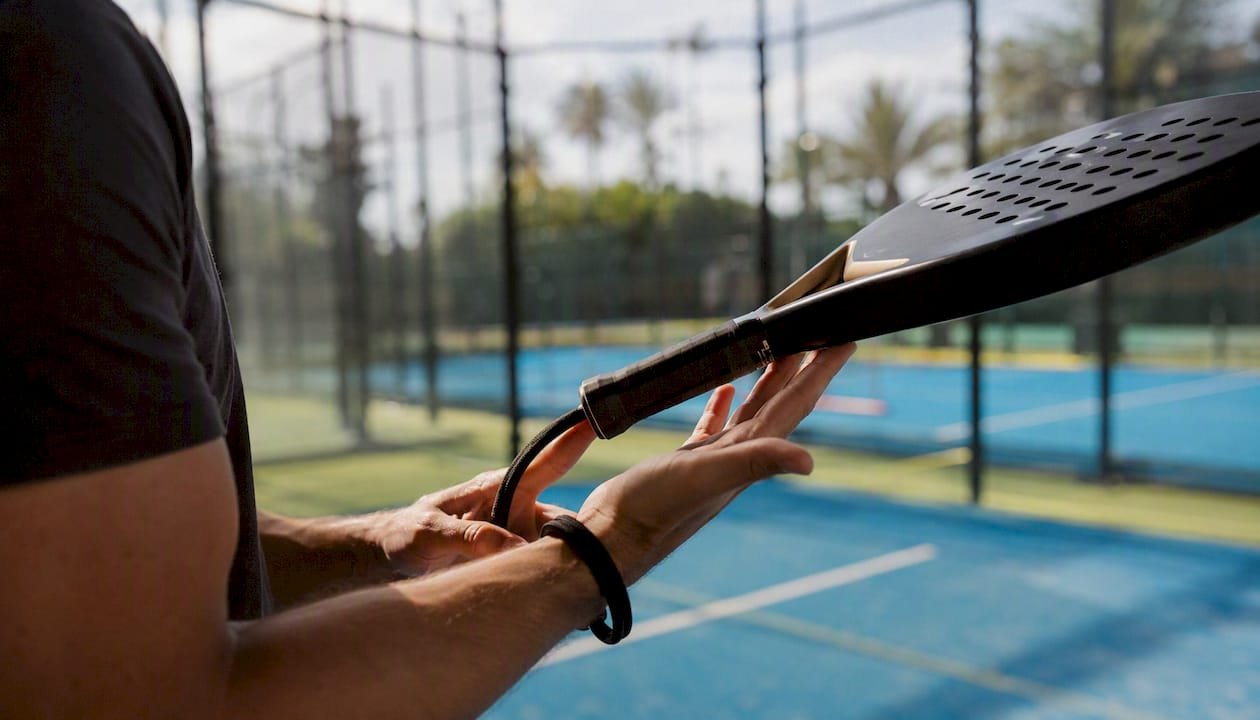
Padel racket balance is the location of the racket’s center of mass, measured in centimeters from the butt of the handle. That single number determines whether a frame rewards power or maneuverability. Padelgearfinder, low balance gives more control and is easier on the arm, medium balance suits all-court play, and high balance delivers more power for advanced players.
Here is the quick-reference breakdown by player type:
- Net-first / defensive player: head-light balance (roughly 25.0–25.9 cm) for faster reactions and less arm fatigue
- All-court / club player: even/neutral balance (roughly 26.0–26.5 cm) for a forgiving mix of power and control
- Baseline attacker / advanced player: head-heavy balance (roughly 26.6–27.0 cm or above) for maximum momentum on drives and smashes
Key Takeaways
Padel racket balance, measured in centimeters from the handle, is the single most important spec for matching a frame to your role and timing on court.
| Point | Details |
|---|---|
| Balance range to know | Most adult rackets fall between 25.0 and 27.0 cm; differences of 0.5 cm change swing inertia noticeably. |
| Head-heavy suits attackers | High balance (above 26.5 cm) adds momentum for smashes and drives but demands clean timing. |
| Head-light suits net players | Low balance (below 26.0 cm) speeds up volleys and reduces arm fatigue over long matches. |
| Measure before you modify | DIY balance testing takes two minutes; overgrips shift balance toward the handle by roughly 0.1–0.3 cm. |
| Padelhip for the right fit | Padelhip lists balance specs on every racket page and offers easy returns so you can test and swap if needed. |
Table of Contents
- What does padel racket balance actually mean?
- How head-heavy, even, and head-light balance affect your game
- What balance ranges do manufacturers actually use?
- How to measure your racket’s balance point at home
- Why balance alone does not tell the whole story
- How to choose the right balance for your playing style
- Find the right balance at Padelhip
- Sources
What does padel racket balance actually mean?
Balance point is the exact spot where the racket would rest level if you placed it on a narrow edge. Manufacturers measure it as the distance in centimeters (or millimeters) from the base of the handle to that center of mass. A racket listed at 26.0 cm has its mass centered 26 centimeters up from the butt cap.
Not every brand publishes a precise number. As Playtomic notes, most adult rackets fall within a range of roughly 25.0–27.0 cm, and some manufacturers simply label balance as “low,” “medium,” or “high” rather than giving an exact figure. When a product page does list a number, like the Toalson S-Mach Tour Allround Racket, you will see it listed alongside weight and shape as a core specification.
The difference between 25.5 cm and 26.0 cm sounds trivial. It is not. A 0.5 cm shift in balance meaningfully changes swing inertia, which affects how quickly you can accelerate the frame, how fast you react to a ball at the net, and how much your forearm tires over a long match.

How head-heavy, even, and head-light balance affect your game
The three balance types each create a different physical relationship between your arm and the racket head. Here is how they compare:
| Balance type | Power | Control | Sweet spot | Fatigue risk |
|---|---|---|---|---|
| Head-heavy (high) | High | Lower | Smaller, toward tip | Higher over time |
| Even/neutral | Moderate | Moderate | Centered, forgiving | Moderate |
| Head-light (low) | Lower | High | Larger, more consistent | Low |
Head-heavy rackets increase swingweight and stability for overheads and drives. Head-light rackets improve maneuverability and volley response. Neutral balance is the safest all-court compromise.
Swing inertia is the key concept here. When mass sits closer to the tip, the racket resists direction changes more strongly. That resistance translates into momentum on a smash but slows your wrist on a reflex volley. A 0.5 cm shift toward the head can feel like adding several grams to the tip because the leverage effect amplifies the change.
- Head-heavy: best for baseline attackers and advanced players who generate their own swing speed and want maximum punch on bandejas and smashes
- Even/neutral: the go-to for intermediate and all-court players who split time between net and baseline, and the best starting point for anyone unsure which direction to go
- Head-light: ideal for net-first players, doubles specialists, and anyone recovering from a shoulder or elbow issue
Pro Tip: If you are moving from tennis to padel, start with an even or head-light frame. Tennis players often overswing with head-heavy padel rackets, which compounds fatigue and timing errors until the shorter swing mechanics click.
What balance ranges do manufacturers actually use?
Most adult rackets land within a moderate range of balance points, and the practical thresholds most brands and retailers use look like this:
- Below 26.0 cm: typically labeled “low balance” or “head-light”
- 26.0–26.5 cm: typically labeled “medium” or “even”
- Above 26.5 cm: typically labeled “high balance” or “head-heavy”
Small differences inside those bands still matter. A racket at 26.8 cm will feel noticeably more top-heavy than one at 26.3 cm, even though both sit in the “medium-to-high” zone. When a brand uses only a label without a number, ask the retailer for the spec or look for the measurement on the product page.
A 0.5 cm shift in balance significantly changes swing inertia and how the racket behaves in motion, affecting acceleration, reaction time, and fatigue — padel.how
How to measure your racket’s balance point at home
You do not need a lab. The DIY method takes about two minutes.
- Place a narrow, firm edge (a ruler spine, a pen, or the edge of a table) across the throat of the racket, perpendicular to the frame.
- Slide the racket slowly toward the handle until it balances level without tipping.
- Mark that point with a piece of tape.
- Measure the distance from the center of the butt cap to that mark in centimeters.
That is your balance point. For greater precision, a digital balance-point ruler (available at most pro shops for under $30) removes the guesswork from the balancing step and gives a reading accurate to within 1 mm. Most pro shops will also measure it for free if you bring the racket in.
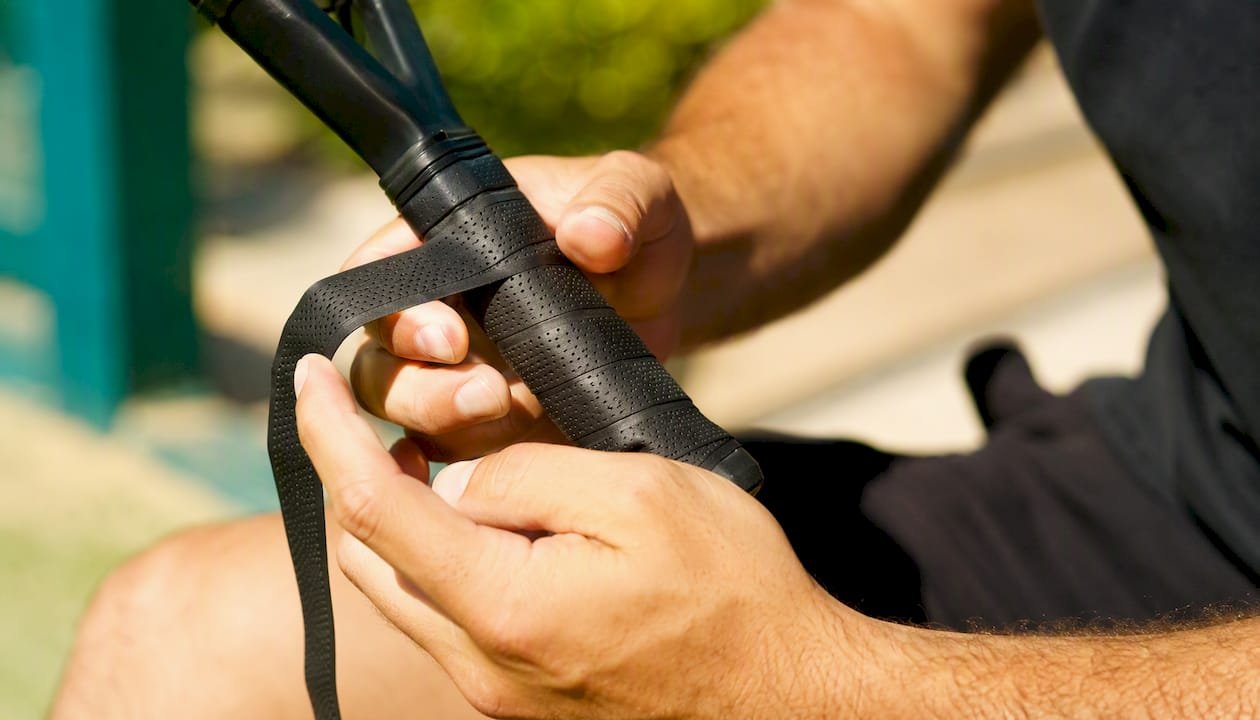
Pro Tip: Adding an overgrip shifts the balance toward the handle by roughly 0.1–0.3 cm because the grip weight sits at the lowest point of the frame. Lead tape applied near the tip moves balance in the opposite direction by a similar amount per strip. Always re-measure after any modification.
Why balance alone does not tell the whole story
Balance is one variable in a system. Total weight, swingweight, and racket shape all interact with it, and reading balance in isolation can lead you to the wrong frame.
Swingweight is the rotational resistance of the racket around a fixed pivot point (typically 10 cm from the butt). Two rackets with identical static weight and identical balance can have different swingweights depending on how mass is distributed along the length of the frame. A racket with mass concentrated at the tip and the handle will swing heavier than one with mass clustered near the center, even if the balance numbers match.
Shape compounds this further. How shape interacts with balance changes where the effective sweet spot sits and how the frame responds off-center. A diamond shape already pushes the sweet spot toward the tip; pair it with a high balance and you get a very demanding frame that rewards precise timing. A round shape with a low balance is the opposite: forgiving, maneuverable, and consistent.
Combined effects worth knowing:
- Heavy frame + head-light: stable and controlled, low fatigue, good for long matches
- Light frame + head-heavy: fast swing potential but less stability on hard blocks
- Diamond shape + high balance: maximum power ceiling, demands clean contact
- Round shape + low balance: maximum forgiveness, best for beginners and net specialists
How to choose the right balance for your playing style
Start with your role on court, then refine by weight and shape.
Player profile recommendations:
- Net-first / doubles specialist: target 25.0–25.9 cm; prioritize a round or teardrop shape; check beginner and control-oriented options if you are newer to the game
- All-court / club player: target 26.0–26.5 cm; an even-balanced teardrop is the most versatile starting point
- Baseline attacker / advanced player: target 26.5–27.0 cm; pair with a diamond shape and a firm EVA core for maximum punch; advanced power rackets in this range are built around exactly this combination
15-minute on-court demo checklist:
- Hit 10 volleys at the net. Does the racket feel sluggish or easy to redirect?
- Hit 10 bandejas. Does the frame feel stable at contact or does it twist?
- Hit 5 smashes. Is there enough momentum without over-swinging?
- Play 3 reaction-block exchanges. How quickly can you reset the racket face?
- Check your forearm after the session. Any unusual tension or fatigue signals the balance is too high for your current conditioning.
Pro Tip: Before buying lead tape to raise balance, try a heavier racket in the same shape first. Adding tape changes balance but also raises total weight unevenly, which can create new swingweight problems. A purpose-built frame at the right spec is cleaner than a modified one. Building power through training also lets you handle a higher-balance frame without relying on equipment modifications.
The balance question players keep getting wrong
Most players who come to Padelhip asking about balance have already decided they want more power, so they reach for a head-heavy frame. What they often discover after a few sessions is that the extra momentum is useless if they cannot get the racket into position fast enough. Balance is not just a power dial. It is a timing dial. A frame that is 0.3 cm too heavy at the tip will cost you more points at the net than it wins at the baseline, especially at club level where rallies are won on consistency, not on the occasional hard smash.
The players who benefit most from testing balance in person are intermediates who have plateaued. They have the technique to feel the difference between a 25.8 cm and a 26.3 cm frame, but they have not yet locked into a style that demands one over the other. That window is the best time to experiment.
Find the right balance at Padelhip
Choosing the wrong balance costs you points and strains your arm. Padelhip carries a full range of rackets across every balance category, from forgiving head-light frames for net specialists to high-balance diamond rackets for players who want to finish points from the back.

The Bullpadel Vertex Advance 26 is a strong example of a high-balance, diamond-shape frame built for intermediate and advanced attackers. If you are not sure where to start, browse the full store at Padelhip, where every racket listing includes balance specs alongside weight and shape. Fast worldwide shipping and easy returns mean you can order with confidence, and if the balance does not suit your game, the return process is straightforward.
Sources
- Balance in Padel Rackets: 26 cm vs 25.5 cm
- Padel Racket Balance Power vs Control Head Heavy vs Even
- How to Choose a Padel Racket: Shape, Weight, Balance Guide
- Guide on how to choose a padel racket