

4 PSI Pressure Gap That Changes Play: Padel Balls vs Tennis Balls

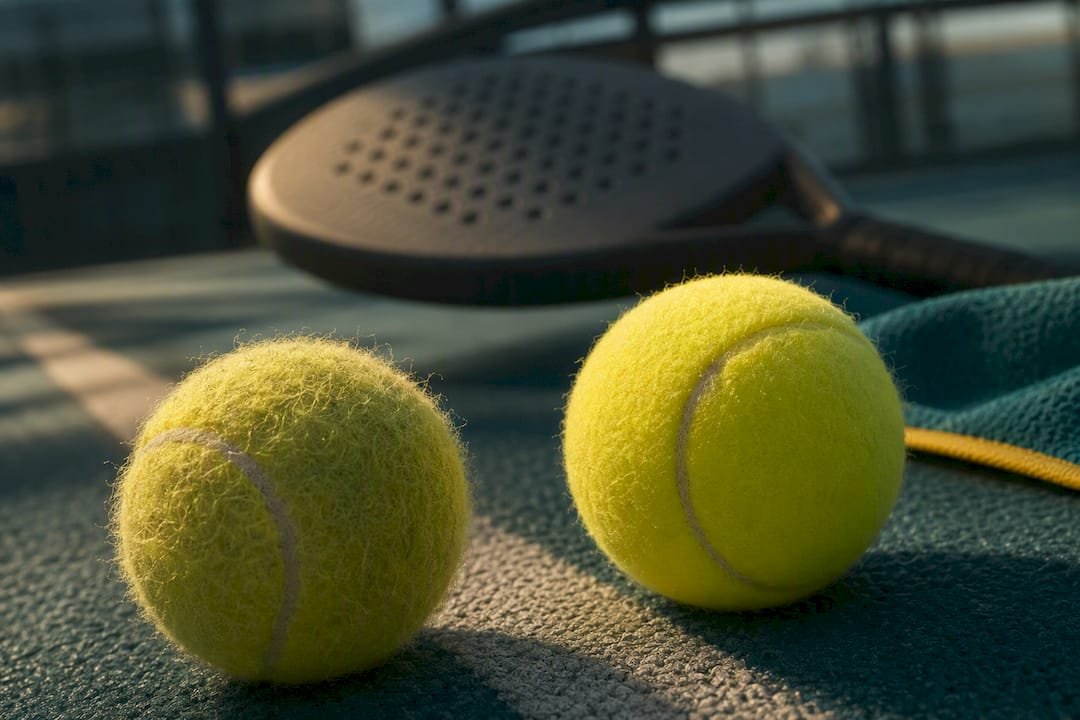
Padel and tennis balls are not interchangeable, and the reason comes down to one number: internal pressure. Padel balls run lower pressure than tennis balls, which changes how much they compress on contact and how they rebound off walls and glass. Use padel balls for padel, tennis balls for tennis, and treat any swap as a stopgap, not a habit.
TL;DR:
- Padel balls operate at a pressure of about 10 to 11 PSI, which is lower than the 14 PSI typical of tennis balls, significantly affecting rebound and control.
- The diameter difference between padel and tennis balls is just two to three millimeters, influencing how the ball contacts rackets and walls in padel, but barely affects tennis.
- Padel balls bounce lower and more predictably from standard drop tests compared to tennis balls, making game play more controlled near walls and glass surfaces.
- Using tennis balls in padel can damage equipment and disrupt play due to stiffer feel and sharper rebounds, so they should only be used in low-risk practice scenarios.
- A ball’s pressure loss occurs quickly, with padel and tennis balls typically needing replacement after a few sessions, indicated by softening, dull sounds, and reduced bounce.
Table of Contents
- Padel Balls vs Tennis Balls: Size and Weight Compared
- Why Do Padel and Tennis Balls Feel So Different?
- How Bounce and Speed Change the Way You Play
- Can You Use Tennis Balls for Padel? Here’s the Real Risk
- How Long Do Padel and Tennis Balls Actually Last?
- How to Choose the Right Ball for Your Court and Level
- What Backs This Comparison Up
- What Most Players Get Wrong About Ball Choice
- Ready to Stock Up on the Right Balls and Gear?
- Sources
Padel Balls vs Tennis Balls: Size and Weight Compared
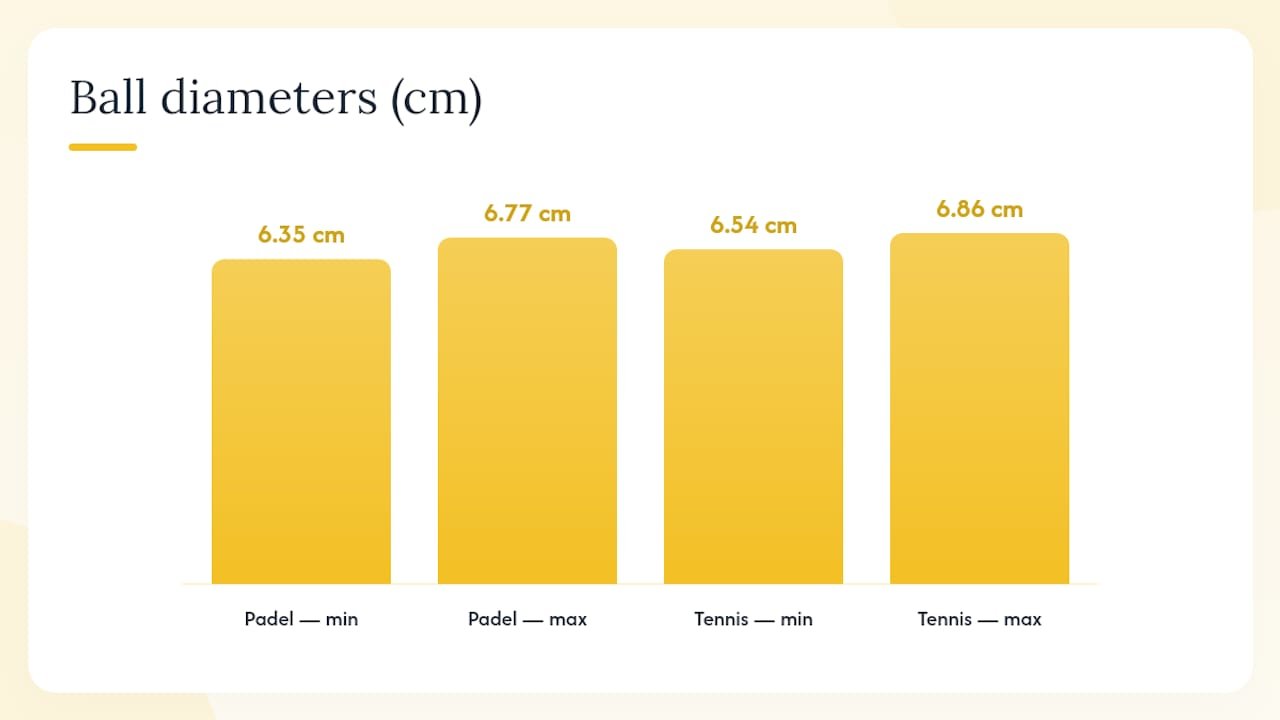
The size gap is smaller than most players assume. A padel ball measures 6.35 to 6.77 cm in diameter, while a tennis ball runs 6.54 to 6.86 cm. That’s a difference of roughly 2 to 3 millimeters at most, barely visible if you set both balls side by side. Weight ranges are essentially identical between the two.
So why does this small gap matter? A few millimeters changes how cleanly the ball meets the strings on a padel racket’s solid, stringless face. It also affects how the ball contacts the glass and mesh walls that define padel scoring. On a tennis court, that same margin barely registers, because there’s no wall to read.
Here’s how the specs stack up:
- Padel ball diameter: 6.35 to 6.77 cm
- Tennis ball diameter: 6.54 to 6.86 cm
- Weight: Effectively the same range for both
- Governing bodies: International Padel Federation (FIP) for padel, International Tennis Federation (ITF) for tennis
Picture a wall rebound in padel: a ball that’s a touch smaller and softer sits into the glass for a fraction longer before it kicks back, giving you a beat more time to read the angle. That’s the size story in a nutshell, but it’s the pressure story that really drives the difference.
Why Do Padel and Tennis Balls Feel So Different?
Felt and core construction diverge more than diameter does. Tennis balls use a tighter, often nap-heavier felt over a rubber core built to survive open-court friction across a full match. Padel balls use a similar rubber core but a lighter felt finish, tuned to work with the solid-face racket and the confined dimensions of a walled court.
Pressure is where the real split happens. Padel balls typically run around 10 to 11 PSI, while pressurized tennis balls sit closer to 14 PSI. Converted, that’s roughly 69 to 76 kPa for padel against about 96 kPa for tennis. It doesn’t sound like much on paper, but on impact it changes everything.
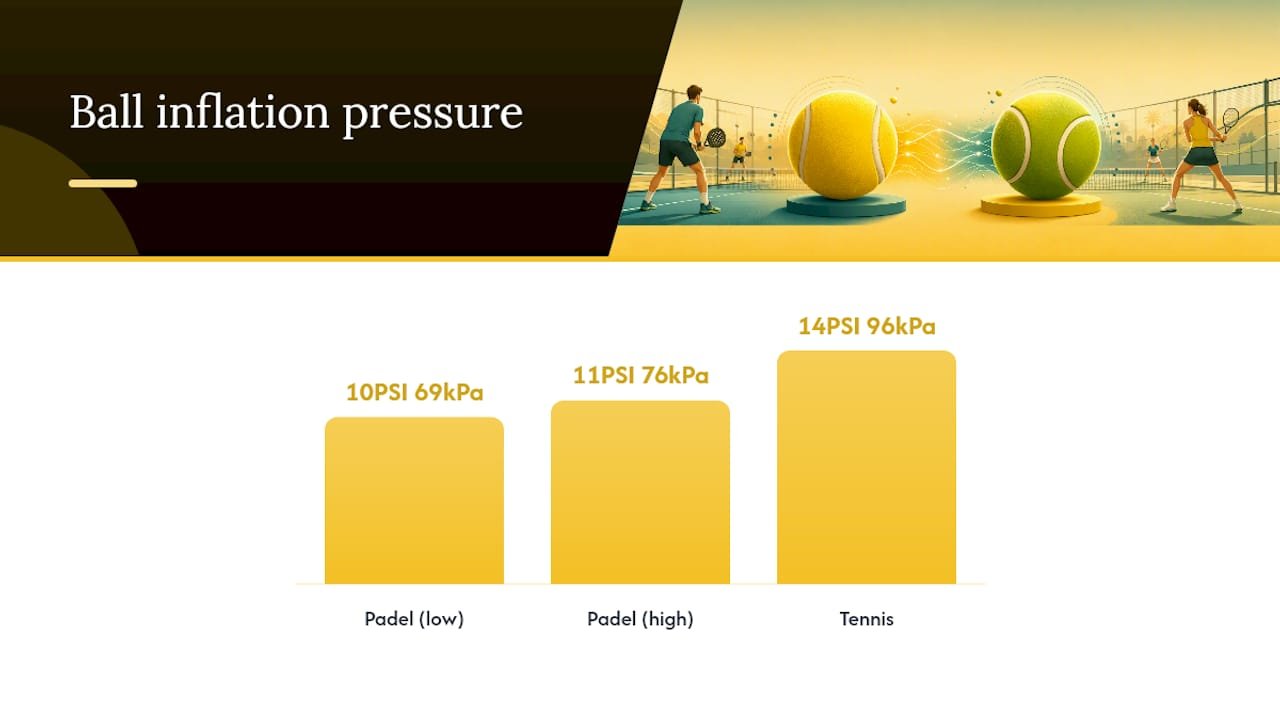
A four-PSI gap changes the whole feel of the game. Lower pressure means more compression when the ball meets the racket or the glass. That extra squeeze absorbs energy, so the ball comes off softer and slower, which is exactly what you want on a court where the ball can hit four surfaces before a point ends. Tennis balls, built stiffer, resist that compression and snap back faster.
What this means for your game:
- Padel balls: More compression, softer rebound, better spin grip for touch shots near the glass
- Tennis balls: Less compression, faster rebound, harder to control off a wall
- Practical effect: Padel’s lower pressure gives you more dwell time to generate spin and angle; tennis’s higher pressure rewards flat power and depth
That compression difference is the main technical reason padel and tennis balls play so differently, and it’s worth remembering before you grab whichever can is closest to the door.
How Bounce and Speed Change the Way You Play
Ball testers use a standard drop from 2.54 meters to measure rebound height, and the results tell you almost everything about why these two sports feel different at contact. Padel balls tend to bounce lower and more predictably from that drop height, while tennis balls rebound higher and with more pace.
That gap changes how you play the point, not just how the ball moves:
- Lower, controlled bounce (padel): Gives you more time to track wall rebounds and set up a lob or a smash
- Higher, faster bounce (tennis): Rewards early preparation and quick footwork, since the ball arrives sooner than it looks
- Wall interaction: Padel’s softer compression makes glass rebounds more readable; a tennis ball on the same glass would kick off sharper and less predictably
A four-wall court amplifies every millimeter of bounce difference. Picture a defensive lob in padel that clips the back glass. Because the ball compresses more on impact, it sheds pace and drops into a manageable zone for the return. Swap in a tennis ball and that same lob comes off the glass faster and lower, cutting your reaction window and often ending the rally early instead of extending it. Coaches who work with tennis players transitioning to padel see this constantly: players misjudge wall speed because they’re used to a livelier ball, and it takes real repetition to recalibrate.
Can You Use Tennis Balls for Padel? Here’s the Real Risk
Short answer: only in a pinch, and only if you accept the tradeoffs. A tennis ball’s higher pressure and stiffer felt change wall rebounds enough to throw off your timing, and the added hardness accelerates wear on padel rackets while producing sharper, less predictable ricochets off the glass.
The risks break down into two categories:
- Equipment wear. A harder ball repeatedly striking a padel racket’s solid face stresses the surface faster than the ball it was designed for.
- Play risk. Faster, sharper glass rebounds shorten rallies and increase the odds of a mistimed shot or a bad bounce near another player.
- When it’s tolerable. Solo wall practice, footwork drills, or warming up with no glass contact are low-risk uses. Match play or doubles on an enclosed court is not.
Pro Tip: If you’re stuck without padel balls, use tennis balls only for solo hitting against a flat wall, never for full-court rallies where glass rebounds are part of the point.
How Long Do Padel and Tennis Balls Actually Last?
Padel balls lose usable pressure faster than most players expect. Recreational players typically notice a real drop in bounce and control after several sessions, even though the can felt brand new at the start. Pressurized tennis balls follow a similar curve, going flat within a handful of sets once the can is opened.
Three checks tell you when it’s time to swap a ball:
- Squeeze test. If the ball compresses too easily under light finger pressure, it has lost core pressure.
- Sound test. A dull, flat thud on impact (instead of a sharp pop) signals pressure loss.
- Bounce test. Drop it from shoulder height; if it rebounds noticeably lower than a fresh ball, retire it from match play.
Pro Tip: Store opened cans upright in a cool, dry spot and reseal with a pressurizer tube if you have one. It won’t restore lost pressure, but it slows the leak for balls you’re not using yet. For a deeper breakdown of session counts and storage specifics, see how long padel balls actually last.
How to Choose the Right Ball for Your Court and Level
Matching the ball to the situation matters more than brand loyalty. Run through this before you buy:
- Court type: Enclosed padel courts need padel-spec balls for predictable glass rebounds; open tennis courts need tennis-spec balls built for higher-speed rallies.
- Player level: Beginners often do better with slightly softer, lower-pressure practice balls that forgive mistimed shots; competitive players need FIP-approved or ITF-approved match balls.
- Session purpose: Practice cans can run a few sessions past their prime; match play calls for a fresh can every time.
- Altitude and indoor factors: Some tennis ball lines offer altitude-adjusted pressure for high-elevation courts; check packaging for indoor versus outdoor felt ratings on both ball types.
- Packaging cues: Look for FIP approval markings on padel cans and ITF approval on tennis cans if you’re buying for sanctioned play, and check indoor/outdoor and altitude labeling before checkout. For court-condition specifics, indoor and outdoor padel balls behave differently enough to affect which can you should grab.
What Backs This Comparison Up
Padelhip built this comparison around the specs that actually govern the sport: FIP standards for padel balls, ITF standards for tennis balls, and the bounce and pressure figures that separate them on court. That’s the same technical grounding behind Padelhip’s equipment guides, including breakdowns of indoor versus outdoor padel ball performance and how racket choice pairs with ball behavior.
If you’re building out a full kit and want model-specific picks rather than just the technical rundown, Padelhip’s guide to the best padel balls walks through current options by playing style and budget. The goal across all of it is the same: match the gear to the specs, not the other way around.
What Most Players Get Wrong About Ball Choice
Most players treat the ball as an afterthought, something you grab off a shelf without thinking about how it interacts with the racket or the walls. That’s backwards. The ball is the single variable that determines whether your racket, your footwork drills, and your wall-reading instincts actually transfer from one sport to the other.
The conventional advice, “just use whatever ball is around,” ignores that pressure difference entirely. It treats padel and tennis as close enough cousins that gear is interchangeable. It isn’t, not for anything beyond casual solo hitting. A tennis ball’s stiffness doesn’t just feel different, it actively degrades the wall-reading skills that make padel padel.
If you take one thing from this comparison, prioritize matching the ball to the court before you worry about racket upgrades or footwork drills. A mismatched ball will undercut good technique faster than a mediocre racket ever could. Get the pressure and construction right first, then build the rest of your game on top of it.
— Serena
Ready to Stock Up on the Right Balls and Gear?
Padelhip stocks padel balls and the equipment that goes with them, curated so you’re not guessing between match-approved cans and practice-grade ones. Every order ships fast with straightforward returns if something isn’t right, and the lineup covers rackets, footwear, and apparel alongside the balls themselves.

Start with the Padelhip shop to browse current padel ball stock and match-ready gear, or check the padel accessories guide if you’re building a full kit from scratch. Pair your next can of balls with a racket suited to your level, like the Bullpadel Vertex Advance 26 for advanced control or the Babolat Air Vertuo for faster net play. If you’re shipping outside Spain, the shipping details page covers delivery timing so you know what to expect before you check out.
Sources
Specs and testing details in this piece draw from the FIP and ITF diameter standards, Bounce’s pressure and lifespan data, Padel Magazine’s equipment-risk reporting, and LTA Padel’s coaching notes. Racket-sport crossover context comes from Six Love’s racquetball and tennis guide.
- Padel Ball vs Tennis Ball Explained | Bounce
- Difference between padel and tennis balls
- Can you play padel with tennis balls? (and vice versa) | Padel Magazine
- Padel vs tennis | Key differences explained