

Do New Padel Shoes Need a Break-In Period?

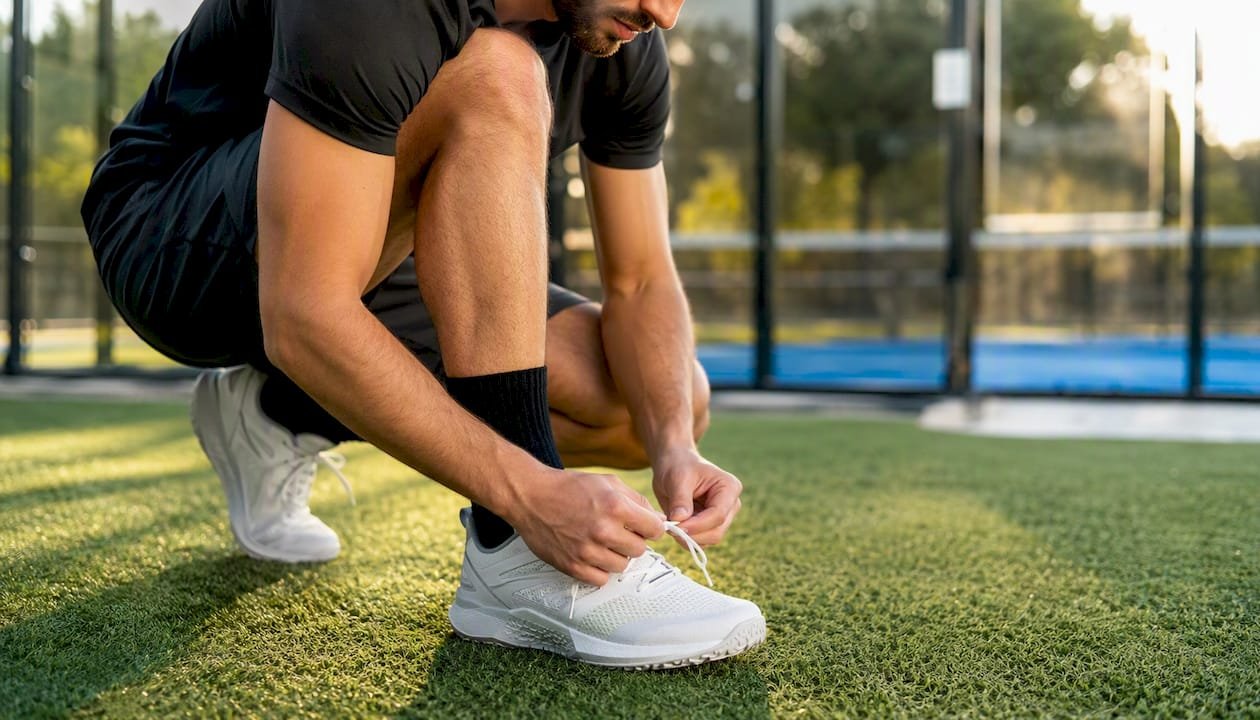
Most dedicated padel shoes need a short break-in over a few brief court sessions, but they should feel secure from the first time you put them on, not painful. A little stiffness in the upper is normal. Pinching, numbness, or a heel that slides an inch with every step is not something a break-in period fixes.
Before you step on court in a new pair, do three things. Check that you have roughly a thumb’s width of space at the toe, lace the shoe with a heel-lock loop if your heel moves at all, and run a controlled 20 to 30 minute session that mixes light movement with a few real sprints, so you can judge grip and rubbing before a match matters. If tightness, pinching, or numbness is still there after several of these short sessions, you’re almost certainly looking at the wrong size or shape, not a shoe that “just needs time.” Most new padel shoes settle in within a few short court sessions, according to break-in guidance built specifically around padel footwear rather than running shoes.
- Check toe room and width at home before you ever step on court.
- Lace with a heel-lock (runner’s loop) if there’s any heel movement.
- Run one 20 to 30 minute controlled session before trusting the shoes in a match.
Pro Tip: If a shoe still hurts in the same spot after two short sessions, stop trying to “wear it in.” That’s a fit signal, not a break-in signal, and continuing to play in it risks a blister or worse.
Key Takeaways
A properly broken-in padel shoe settles within two to three short sessions and should never require pushing through real pain to get there.
| Point | Details |
|---|---|
| Run the fit checklist first | Check toe space, heel lock, and midfoot hold at home before any court time. |
| Follow the 3-session plan | Build from a light 20 to 30 minute session up to a full match over three outings. |
| Test grip at half speed | Try a side lunge, a small pivot, and a forward stop before trusting shoes in a match. |
| Treat hot spots immediately | Tape or moleskin friction points the moment you feel them, don’t wait for a blister. |
| Preserve your return window | Keep the box, avoid scuffing the outsole, and check return rules if fit feels wrong. |
| Shop the right shoe for your feet | PadelHip stocks Drop Shot, Head, Babolat, Bullpadel, and Aca Padel across a range of break-in profiles. |
The single readiness test that matters most: if you stop thinking about your shoes entirely during play, they’re ready for match day.
Table of Contents
- Why Does a Padel Shoe Break-In Period Matter?
- How Long Does It Take to Break In Padel Shoes?
- What Affects How Fast a Padel Shoe Breaks In?
- What Fit Checks Should You Run Before Breaking Shoes In?
- What’s a Practical 3-Session Break-In Plan for Padel Shoes?
- How Do You Test Padel Shoe Grip Before a Match?
- How Do You Prevent Blisters When Breaking In Padel Shoes?
- How Do Uppers, Midsoles, and Outsoles Affect Break-In?
- When Should You Not Try to Break In a Padel Shoe?
- What Does the Evidence Say About Safe Break-In Testing?
- Get Your Feet Match-Ready With the Right Padel Shoes
- Where to Read More About Padel Shoe Fit and Blister Care
- Frequently Asked Questions
- Sources
Why Does a Padel Shoe Break-In Period Matter?
A stiff new shoe changes how confidently you move, and in padel that matters more than in almost any other racquet sport. Padel is built on short, violent lateral movements: side steps, split steps, sudden pivots off the back glass. A sole and upper that haven’t settled yet can make your foot feel slightly disconnected from the court during exactly those moments, which is when you most need to trust your footing.
Breaking shoes in gradually does two things at once. It lets the outsole seat naturally against the court surface so grip becomes predictable instead of grabby or unpredictable, and it lets the upper soften around your foot’s actual shape without losing the lateral support that keeps your ankle stable during a hard cut. Jump straight into a two-hour match in a stiff, brand-new pair and you’re combining unfamiliar footwear with the highest-friction moments the shoe will ever see. That’s a bad pairing for blisters, and it’s also a bad pairing for your Achilles and ankles if the shoe isn’t yet moving with your foot the way it will after a session or two.
A properly broken-in padel shoe gives you three concrete things: a heel collar that’s settled rather than rigid, an upper that’s softened just enough without sacrificing the side support you need for hard stops, and grip that behaves the same way on your fifth sprint as it did on your first.
- Settled heel collar that doesn’t rub with every stride.
- Softened upper flex points without lost lateral support.
- Consistent, predictable grip from the first rally to the last.
Pro Tip: Test lateral stability specifically, not just straight-line comfort. Walk to the shop mirror all you want, but a shoe only reveals its true fit during a side shuffle or a hard stop.
How Long Does It Take to Break In Padel Shoes?
Plan for two to three short court sessions before you trust a new pair in a competitive match. That’s the benchmark that break-in guidance for padel-specific shoes generally points to, and it lines up with what most players actually report: session one feels stiff but tolerable, session two feels noticeably better, and by session three the shoe mostly disappears from your attention during play.
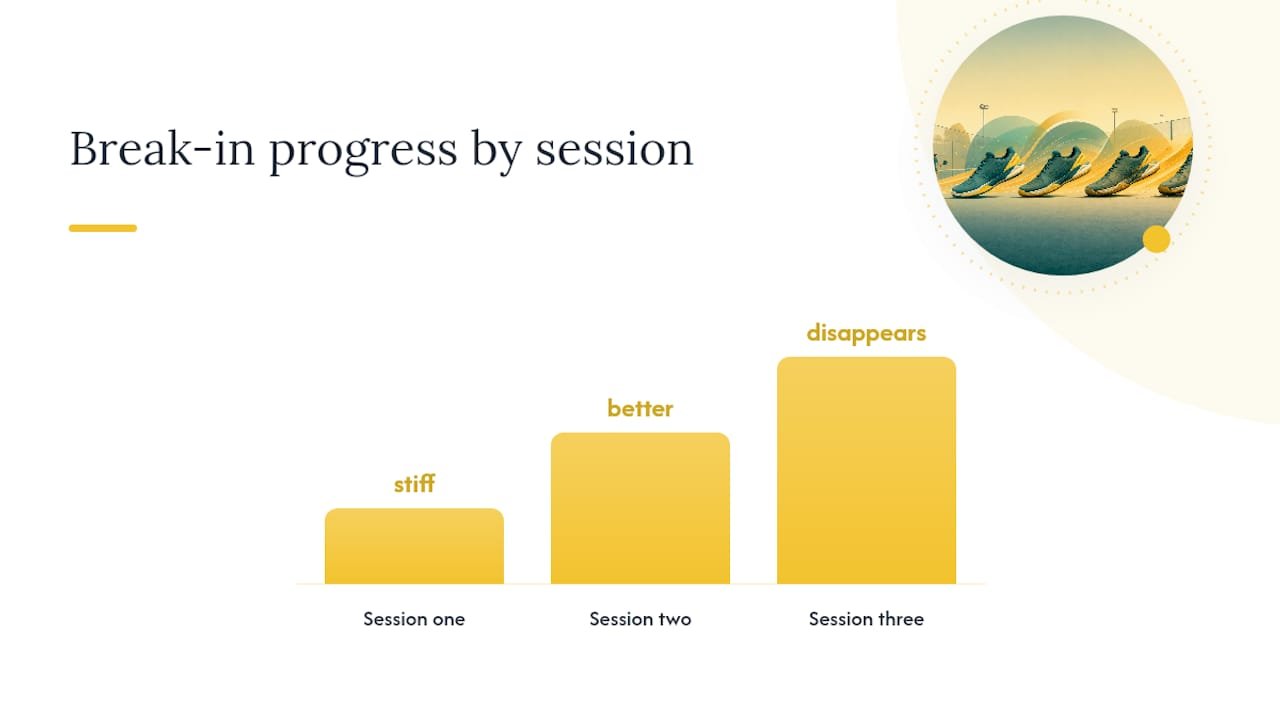
Here’s roughly what that progression looks like in practice. In session one, expect some awareness of the upper around your ankle and maybe a little heel movement you’re monitoring closely. By session two, that awareness fades during rallies and only shows up when you specifically think about it. By session three, if the shoe is right for you, you stop thinking about your feet altogether, which is honestly the best possible sign a shoe has “arrived.”
You’ll know you’re ready for a real match when a few things line up together: no hot spots anywhere on the foot, a heel that stays locked through hard stops, grip that feels the same on your last sprint as your first, and no new soreness the next morning. Those four signals matter more than any fixed number of sessions.
- No hot spots or friction points after a full session.
- Heel stays locked during side steps and sudden stops.
- Grip feels consistent, not slippery early and grabby later.
- No unusual soreness or stiffness the next day.
Stopping the break-in plan early is a good sign; it means the shoe fit well from the start. Stopping the attempt to break shoes in entirely, because the same pain point shows up session after session, is the other kind of “early stop,” and it’s the one that should send you back to the fit checklist rather than back on court.
What Affects How Fast a Padel Shoe Breaks In?
Material and construction drive most of the variation you’ll feel between one pair and the next. Leather and PU uppers tend to have a mild natural stretch and feel firmer out of the box, which usually means a slightly longer settling period. Synthetic overlays and TPU panels barely stretch at all. They’re built for structure, so what “breaking in” means for them is really the foam and heel counter seating to your foot, not the material itself giving. Knit and mesh uppers, by contrast, tend to feel comfortable almost immediately because the material flexes with your foot from the first wear, though that quicker comfort can come with less lateral rigidity during hard cuts.
Your own body and playing style shift the timeline too. A heavier player or someone who plays an aggressive, stop-start style with constant pivots will load the midsole and outsole differently than someone with a smoother, more positional game, and that changes how quickly cushioning adapts to actual foot pressure rather than just factory shape. Foot width matters as much as length here. A narrow foot in a standard-width shoe will feel pressure points a wider foot never notices, and sock choice, thin versus cushioned, compresses or expands that fit by more than people expect.
Court surface changes the picture again. Grip and break-in feel differently depending on whether you play on a dusty outdoor turf court or a clean indoor surface, since dust and sand sit on top of the outsole tread and can make a shoe feel less grippy than it actually is during those first sessions. Break shoes in on the surface you’ll actually play matches on whenever that’s possible.
| Factor | Typical break-in effect |
|---|---|
| Leather/PU upper | Mild stretch, firmer at first, softens gradually over sessions |
| Synthetic/TPU upper | Minimal stretch, structured feel, comfort comes from foam seating |
| Knit/mesh upper | Comfortable fast, but less lateral rigidity during hard cuts |
| Heavier player / aggressive stops | Faster midsole compression, quicker perceived break-in |
| Dusty outdoor court | Can feel less grippy early until dust is worked off the tread |
What Fit Checks Should You Run Before Breaking Shoes In?
Run these checks at home, before the shoes ever touch a court, because a poor fit caught in your living room is a returned pair. A poor fit caught after three sweaty sessions is a shoe you’re stuck arguing with a retailer about.
Start with toe space: standing up, you want enough space between your longest toe and the front of the shoe, about a thumb’s width. Lace up and lock the heel, checking that your foot doesn’t lift or slide inside the heel cup when you rise onto your toes. Then check the midfoot; the laces should hold your foot snugly across the top without any single pressure point, and the toe box should have enough volume that a hard forward stop doesn’t jam your toes into the front.
Walk around the house for a few minutes, then try a slow squat and a few step-ups on stairs. Any pinching, sliding, or specific pressure point you notice indoors will only get worse, not better, once sweat and real movement are added. After your actual first 20 minute court session, check again, specifically watching for redness that’s forming into a pressure point rather than fading, since that’s usually the first sign a blister is coming.
If anything feels off, keep the original box and packaging, and hold off on a full session until you’ve confirmed there’s no immediate pain. Most retailers, PadelHip included, need shoes in resalable condition to process a return, so testing outdoors on rough concrete or scuffing the outsole before you’re sure about fit can cost you that option.
- Thumb’s width of toe space when standing.
- Heel stays locked when you rise onto your toes.
- No single pressure point across the midfoot lacing area.
- Toe box has volume for a hard forward stop without jamming.
- Keep the box until you’ve confirmed comfort on court.
What’s a Practical 3-Session Break-In Plan for Padel Shoes?
Here’s the plan, laid out session by session, with what to check after each one.
- Session 0, at home (15 to 20 minutes). Wear the padel socks you actually plan to play in and walk, squat, and do a few light step-ups around the house. This is purely a fit and obvious-pressure-point check, not a movement test.
- Session 1, on court (20 to 30 minutes). Warm up, then move through light side steps and short volleys. No competitive points yet. This kind of light, structured session, warm-up plus short side steps and small forward stops, reveals fit and outsole behavior without exposing the shoe to heavy wear. Inspect your feet immediately afterward for any rubbing.
- Session 2 (45 to 60 minutes). Push the intensity up: side-to-glass recovery runs, short forward bursts, real split steps. Fix any minor hot spots now with tape before they become blisters, and pay close attention to how grip feels on your last sprint compared to your first.
- Session 3 (light match or controlled sets). If sessions 1 and 2 were genuinely comfortable, this is where you find out for real. Watch specifically for toe impact on hard stops, any heel slippage during pivots, and how your feet feel the next morning.
After every single session, run the same quick inspection: look for redness that’s turning into a hot spot, any numbness, instability during lateral movement, and whether the sole’s grip behavior stayed consistent from start to finish.
Pro Tip: Don’t substitute long walks around the house for court movement. Padel-specific lateral forces and quick pivots load a shoe in ways flat walking simply never will, so the real test only happens on court.
How Do You Test Padel Shoe Grip Before a Match?
Three low-risk movements will tell you almost everything you need to know about a sole’s grip, and all three should be done at half speed first.
- Side lunge and recover. Step wide to one side, load your weight, then push back to center. Note whether the outsole grabs cleanly or slides before catching.
- Small pivot. Rotate on the ball of your foot the way you would setting up for a forehand. A grippy sole will resist slightly through the turn rather than spinning freely.
- Forward stop. Take a few steps and stop hard, the way you would chasing a short ball. Watch for any forward slide inside the shoe itself, not just the sole against the court.
Surface changes everything here. A clean indoor court and a dusty outdoor turf court will make the exact same outsole feel completely different during those first sessions, since dust sits on top of the tread pattern and can mute grip until it’s worked off through normal play. If your local courts run dusty, expect the first session or two to feel slightly less sharp underfoot than the shoe’s actual design intends.
One thing not to do: deliberately scuff or drag a new sole across rough concrete to “wear it down” faster. That risks flattening the tread geometry the manufacturer engineered for your play style, and it can void a return if the grip genuinely turns out to be wrong for your court. Bed the sole in on the surface you’re actually going to play on, not on a random sidewalk.
How Do You Prevent Blisters When Breaking In Padel Shoes?
Blisters come down to three things working together: friction, heat, and moisture. Any new shoe generates more of all three than one that’s already molded to your foot, which is exactly why the first few sessions carry the highest blister risk. NHS guidance on blister prevention centers on avoiding that friction buildup in the first place rather than dealing with the aftermath, and that prevention-first approach is exactly the right mindset for a break-in period.
Three tactics do most of the work. Wear moisture-wicking sports socks instead of cotton, since cotton holds sweat against the skin and multiplies friction. Get lace tension right, snug enough to lock the heel but not so tight it creates pressure points across the top of the foot. And if you already know where your feet tend to blister, tape or moleskin that spot before your first session, not after you feel it burning.
A few habits reliably cause the blisters and shoe damage that ruin an otherwise fine break-in. Assuming a shoe that’s genuinely too small will “stretch out” over time is the biggest one; padel uppers, especially synthetic ones, don’t stretch nearly as much as people hope. Jumping straight into a full competitive match in unbroken shoes is another. So is over-tightening laces to compensate for heel slip instead of using a heel-lock loop, which just trades one problem for a different pressure point. And wearing thick running socks that bunch up inside a padel shoe’s tighter fit creates friction points that weren’t there in the store.
If you feel a hot spot developing mid-session, stop and address it immediately rather than pushing through. Clean the area, apply moleskin or tape directly over the friction point, and if a blister has already formed, avoid popping it and keep it protected rather than trying to play through it.
- Wear moisture-wicking socks, never cotton, from session one.
- Get lace tension right: snug at the heel, no pressure ridges on top.
- Tape or moleskin known hot spots before you feel them burning.
- Use a heel-lock loop for slip, don’t just crank the laces tighter.
Pro Tip: If a blister has already formed, resist the urge to burst it. Cover it, keep it clean, and give it a day off rather than risking infection during your next session.
How Do Uppers, Midsoles, and Outsoles Affect Break-In?
Every layer of a padel shoe contributes something different to how long it takes to feel right, and knowing which layer is causing your discomfort helps you judge whether it’s a normal break-in or a fit problem.
Upper material sets your starting point. Leather and PU uppers, common on models like the Babolat Jet Viva, have a mild give to them and tend to feel firmer for the first session or two before settling. Synthetic overlays and TPU reinforcement, which you’ll find on more structured shoes like the Bullpadel Vertex Vibram, barely stretch at all; their comfort comes from the foam beneath adapting to your foot rather than the upper itself softening. Knit and mesh construction, seen on lighter models, tends to feel comfortable almost immediately, trading a bit of lateral rigidity for that early comfort.
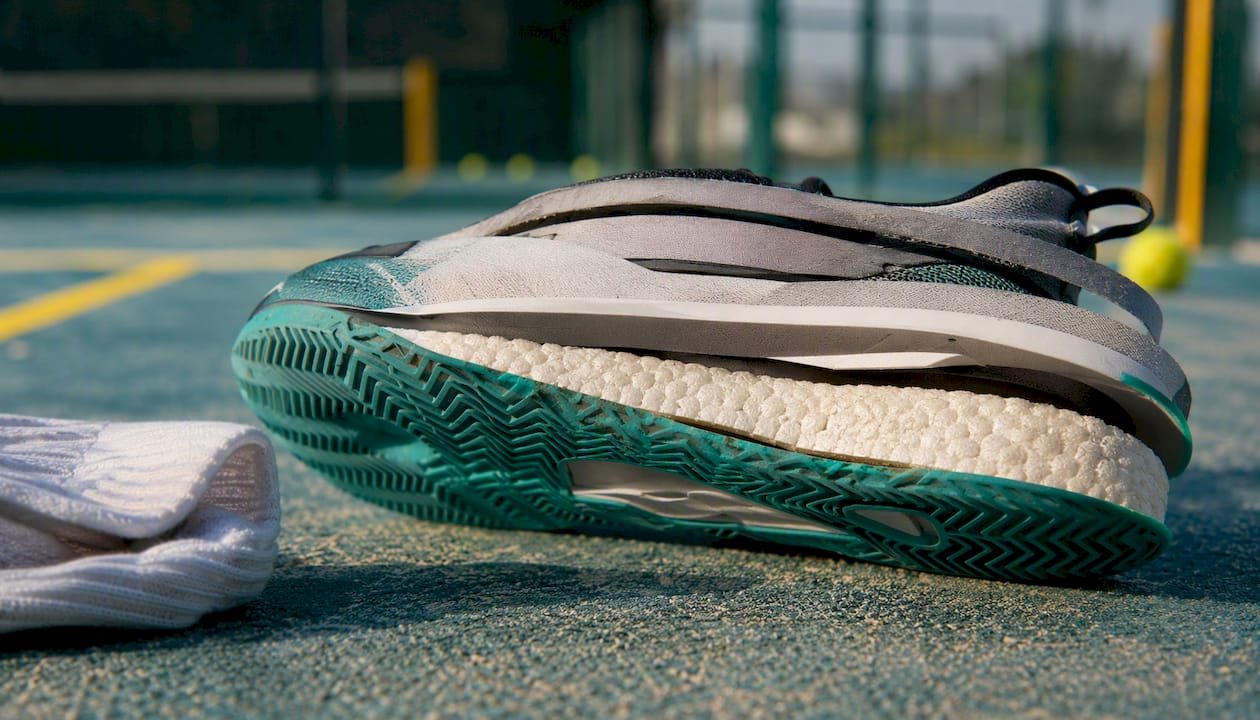
The midsole and heel counter matter just as much, arguably more for how “ready” a shoe feels for hard lateral movement. A rigid heel counter gives real stability during sharp cuts, but it commonly takes a session or two to seat fully around your heel shape, which is part of why heel-lock lacing helps so much early on. Midsole foam compresses differently depending on your body weight and how hard you land, which is exactly why two players in the identical shoe can report completely different break-in experiences.
Outsole compound is the final piece, and it’s a genuine tradeoff rather than a simple “better or worse” choice. Softer rubber compounds grip the court almost immediately but wear down faster over a season. Harder compounds take longer to feel dialed in, since the tread needs a session or two of real movement to seat against the surface, but they’ll outlast the softer option by a wide margin. Matching that compound to your primary court surface, and to how often you actually play, matters more than chasing whichever compound feels grippiest on day one.
PadelHip stocks models across that entire spectrum, from the structured stability of Bullpadel and Head shoes to the lighter, faster-to-comfort feel of options like Drop Shot and Aca Padel, so you can pick based on how much break-in time you’re actually willing to put in before your next tournament.
| Layer | Faster break-in | Slower, longer-lasting break-in |
|---|---|---|
| Upper | Knit/mesh | Synthetic/TPU structured overlays |
| Midsole/heel counter | Softer, less rigid support | Rigid heel counter for hard cuts |
| Outsole compound | Softer rubber, grips immediately | Harder compound, seats over sessions |
When Should You Not Try to Break In a Padel Shoe?
Some discomfort is a normal part of settling into a new shoe. Persistent pinching, numbness, severe heel slip, or pain that’s out of proportion to what you’d expect from stiff-but-new footwear are not. If any of those show up consistently across two or three short sessions, that’s a fit problem, not a break-in problem, and no amount of additional wear is going to fix it.
The good news is you can test thoroughly without burning your return window, as long as you’re deliberate about it. Keep the original box and packaging until you’re confident in the fit. Avoid scuffing the outsole on rough concrete or gravel outside the court, since that kind of visible wear is exactly what retailers look for when deciding whether a pair qualifies for return. Photograph any specific fit issues, like a heel that visibly lifts or a toe box that’s clearly too narrow, as you go, so you have something concrete to reference if you do need to return them. And check your retailer’s specific return window and condition requirements before you commit to an extended testing period.
Pro Tip: Before you write off a shoe entirely for heel slip, try the extra top eyelet, sometimes called a runner’s loop or heel-lock lace. It secures the heel collar without adding pressure across the forefoot, and it solves more “this shoe doesn’t fit” complaints than people expect.
What Does the Evidence Say About Safe Break-In Testing?
The safest approach to any new padel shoe combines a short testing checklist with realistic expectations about what a body actually needs. Target 20 to 30 minutes for your first session, 45 to 60 for your second, and treat your third session as a genuine readiness test rather than a formality. After each one, inspect specifically for redness that’s becoming a defined pressure point, any numbness, instability during lateral cuts, and whether the sole’s grip held steady from start to finish.
NHS guidance on blister care backs a prevention-first approach: avoid the friction before it becomes a wound, rather than treating a blister aggressively once it’s already there. On the equipment side, governing bodies like the LTA provide staged, cautious guidance for testing new gear before committing to full competitive play, which lines up with everything the break-in plan above is built around.
Gradual loading protects two things at once: your skin, because friction and heat build slowly instead of all at once, and the shoe’s structure, because the outsole and heel counter seat naturally to your specific foot pressure rather than being forced under full match-intensity stress on day one.
Why I trust the 3-session plan
I’ve watched enough players walk onto a court in shoes they bought that morning to know exactly how that story usually ends: a blister by game three, or a rolled ankle because the heel counter hadn’t settled yet. The pattern that actually works is boring and short. Test the fit first, always, before you even think about grip or feel. A shoe that’s slightly too narrow will never “break in” its way out of that problem, no matter how many sessions you give it.
What I’ve come to trust about the three-session structure specifically is how quickly it exposes the difference between normal stiffness and a genuine fit mismatch. By the end of session two, you know. There’s no ambiguity left. That clarity is worth more to me than any amount of guessing based on how a shoe felt standing in a store. PadelHip carries models across that entire spectrum, from stiffer, more structured shoes that need the full three sessions to lighter builds that feel close to right on day one, which means the plan isn’t fighting against whatever pair you happen to own. It’s just a faster way to find out if that pair was right for you in the first place.
Get Your Feet Match-Ready With the Right Padel Shoes
Breaking in a new pair is a lot easier when the shoe was a good match to begin with, and that’s where a curated selection actually earns its keep. PadelHip carries Drop Shot, Head, Babolat, Bullpadel, and Aca Padel models spanning the full range from lightweight, fast-to-comfort builds to stiffer, stability-first designs, alongside the accessories that make the process painless: cushioned padel socks, moleskin and tape for hot spots, and replacement insoles if your factory footbed isn’t quite right for your arch.

If you’re not sure which construction fits your foot shape or playing style, reach out to customer service for fit advice before you order, and rely on the easy returns policy as your safety net if a pair doesn’t work out once you’ve tested it properly. Browse the full range of padel shoes and gear at PadelHip and get a pair on its way to your first break-in session this week.
Where to Read More About Padel Shoe Fit and Blister Care
- How to Break In New Padel Shoes: best for the session-by-session break-in timeline and movement drills.
- Padel Shoes: Body and Court Fit Guide: best for matching outsole compound and fit to your court surface and body type.
- Blisters – NHS: best for first-aid basics on preventing and treating blisters during early sessions.
- Why You Need Padel Shoes – Tennis Warehouse Learning Center: best for understanding how padel shoe construction differs from running or tennis shoes.
- Ways to Play Padel – LTA: best for governing-body guidance on staged, cautious equipment testing.
Frequently Asked Questions
Do all padel shoes need a break-in period?
No. Many padel shoes, especially knit or mesh models, feel comfortable from the first wear. Stiffer, more structured shoes with rigid heel counters or synthetic overlays typically need one to three short sessions to settle.
How long should a padel shoe break-in session last?
Start with 20 to 30 minutes for your first session, focused on light movement rather than full-intensity play, then extend to 45 to 60 minutes for your second session once you’ve confirmed there’s no rubbing or pain.
What’s the difference between normal stiffness and a bad fit?
Normal stiffness fades noticeably by your second session and never involves numbness or severe pain. If the same spot hurts consistently across two or three sessions, that’s a fit issue, not a break-in issue.
Can I break in padel shoes by wearing them around the house?
Home wear is useful for an initial fit check, toe room, heel lock, obvious pressure points, but it won’t replicate the lateral forces and pivots of actual padel movement, so it can’t fully substitute for court sessions.
Will breaking in a too-small shoe make it fit eventually?
Rarely, and you shouldn’t count on it. Most padel shoe uppers, particularly synthetic and TPU-reinforced ones, have very limited stretch. A shoe that’s genuinely too small or narrow needs a size or width change, not more wear time.
Sources
- How to Break In New Padel Shoes — Padel Setup
- Padel
- Blisters – NHS
- Why you need padel shoes — Tennis Warehouse Learning Center
- Ways to play padel — LTA
Recommended
- Padel Shoes vs Tennis Shoes: What Padel Players Need
- Aca Padel Magic White Padel Shoes for Men – Your online Padel store- Padel Hip-Premier padel shop
- Best Padel Shoes for 2026: Top Picks and Buying Guide
- Babolat Jet Viva M 26 Padel Shoes | Lightweight Comfort & Grip Shoes for Beginner and Intermediate Players – Your online Padel store- Padel Hip-Premier padel shop