

Why Should We Wear Padel Shoes? Benefits Explained

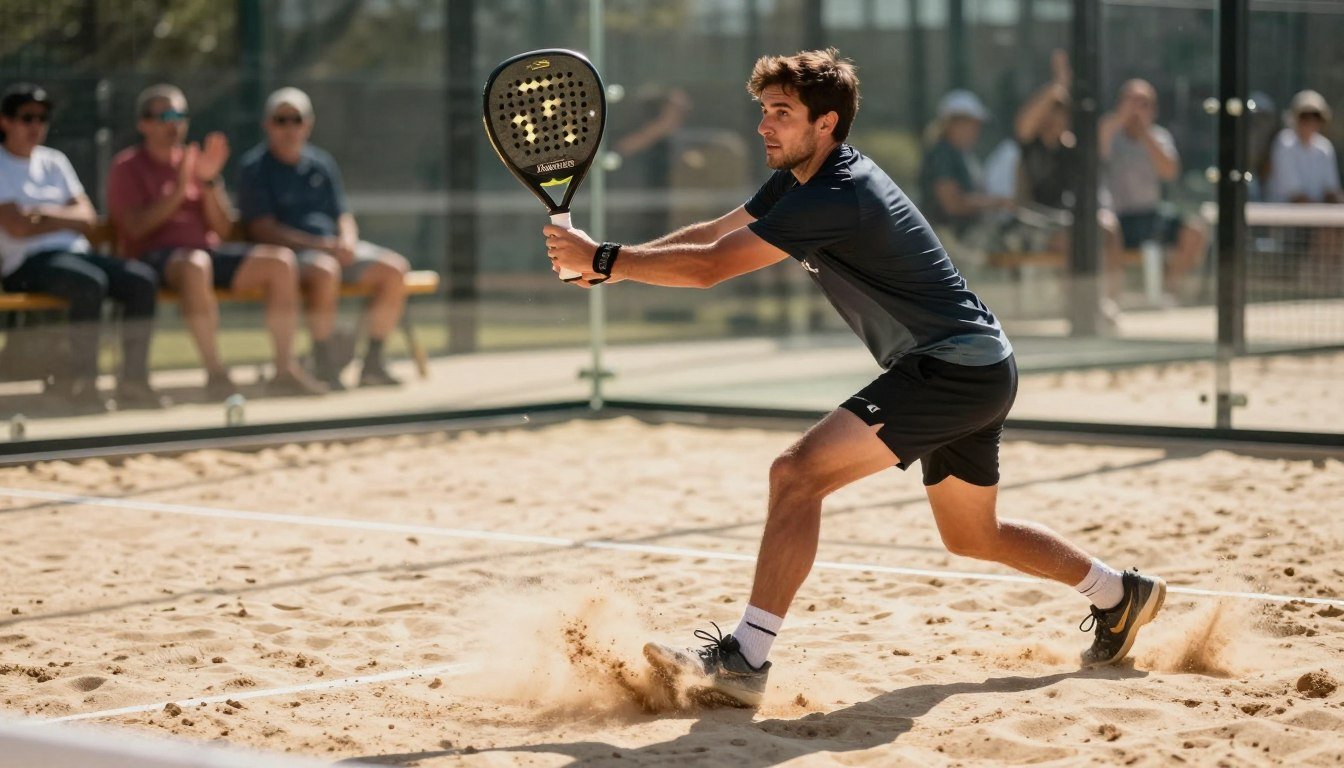
Padel shoes are the right choice because their grip, lateral support, and cushioning are built for the sport’s quick, multidirectional movements. The outsole is the bottom part of a shoe that contacts the court. Padel combines sharp direction changes, short bursts, jumps, and lunges, loading your ankles, knees, hips, lower back, and shoulders.
Those movements make footwear a practical part of getting ready for a game. Padel has approximately eight injuries per 1,000 matches, and suitable shoes can help you move with more control. They cannot prevent every injury, which can also depend on your movement, conditioning, and the play around you. Good footwear can support safer movement, but it cannot remove every risk.
Choosing a shoe for the padel court means considering how you stop and turn, not just how comfortable it feels standing still. The right fit and court grip can help you move with confidence through the sport’s quick exchanges. Treat footwear as one part of safer play, not a guarantee against injury.
Key Takeaways
- Choose footwear built for side-to-side movement.
- Match the outsole to the court surface.
- Look for support, grip, and useful cushioning.
- Check wear instead of relying on age alone.
- Suitable shoes support safer play, but cannot guarantee injury prevention.
Why Should We Wear Padel Shoes?
A rally can take you from a forward sprint to a sharp lateral stop and a recovery step in just a few seconds. Padel shoes suit those rapid changes because they are made for movement in several directions, not only a straight run.
Lateral support and reinforced uppers help your foot stay supported during side-to-side loading. Cushioning helps absorb impact when you jump or lunge, then push off again. These features matter when the ball comes off the glass and changes where you need to move.
Padel’s stop-start movement
Padel players often sprint toward a short ball, brake, pivot, and recover toward the middle. A ball bouncing off the glass can call for a sudden adjustment, even after you have started moving the other way. Your shoes need to support those stops and starts without feeling cumbersome.
Sideways steps put different demands on footwear than a steady run. When you lunge wide, the shoe’s upper helps hold your foot in place, while the sole grips the court as you plant. A loose or poorly supported shoe can make a quick recovery feel less controlled.
Support for controlled court movement
A controlled slide is a manageable glide during movement; slipping means losing control, while a foot that sticks unexpectedly can disrupt a turn.
On a suitable surface, a little glide can help you adjust your position without stopping dead. The aim is not maximum grip at every moment. It is traction that lets you push off and brake, with enough release for a controlled slide when your movement calls for one.
That balance can make it easier to transition from a defensive lunge into a recovery step. Good lateral support also helps the shoe move with your foot instead of folding unpredictably during a sharp turn. No shoe can make every movement safe, but purpose-built support can help you feel more composed.
Before you play, notice whether the heel stays in place as you shift from side to side. Look for a shoe that lets you stop and recover without your foot shifting inside it.
How Do Padel Shoes Differ From Running and Tennis Shoes?
If you already own court footwear, clay-court tennis shoes are a more reasonable padel option than running shoes, but padel shoes are purpose-built for the sport. For regular play, choose footwear suited to the court’s side-to-side demands and surface.
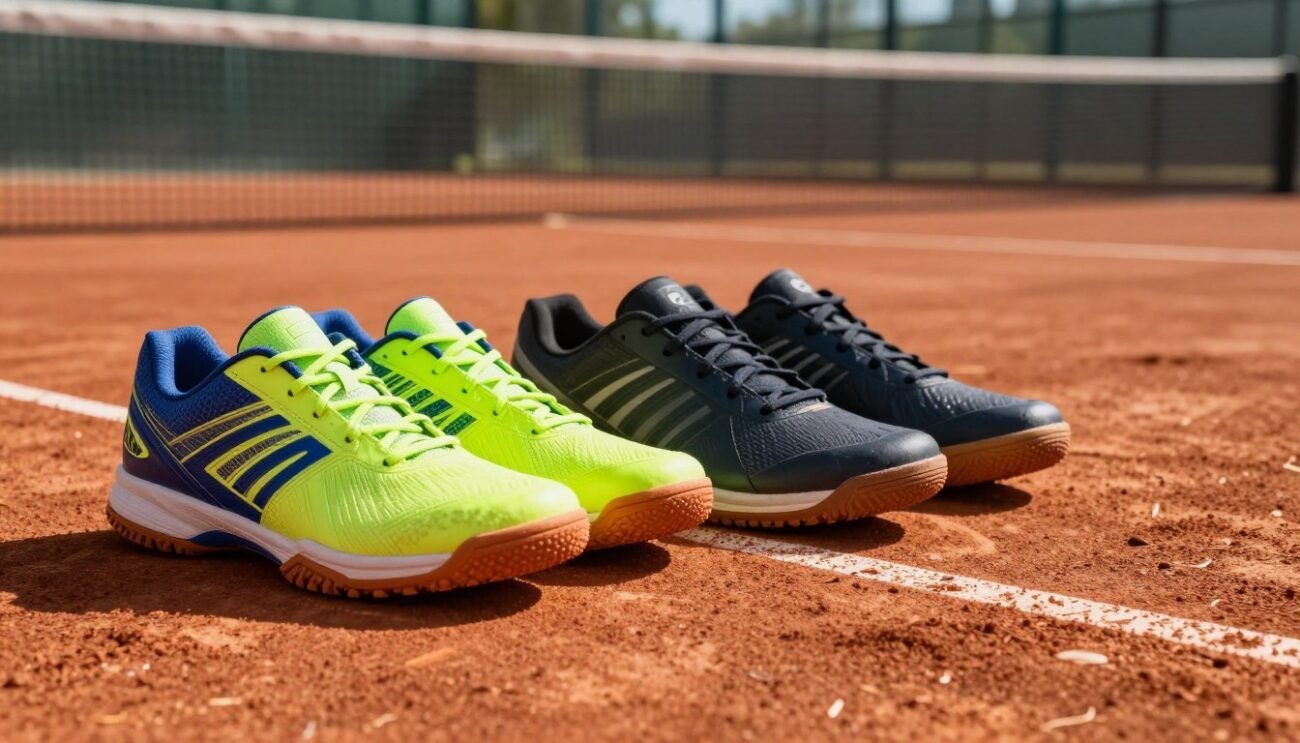
Running shoes favor forward motion, while padel shoes are designed for lateral stability. Tennis shoes also vary by court surface, so the label alone does not tell you how a pair will perform on padel turf.
Running shoes favor forward motion
Running shoes and many training shoes are built mainly for forward movement. Their design may feel comfortable on a straight run, but it does not provide the lateral stability padel asks for during quick cuts and lunges. That difference can make them feel less secure when you plant your foot sideways.
A running shoe is not the best choice simply because it has soft cushioning. On a padel court, your shoe needs to support sharp turns and repeated stops as well as forward movement. Running shoes are not recommended for padel play.
Tennis shoes depend on court surface
Tennis shoes are made for different court surfaces, and their tread and support can vary. Clay-court tennis shoes can work reasonably well on some padel courts, particularly sandy ones. Hard-court tennis shoes are a poor choice because their design may not suit the movement and surface conditions.
| Shoe type | Design priority | Padel-court fit | Practical verdict |
|---|---|---|---|
| Padel shoes | Lateral movement and court grip | Built for padel surfaces | Best choice for regular play |
| Running shoes | Forward motion | Limited lateral stability | Not recommended |
| Clay-court tennis shoes | Movement on clay courts | Reasonable on some sandy courts | Possible occasional option |
Clay-court footwear can be a practical alternative when its tread suits the padel surface, but its performance is not the same on every court. Tennis shoes intended for hard courts have a different purpose, so do not assume every tennis pair will work equally well.
For regular padel play, choose footwear made for padel rather than relying on a running shoe or a hard-court tennis shoe.
Match the Outsole to the Padel Court
On a sandy artificial-grass court, start by looking for a herringbone outsole; for hard or indoor courts, consider omni or hybrid. The surface matters because grip needs to support quick movement without preventing a controlled slide.
Sand-dressed artificial grass usually suits herringbone, while low-sand and indoor conditions often suit omni or hybrid. Court materials and sand depth vary, so match the tread to the actual surface rather than choosing by pattern name alone.
Herringbone for sand-dressed artificial grass
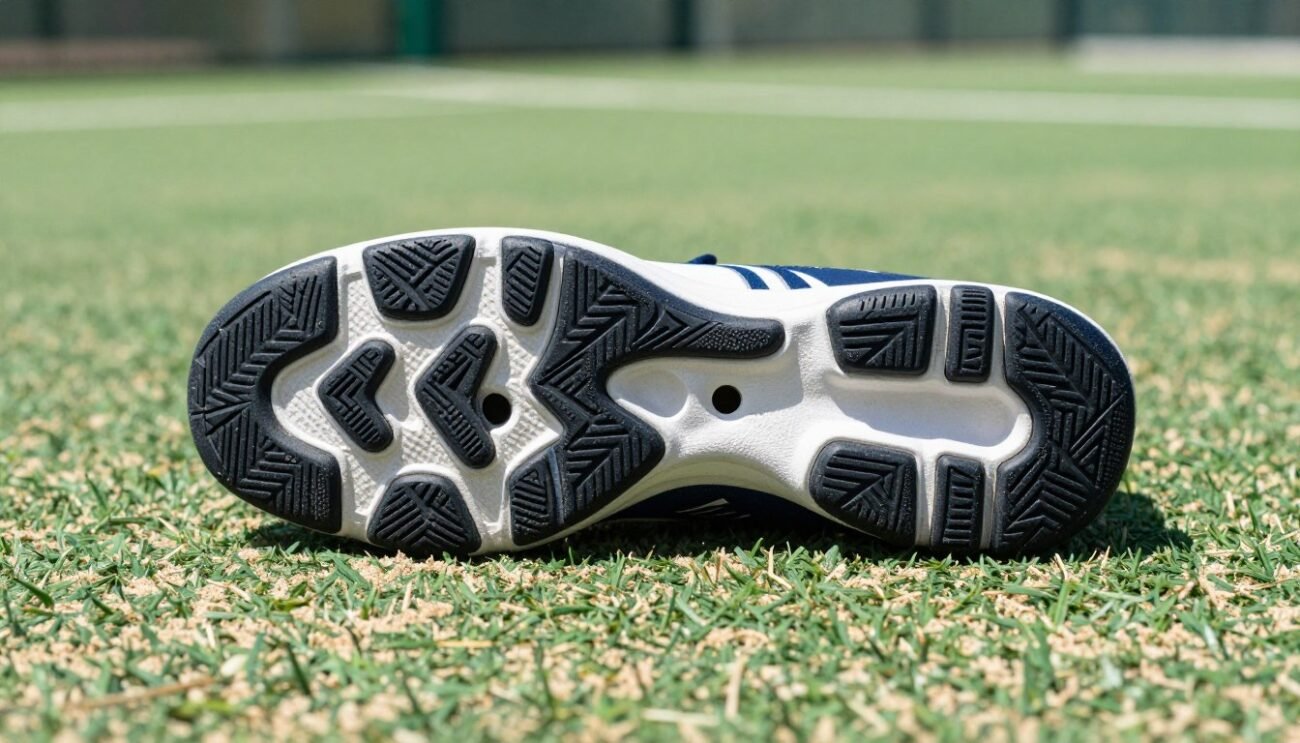
Most padel courts use artificial turf with sand infill, also called sand-dressed artificial grass. A herringbone outsole has V-shaped grooves that can engage with loose sand. The pattern is a common choice for sandy artificial grass, where players need traction for pushing off and braking.
Sand depth affects how the tread feels underfoot. Herringbone or clay-style soles are often suitable when the artificial grass has loose sand. If the court has little sand, the same level of grip may feel excessive and make a controlled slide harder.
Omni and hybrid patterns for other courts
An omni outsole uses small, round studs. It can suit hard or indoor courts, short carpet, and dry grass. Omni or hybrid patterns are often preferred for artificial grass with minimal sand and indoor courts with curly-fiber mats.
A hybrid outsole combines herringbone grooves and omni studs. That mix makes it a practical option if you switch between court types. It can suit a range of surfaces, but no single tread pattern will feel identical on every carpet and sand depth.
| Outsole pattern | Visible tread | Suitable court conditions | Surface-switching use |
|---|---|---|---|
| Herringbone | V-shaped grooves | Sand-dressed artificial grass with loose sand | Best suited to sandy courts |
| Omni | Small round studs | Hard, indoor, short-carpet, or dry-grass courts | Useful on low-sand surfaces |
| Hybrid | Herringbone grooves and omni studs | Low-sand grass and some indoor courts | Practical for switching surfaces |
Recommendations differ with sand depth and carpet type, especially on indoor courts. A tread that grips well on one surface may feel too sticky on another. Check the actual court’s sand and carpet before choosing a sole pattern.
Fit, Stability, and Cushioning That Support Your Game
A good fit holds your heel securely while leaving your toes comfortable enough to move. Secure, not squeezed, is the goal for a shoe you will wear through repeated stops, turns, and lunges.
Choose stable support and protective cushioning without losing court feel. Padel shoes often use EVA foam or other shock-absorbing materials in the midsole, while keeping the shoe stable enough for quick reactions.
Secure fit and lateral stability
Fit depends on your foot shape and width, so the same size can feel different across brands. Your heel and midfoot should feel held in place as you shift your weight. The upper should support side-to-side movement without pressing painfully against your feet.
- Secure heel hold, with no lifting during movement.
- No pinching across the toes.
- Stable side support when you shift laterally.
- Cushioning that feels protective without making the shoe unstable.
Playing style and body weight can affect how much cushioning feels comfortable. A player who makes frequent hard stops may prefer a more protective feel, while another may want a closer sense of the court beneath the foot.
Cushioning without losing court feel
Do not choose the softest or most cushioned shoe without checking its stability. Heavy cushioning can feel pleasant while standing, but too much softness may make quick direction changes feel less steady. The shoe should absorb impact without feeling wobbly under load.
Breathability also affects comfort during a long game. A breathable upper can help your feet feel less confined, and technical sport socks can feel smoother during repeated movement. Consider these details along with cushioning, since comfort is more than softness alone.
Try shoes on with the socks you plan to wear and check for pressure points before playing.
Recognize Wear Before Grip Fades
A typical pair lasts about 60 to 100 playing hours, but the outsole’s condition is a better replacement signal than the calendar alone. Check the shoe itself, since playing frequency and movement style affect how quickly it wears.
Replace your pair when at least two of these four wear checks fail. Someone playing two to three times a week may get about four to six months from a pair, though hard stops and frequent court time can shorten that span.
A smoothed-flat or shiny area under the forefoot or near the big toe is a clear warning sign. That part of the shoe repeatedly meets the court during movement, and a worn tread may no longer offer the grip you expect.
Expect about 60 to 100 playing hours from a typical pair, then judge its condition rather than trusting the calendar.
Use these four checks to judge whether a pair still feels ready for play:
- Outsole-pattern depth: are the grooves or studs still visible?
- Outer-edge wear: is one side noticeably more worn than the other?
- Resistance to twisting: does the shoe still resist easy twisting through the middle?
- Slide-and-stick feel: can you move with a controlled slide, then plant securely?
Compare both shoes, since your movement may wear one side faster. A clear smooth patch under the big toe can matter more than a small mark elsewhere, especially if the tread has lost its shape.
Replace the pair when at least two of the four wear checks fail.
Conclusion
Padel shoes are the practical choice for players who want court-specific grip and support for quick changes of direction. Fit still matters: a shoe should feel secure as you move, and its outsole should suit the court’s surface.
For your next pair, check whether the court has loose sand, little sand, or an indoor carpet. Then try on footwear with the socks you use for play and notice how your heel and forefoot feel while shifting side to side.
Before your next match, confirm the court surface and choose a pair that feels secure from the first step.